

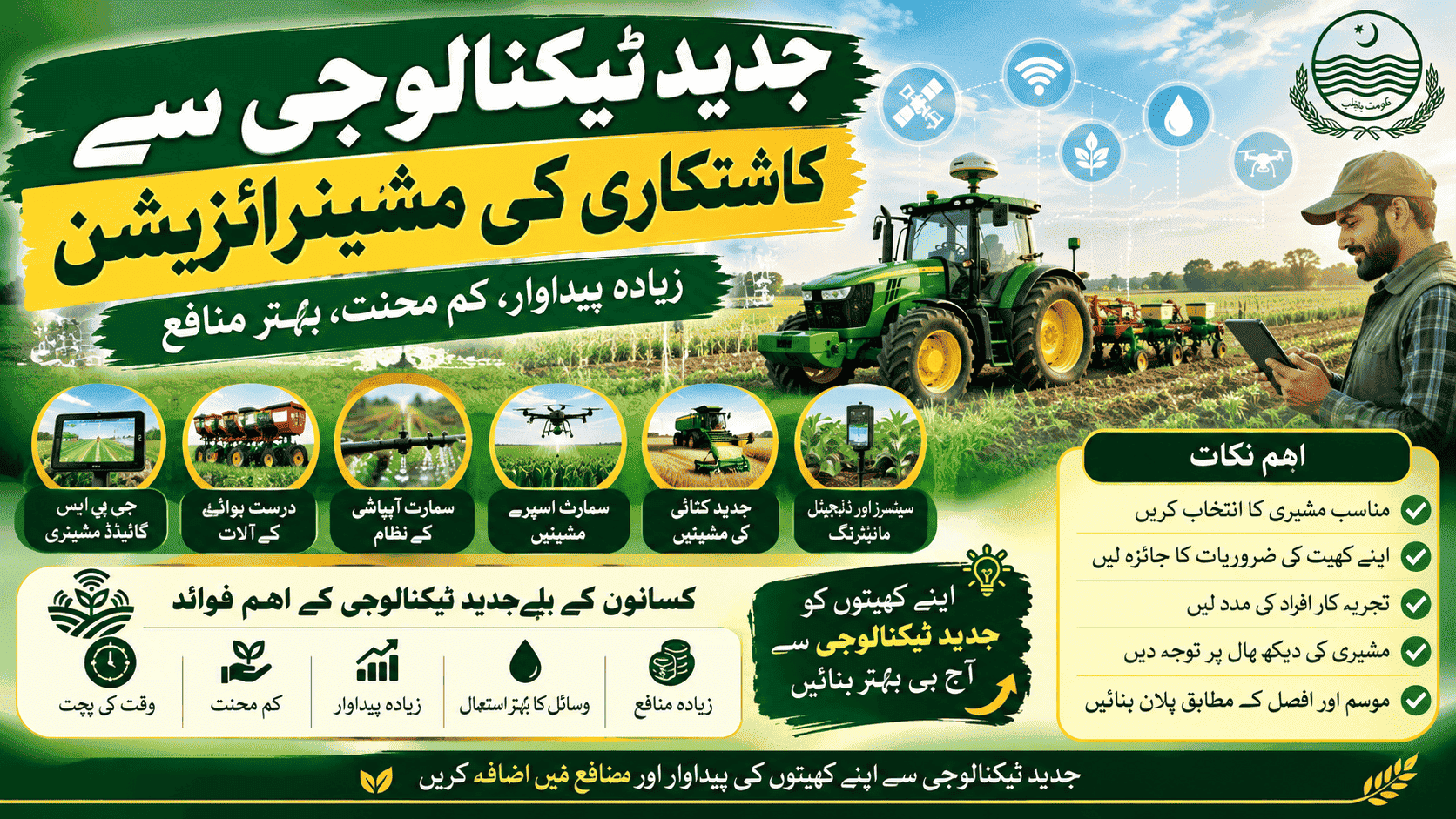
Agriculture is rapidly moving toward smarter and more efficient production methods. Farmers today can use modern machinery, precision equipment, automation, sensors, and digital technologies to complete agricultural tasks with greater accuracy and less manual effort. Technology-driven farm mechanization brings these technologies together to improve the way farms are prepared, planted, managed, harvested, and maintained.
Modern mechanization is not limited to tractors and traditional agricultural equipment. It can include GPS-guided machinery, precision planters, automated irrigation systems, smart spraying equipment, harvesting machines, sensors, and data-based farm management tools. When these technologies are selected according to actual farming requirements, they can help improve operational efficiency, reduce unnecessary resource use, and make agricultural work more manageable.
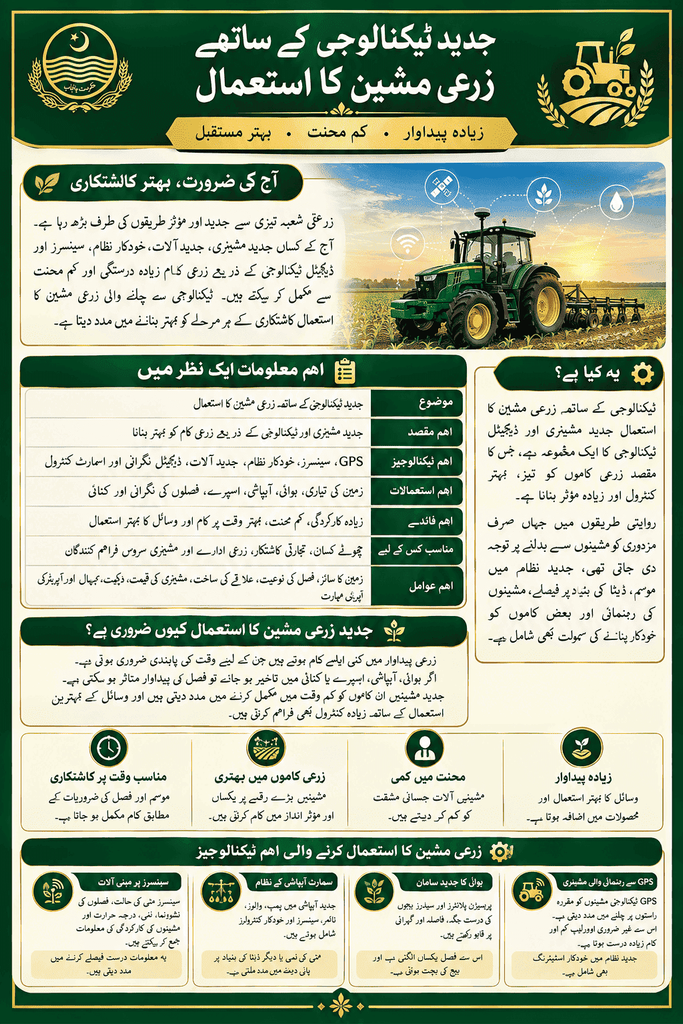
Key Information About Technology-Driven Farm Mechanization
| Key Detail | Information |
|---|---|
| Topic | Technology-Driven Farm Mechanization |
| Main Focus | Using modern machinery and technology to improve farming operations |
| Key Technologies | GPS, sensors, automation, precision equipment, digital monitoring and smart controls |
| Major Applications | Land preparation, planting, irrigation, spraying, crop management and harvesting |
| Main Benefits | Improved efficiency, reduced manual effort, better timing and resource management |
| Suitable For | Small farms, commercial farms, agricultural enterprises and machinery service providers |
| Important Considerations | Farm size, crop type, terrain, machinery cost, maintenance and operator skills |
What Is Technology-Driven Farm Mechanization?
Technology-driven farm mechanization is the integration of modern agricultural machinery with digital and automated technologies. Its purpose is to make farming operations faster, more controlled, and more efficient.
Traditional mechanization primarily focused on replacing manual labor with machines. Modern systems go further by adding technologies that can monitor conditions, guide machinery, collect information, and automatically control certain operations.
For example, a conventional tractor can perform field preparation, while a GPS-guided tractor can follow more precise routes. Similarly, traditional irrigation can be upgraded with sensors and automated controls that help manage water according to field conditions.
Why Modern Farm Mechanization Matters
Agricultural production involves many time-sensitive activities. Delays in planting, irrigation, spraying, or harvesting can affect the overall performance of a crop.
Modern machinery can help farmers complete these activities within shorter periods. Technology can also provide greater control over how equipment is used, allowing farmers to manage resources more carefully.
Reducing Manual Work
Many farming activities require repetitive and physically demanding labor. Mechanized equipment can reduce the physical workload associated with tasks such as soil preparation, planting, cultivation, spraying, and harvesting.
Improving Farm Operations
Machines can perform many agricultural tasks consistently across large areas. This can help farmers manage their fields more efficiently and reduce delays during busy periods.
Supporting Timely Farming
Weather conditions and crop development often determine when an agricultural operation should be completed. Mechanization can help farmers cover larger areas within available working windows.
Major Technologies Used in Farm Mechanization
GPS-Guided Agricultural Machinery
GPS technology can help agricultural machinery follow predetermined routes across fields. Guidance systems may reduce unnecessary overlapping passes and make field operations more consistent.
Advanced systems can also support automated steering, reducing the amount of manual steering required from the operator.
Precision Planting Equipment
Precision planters and seeders are designed to provide greater control over seed placement, spacing, and depth.
Accurate planting can contribute to more uniform crop establishment and help farmers use seed efficiently.
Smart Irrigation Systems
Modern irrigation technology can combine pumps, valves, timers, sensors, and automated controllers.
Some systems can use soil-moisture information or other field data to help determine when irrigation is needed. This approach can provide greater control than applying water according to a fixed schedule alone.
Sensor-Based Equipment
Sensors can monitor different aspects of farming and machinery operations. Depending on the system, they may collect information about soil conditions, crop characteristics, moisture, temperature, machine performance, or other variables.
This information can help farmers make more informed decisions about field operations.
Automated Spraying Technology
Modern spraying equipment can use electronic controls, sensors, GPS, or other technologies to improve application accuracy.
The objective is to deliver agricultural inputs more consistently and avoid unnecessary application where possible.
Mechanized Harvesting Equipment
Harvesting is often one of the most demanding stages of crop production. Modern harvesting machines can perform multiple tasks and cover substantial areas in a relatively short time.
Appropriate harvesting equipment can help farmers complete harvesting operations efficiently and reduce delays.
Applications of Technology-Driven Farm Mechanization
Technology-driven systems can support almost every major stage of agricultural production.
Land Preparation
Tractors, cultivators, ploughs, harrows, and other implements can prepare fields before planting. GPS guidance can help operators maintain more consistent field passes.
Planting and Seeding
Mechanized planters and seeders can improve the consistency of seed placement while reducing the amount of manual work required.
Fertilizer Application
Modern application equipment can help distribute fertilizers more consistently. Precision systems may also allow application rates to be adjusted according to field requirements.
Crop Protection
Mechanized sprayers can improve the efficiency and consistency of crop-protection operations. Advanced systems may use sensors or digital controls to support more targeted application.
Irrigation Management
Automated pumps, valves, sensors, and controllers can help farmers manage irrigation more systematically.
Harvesting
Specialized harvesters can reduce the time and labor required to collect mature crops. The appropriate machine depends heavily on the crop being harvested.
Post-Harvest Operations
Mechanization can also support cleaning, sorting, drying, grading, transportation, and other activities after crops are harvested.
Benefits of Technology-Driven Farm Mechanization
Improved Operational Efficiency
Modern machinery can perform agricultural operations across larger areas and within shorter periods. This can make farm management more efficient, particularly during labor-intensive seasons.
Better Resource Management
Precision equipment can help farmers manage resources such as water, seed, fertilizer, fuel, and labor more carefully.
Reduced Physical Effort
Mechanization can take over many repetitive or physically demanding activities, reducing the amount of manual effort required.
Greater Accuracy
GPS guidance, electronic controls, sensors, and automated systems can improve the consistency of certain agricultural operations.
Faster Field Operations
Appropriately sized machinery can complete important field activities more quickly than manual methods, which can be especially useful when planting or harvesting windows are limited.
Challenges of Adopting Modern Farm Mechanization
Despite its advantages, modern mechanization also presents several challenges.
High Initial Cost
Advanced agricultural machinery can require substantial investment. For smaller farms, purchasing expensive equipment may not always be financially practical.
Maintenance Requirements
Modern machinery can include engines, hydraulics, electronics, sensors, software, and other components. Regular maintenance is therefore important for reliable operation.
Operator Training
Farm workers and machine operators may need training to operate advanced equipment safely and correctly.
Availability of Spare Parts
The usefulness of sophisticated machinery can be affected when replacement parts or qualified technicians are difficult to access.
Infrastructure Limitations
Some digital farming technologies depend on reliable electricity, connectivity, technical support, or other infrastructure that may not be equally available in every agricultural area.
Making Mechanization Accessible to Small Farmers
Advanced machinery does not necessarily have to be individually owned by every farmer. Several approaches can make mechanization more accessible.
Agricultural Machinery Rental
Farmers can rent equipment when they need it rather than purchasing machinery that may remain unused for long periods.
Custom Hiring Services
Machinery service providers can perform specific agricultural operations for farmers in exchange for a service fee.
Cooperative Machinery Ownership
Groups of farmers can jointly purchase and manage expensive equipment. This can spread the investment and operating costs among multiple users.
Small and Specialized Machinery
Compact machinery and specialized implements can be suitable for farms where large equipment is difficult to operate or economically unsuitable.
How to Select the Right Farm Machinery
Choosing agricultural machinery should be based on actual farm requirements rather than technology alone.
Consider Farm Size
The size of the farm influences the required machinery capacity. Equipment that is too small may cause delays, while unnecessarily large equipment can increase operating costs.
Consider Crop Requirements
Different crops require different planting, cultivation, spraying, and harvesting equipment. Machinery should therefore be selected according to the production system.
Evaluate Field Conditions
Soil type, field shape, slope, drainage, accessibility, and terrain can influence which machines are suitable.
Calculate Total Ownership Costs
The purchase price is only one part of the overall cost. Farmers should also consider fuel, maintenance, repairs, storage, depreciation, operator costs, and spare parts.
Check Technical Support
Before purchasing advanced machinery, farmers should determine whether maintenance services, spare parts, software support, and trained technicians are available.
The Role of Precision Agriculture
Precision agriculture and modern mechanization are closely connected. Precision agriculture uses field information and technology to manage agricultural activities more accurately, while mechanized equipment provides the physical means to carry out those operations.
For example, digital field information can identify differences in soil or crop conditions. Compatible machinery may then adjust certain operations according to those differences.
This combination can help farmers move from applying the same treatment across an entire field toward more targeted management.
Future of Technology-Driven Farm Mechanization
The next stage of agricultural mechanization is expected to involve greater automation, connectivity, artificial intelligence, robotics, and machine intelligence.
Autonomous Farm Machinery
Autonomous and semi-autonomous equipment could perform selected field operations with reduced direct involvement from operators.
Agricultural Robotics
Robotic systems may increasingly assist with activities such as crop monitoring, precision weeding, harvesting, and field inspection.
Artificial Intelligence in Farming
AI can analyze agricultural and machinery data to identify patterns and support decision-making. Its practical value will depend on data quality, system reliability, affordability, and appropriate implementation.
Connected Agricultural Equipment
Connected machines can transmit operational information to digital farm-management platforms. This can help farmers monitor equipment use, maintenance requirements, fuel consumption, and field activities.
How Farmers Can Adopt Modern Mechanization
Farmers should begin with the agricultural operations that create the greatest challenges in terms of labor, time, cost, or efficiency.
Instead of purchasing multiple machines immediately, it can be more practical to identify one or two high-priority operations and evaluate the available mechanization options.
Farmers should compare purchasing, leasing, renting, and custom hiring before making a decision. Operator training and regular maintenance should also be included in the overall plan.
A gradual and needs-based approach can reduce financial pressure while allowing farmers to evaluate whether a particular technology provides genuine value.
Technology and Sustainable Farming
Technology-driven mechanization can support more efficient resource management when equipment is properly selected and operated.
Precision application, improved irrigation control, accurate field guidance, and better machinery management may help reduce unnecessary resource use.
However, mechanization alone does not automatically make a farming system sustainable. Heavy machinery can contribute to soil compaction, while inefficient equipment can increase fuel consumption and operating costs.
For this reason, sustainable mechanization requires a balance between machinery capacity, field requirements, resource efficiency, and sound agricultural practices.
Conclusion
Technology-driven farm mechanization is transforming modern agriculture by combining agricultural machinery with GPS, sensors, automation, precision systems, and digital technologies. These tools can help farmers improve operational efficiency, reduce physical workload, manage resources more effectively, and complete important agricultural activities on time.
The best mechanization strategy is not necessarily the one with the most advanced technology. Farmers should choose equipment according to their farm size, crop requirements, field conditions, available budget, technical support, and long-term operational needs.
As technology continues to advance, agricultural machinery is likely to become increasingly connected, automated, precise, and intelligent. When adopted strategically, modern mechanization can become an important part of efficient and sustainable agricultural production.











Leave a Reply