
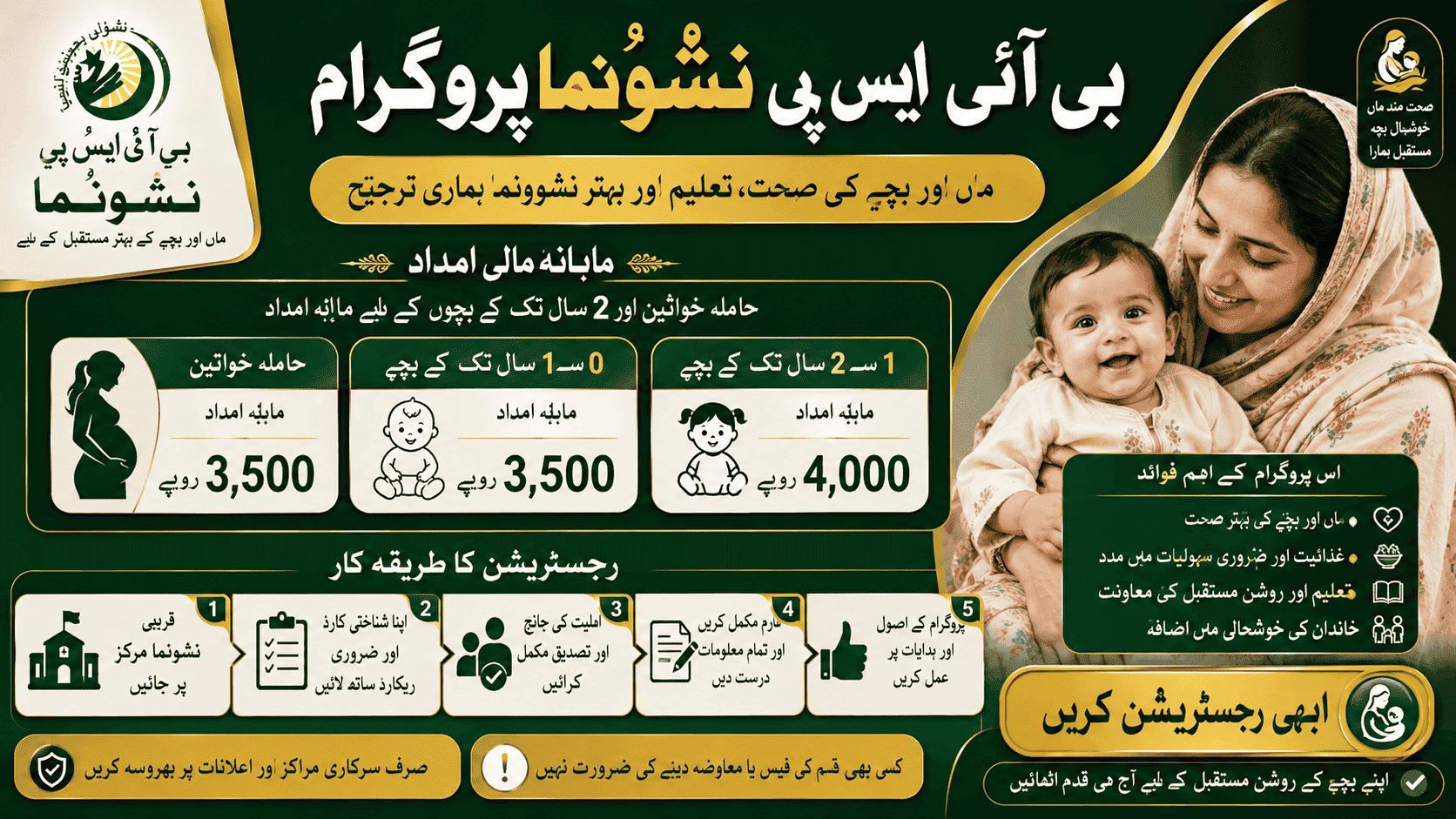
The Benazir Nashonuma Programme (BNP) is one of Pakistan’s major social protection initiatives focused on improving maternal and child nutrition during the critical first 1,000 days of life. The programme is administered through the Benazir Income Support Programme (BISP) and combines conditional financial assistance with health, nutrition, immunization, growth-monitoring, and awareness services.
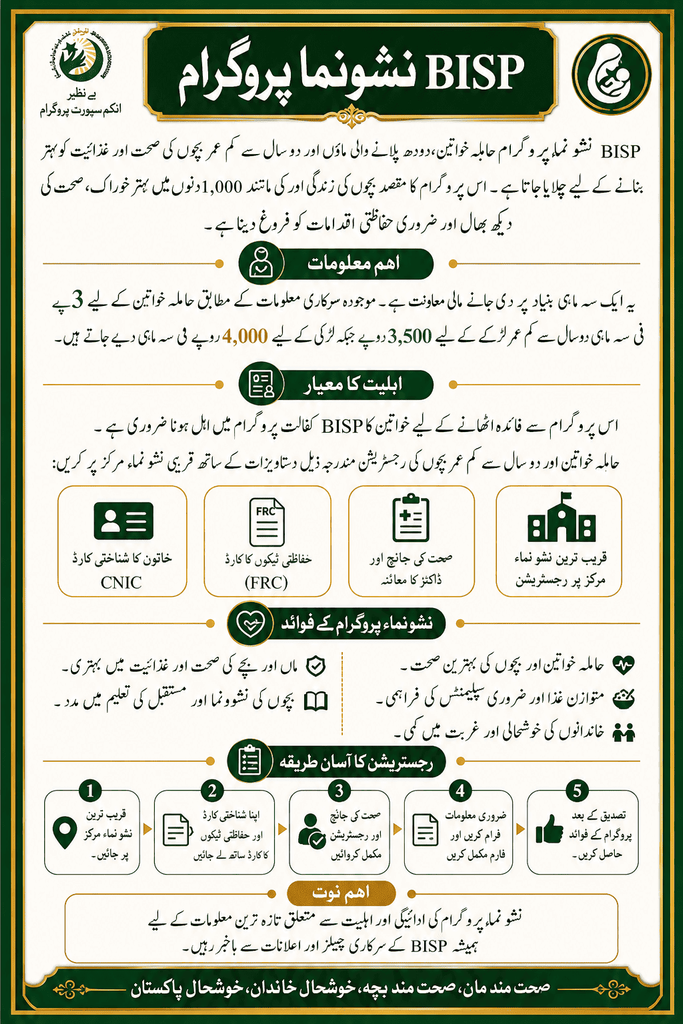
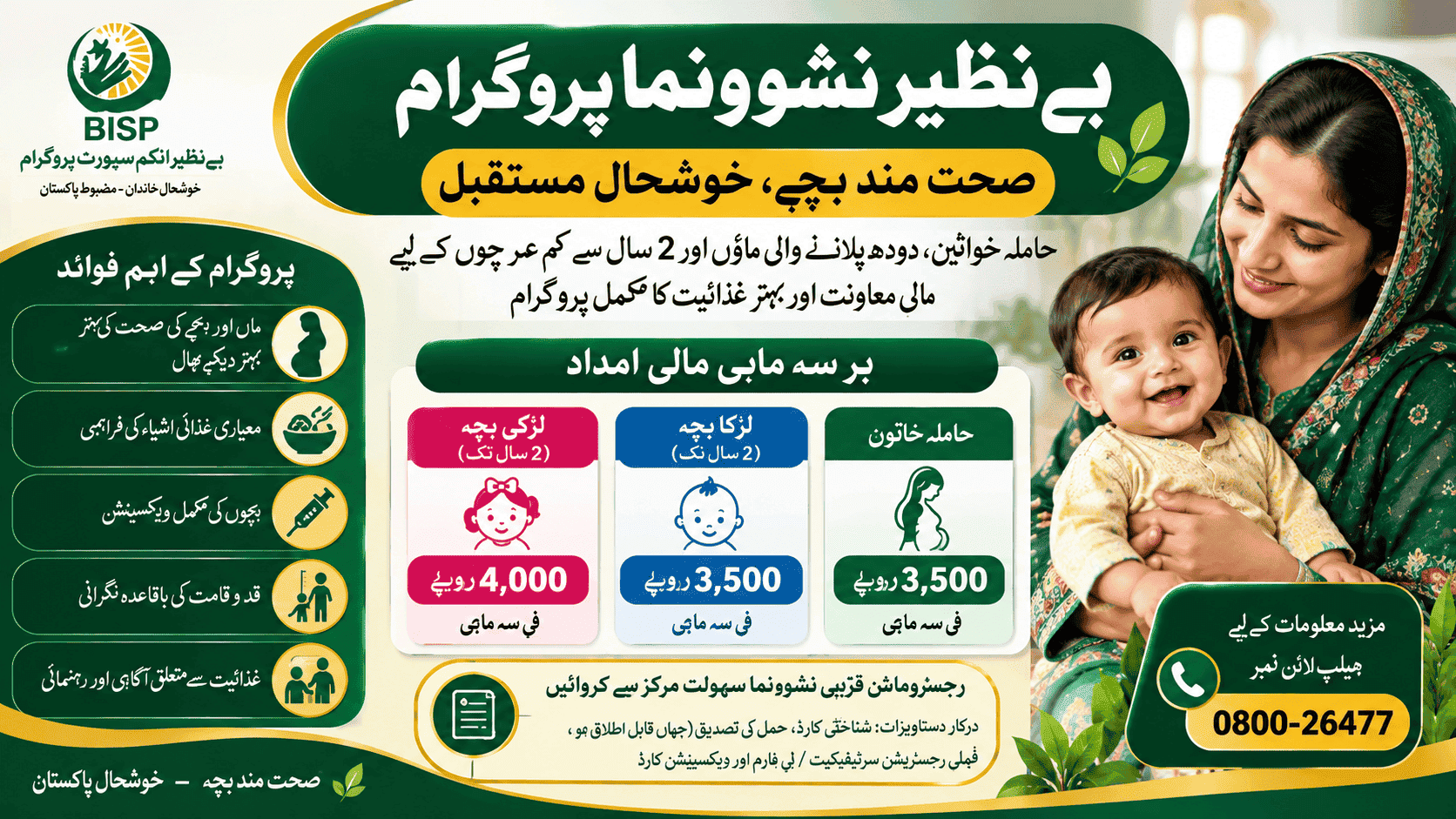
For 2026, the official BISP information lists quarterly Nashonuma stipends of Rs. 3,500 for pregnant women, Rs. 3,500 for boys under two, and Rs. 4,000 for girls under two. Eligibility is linked to BISP Kafaalat participation and the programme’s health and nutrition requirements.
| BISP Nashonuma 2026 Detail | Information |
|---|---|
| Programme | Benazir Nashonuma Programme |
| Administered by | Benazir Income Support Programme (BISP) |
| Main Purpose | Maternal and child nutrition and stunting prevention |
| Target Period | Pregnancy through the child’s second birthday |
| Pregnant Woman Stipend | Rs. 3,500 per quarter |
| Boy Child Under 2 | Rs. 3,500 per quarter |
| Girl Child Under 2 | Rs. 4,000 per quarter |
| Basic Beneficiary Requirement | Active BISP Kafaalat beneficiary |
| Child Age | Under 2 years |
| Main Documents | CNIC, NADRA FRC/B-Form where applicable, immunization record and pregnancy verification |
| Registration Location | Nashonuma Facilitation Centre |
| Official BISP Helpline | 0800-26477 |
| Official Website | BISP Official Website |
What Is the BISP Nashonuma Programme?
The Benazir Nashonuma Programme is a nutrition-focused conditional cash transfer initiative operated under BISP Nashonuma. It was introduced to help prevent malnutrition and stunting among young children while supporting pregnant and breastfeeding women.
The programme concentrates on the first 1,000 days, beginning during pregnancy and continuing until a child reaches two years of age. In addition to financial assistance, beneficiaries can receive specialized nutritious food and participate in health and nutrition-related services.
The programme was initially launched as a pilot in 2020 and has subsequently expanded nationwide. According to BISP’s current programme information, it operates across 158 districts through more than 558 Nashonuma Facilitation Centres, including mobile units.
Why Nashonuma Matters
Early childhood nutrition can have a lasting effect on physical growth and development. The programme therefore does more than provide cash. It encourages families to follow recommended maternal and child health practices, including:
- Antenatal and postnatal care
- Routine childhood immunization
- Growth monitoring
- Nutrition awareness
- Consumption of specialized nutritious food
- Regular health consultations
BISP Nashonuma describes the programme as an integrated social-protection and health intervention rather than simply a cash payment scheme.
BISP Nashonuma 2026 Payment Amount
One of the most important questions for beneficiaries is how much financial assistance is available.
According to the current official BISP Nashonuma programme information, the quarterly structure is:
| Beneficiary Category | Quarterly Stipend |
|---|---|
| Pregnant woman | Rs. 3,500 |
| Boy child under 2 years | Rs. 3,500 |
| Girl child under 2 years | Rs. 4,000 |
The higher amount for girls is part of the programme’s gender-responsive design. BISP states that conditional cash transfers can total up to Rs. 42,500 per beneficiary over the relevant programme period, depending on the beneficiary category and applicable conditions.
Is the Nashonuma Payment Monthly?
No. The published stipend structure is quarterly, rather than a regular monthly payment.
Beneficiaries should therefore avoid relying on social-media posts claiming that every Nashonuma beneficiary automatically receives a fixed monthly amount. The applicable payment depends on the beneficiary’s category, verification and compliance with programme requirements.
Who Is Eligible for BISP Nashonuma 2026?
Eligibility is more specific than simply being a pregnant woman or having a young child.
According to BISP’s current programme criteria, eligible groups include:
Pregnant Women
A pregnant woman may qualify when she is already enrolled as a BISP Kafaalat beneficiary, is within the programme’s specified age range, and meets the programme’s verification requirements.
BISP Nashonuma currently identifies pregnant women aged 18–59 years who are enrolled under Kafaalat as an eligible category. Pregnancy must be verified through a registered health facility.
Lactating Women
Breastfeeding women connected to eligible BISP Nashonuma households can also fall within the programme’s target population, subject to the applicable registration and verification requirements.
Children Under Two Years
Children of a Kafaalat beneficiary can be enrolled while they are under two years of age. The programme provides a higher quarterly stipend for eligible girls than boys.
Residence and Programme Coverage
The beneficiary must reside in an area where the Nashonuma Programme is operational. BISP says the programme has now been expanded across a large network of districts and facilitation centres.
BISP Nashonuma Eligibility Requirements at a Glance
Before visiting a registration centre, applicants should understand the main requirements:
- The household should be an active BISP Kafaalat beneficiary.
- The woman or child must fall within the relevant Nashonuma target category.
- Pregnancy or the child’s eligibility must be medically/documentarily verified.
- Required NADRA documentation should be available.
- Beneficiaries must participate in required health, nutrition and awareness activities.
- Applicable immunization and growth-monitoring requirements should be followed.
This means registration does not automatically guarantee payment. Continued assistance is connected to the programme’s compliance conditions.
How to Register for BISP Nashonuma 2026
Nashonuma registration is generally handled through designated Nashonuma Facilitation Centres, rather than through an ordinary online application form.
Step 1: Confirm BISP Kafaalat Status
The first important requirement is confirming that the household is already included as an active BISP Kafaalat beneficiary.
BISP Nashonuma uses its beneficiary and social-registry systems to establish eligibility. If your household is not registered with BISP, you may first need to complete the applicable NSER/Dynamic Registry process.
Step 2: Visit a Nashonuma Facilitation Centre
Eligible families should visit their nearest designated Nashonuma Facilitation Centre.
BISP’s programme documentation describes the Facilitation Centre as the place where beneficiary status and relevant information are checked before enrolment.
Step 3: Take the Required Documents
Applicants should carry relevant original documents, including:
- Beneficiary’s valid CNIC
- Child’s NADRA B-Form/CRC, where applicable
- Family Registration Certificate where required
- Immunization/EPI card
- Pregnancy verification or relevant health-facility documentation
The exact documents can vary according to whether the applicant is being registered as a pregnant woman, lactating mother or child.
Step 4: Complete Verification
Programme staff verify the household and beneficiary information through the relevant BISP/NADRA systems.
Pregnancy can be medically verified, while children require appropriate identification and health documentation.
Step 5: Complete Health and Nutrition Requirements
After enrolment, beneficiaries may be required to attend health visits, awareness sessions, immunization appointments and growth-monitoring activities.
These requirements are important because Nashonuma is a conditional cash transfer programme.
What Documents Are Required?
Having the correct documents can make the registration process easier.
| Document | Purpose |
|---|---|
| CNIC | Identification and BISP verification |
| NADRA B-Form/CRC | Child identification and enrolment |
| Family Registration Certificate | Family/child relationship verification where required |
| EPI/Immunization Card | Verification of vaccination status |
| Pregnancy verification | Confirmation of pregnancy |
| Relevant health records | Monitoring programme compliance |
BISP’s published eligibility information specifically identifies CNIC, FRC, pregnancy screening and immunization documentation among the evidence used for enrolment.
Nashonuma Health and Compliance Conditions
Receiving the initial registration does not mean beneficiaries can ignore programme conditions.
The Nashonuma Programme connects payments with health and nutrition-related compliance. BISP Nashonuma lists several important activities, including:
Regular Health Checkups
Pregnant beneficiaries are expected to participate in appropriate antenatal and postnatal care and related awareness activities.
Child Immunization
Parents or caregivers should ensure that eligible children receive routine vaccinations according to the national immunization schedule.
Growth Monitoring
Children under two are monitored regularly to track growth and identify nutrition concerns.
Nutrition Support
The programme also provides specialized nutritious foods to eligible pregnant, breastfeeding women and young children as part of its broader nutrition intervention.
What Happens If a Beneficiary Does Not Meet the Conditions?
Because Nashonuma is a conditional programme, payments can depend on completing the required health and nutrition activities.
The purpose of these conditions is not simply to control payments. They are designed to encourage families to use essential maternal and child health services.
Beneficiaries should therefore maintain their health records, attend scheduled visits and follow instructions provided by the relevant Nashonuma centre or health workers.
How Long Can a Child Receive Nashonuma Support?
The programme focuses on the child’s first 1,000 days, with child beneficiaries remaining in the programme until they reach two years of age.
BISP Nashonuma states that the child graduates from the programme after reaching two years.
This age limit is important because parents should not assume that a child will continue receiving Nashonuma payments after the second birthday.
Is There an Online Nashonuma Registration Form?
The safest approach is to avoid websites or social-media pages claiming to provide a separate unofficial Nashonuma registration form.
The official programme information directs eligible beneficiaries toward Nashonuma Facilitation Centres for enrolment and verification. BISP Nashonuma also maintains a dedicated Nashonuma registration-process section on its official website.
For current information, use BISP’s official website rather than third-party registration websites.
How to Check BISP Nashonuma Payment Status
Beneficiaries should rely on official BISP Nashonuma communication when checking payment information.
The BISP Nashonuma website provides programme information and lists the official helpline 0800-26477.
If you have already registered and believe a payment is due, you can:
- Confirm your beneficiary information through BISP.
- Contact the official BISP helpline.
- Visit the relevant Nashonuma Facilitation Centre.
- Ask whether your required health and nutrition conditions have been recorded.
- Keep your CNIC and programme documentation available during verification.
Do not pay an agent simply to check your status or promise faster payment.
BISP Nashonuma 2026 and the Role of Digital Monitoring
BISP has also introduced stronger digital monitoring for the Nashonuma Programme.
In February 2026, BISP announced the launch of a real-time Benazir Nashonuma digital dashboard intended to improve programme monitoring and evidence-based decision-making. The system is designed to provide more timely information across health and social-protection operations.
This reflects a broader move toward digital beneficiary registration, verification, compliance monitoring and payment tracking.
Important Difference Between BISP Kafaalat and Nashonuma
It is easy to confuse the two programmes because both operate under BISP.
Benazir Kafaalat is the broader unconditional cash-transfer programme for eligible households.
Benazir Nashonuma, on the other hand, is a nutrition-focused conditional programme aimed particularly at pregnant and lactating women and young children.
Being a Kafaalat beneficiary is an important prerequisite for Nashonuma eligibility, but Nashonuma has its own target groups and health-related conditions.
Common Mistakes Applicants Should Avoid
1. Trusting Unofficial Payment Claims
Payment amounts can change through official programme decisions. Always verify the latest amount through BISP rather than relying on viral posts.
2. Paying Someone for Registration
BISP Nashonuma registration and official survey processes should not require payment to an agent. BISP officials have also warned beneficiaries about fraudulent sources and emphasized official communication channels.
3. Ignoring the B-Form
For child enrolment, NADRA documentation such as the B-Form/CRC can be essential.
4. Missing Health Visits
Because Nashonuma is conditional, failing to complete required health and nutrition activities can affect payment eligibility.
5. Sharing Personal Information With Unknown Websites
Never give your CNIC information, OTPs or other sensitive details to an unofficial website or person claiming to guarantee Nashonuma payments.
Frequently Asked Questions
What is the BISP Nashonuma payment in 2026?
The current official BISP programme information lists Rs. 3,500 per quarter for pregnant women, Rs. 3,500 for boys under two, and Rs. 4,000 for girls under two.
Who can apply for Nashonuma?
The programme primarily targets eligible BISP Kafaalat beneficiaries who are pregnant or lactating, along with eligible children under two years of age.
Can a family register a child after birth?
Eligible children under two can be considered for enrolment, subject to BISP Nashonuma status, documentation, verification and programme requirements.
Where is Nashonuma registration completed?
Registration and enrolment are handled through designated Nashonuma Facilitation Centres.
Is Nashonuma payment monthly?
No. The published stipend structure is quarterly.
What happens when the child turns two?
The child graduates from the Nashonuma Programme after reaching two years of age.
What is the BISP helpline?
BISP’s official website lists 0800-26477 as its helpline.
Final Words
The BISP Nashonuma Programme 2026 is designed to address an important gap in Pakistan’s social protection system by combining financial assistance with maternal and child nutrition services. The current official stipend structure provides Rs. 3,500 quarterly for pregnant women, Rs. 3,500 for eligible boys under two, and Rs. 4,000 for eligible girls under two.
For families interested in the programme, the most important steps are to maintain an active BISP Nashonuma Kafaalat status, keep CNIC and child documentation ready, visit the designated Nashonuma Facilitation Centre, complete the required verification and continue following the programme’s health and nutrition conditions.
Because payment policies and operational arrangements can be updated, applicants should always confirm the latest information through BISP’s official portal or the official BISP Nashonuma helpline before taking action.

Leave a Reply