

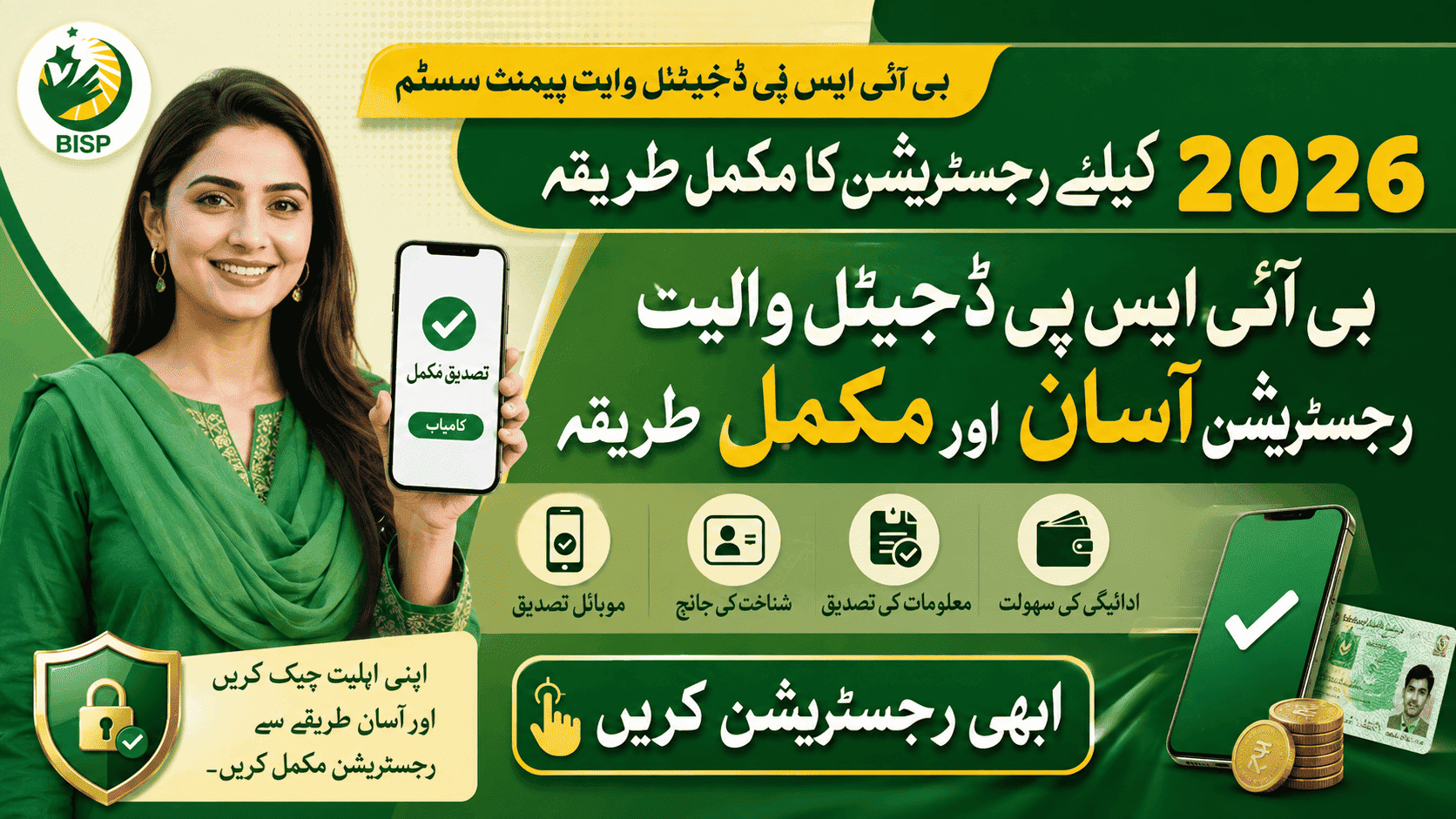
The Benazir Income Support Programme (BISP) is continuing to modernize the way eligible families receive financial assistance. The shift toward digital wallets is intended to make payments more direct, transparent, and convenient while reducing dependence on traditional cash-distribution methods. For beneficiaries, understanding how the BISP digital wallet system works is important for receiving payments safely and knowing what to do when registration, verification, or payment issues arise.
This guide explains the BISP digital wallet payment system in 2026, including eligibility, registration, identity verification, account activation, payment collection, common problems, and important precautions against fraud.
BISP Digital Wallet 2026 – Key Information
| Key Detail | Information |
|---|---|
| Programme | Benazir Income Support Programme (BISP) |
| Payment Method | Digital/electronic payment channels, where officially available |
| Main Verification Document | Valid Computerized National Identity Card (CNIC) |
| Beneficiary Verification | Identity and eligibility checks |
| Registration Route | Official BISP channels and designated registration facilities |
| Payment Information | Should be confirmed through official BISP channels |
| Important Precaution | Never share a PIN, OTP, password, or account credentials with another person. |
| Official Website | bisp.gov.pk |
What Is the BISP Digital Wallet System?
The BISP digital wallet system refers to the use of digital financial accounts or approved electronic payment channels through which eligible beneficiaries can receive government assistance.
The objective is to make payments more secure and traceable while giving beneficiaries greater control over how they access their funds. Depending on the applicable rollout and beneficiary category, the exact procedure for opening, activating, or using a wallet may differ.
Rather than assuming that every beneficiary automatically receives a wallet, applicants should follow the instructions issued through official BISP channels and authorized financial-service providers.
Why Is BISP Moving Toward Digital Payments?
Digital payments can address several challenges associated with traditional cash-distribution arrangements.
Greater Transparency
Electronic transactions create a record of payments, making it easier to track when funds are transferred and reducing opportunities for unauthorized deductions or interference.
Improved Convenience
A properly activated digital account can allow beneficiaries to access funds through approved banking or payment channels instead of relying entirely on a particular cash-distribution location.
Better Financial Access
Digital wallets can introduce beneficiaries to formal financial services and make it easier to retain and manage funds securely.
Reduced Dependence on Cash
Moving away from cash-only distribution can reduce risks associated with carrying large amounts of physical money.
Who Can Use a BISP Digital Wallet?
The digital wallet facility is intended for beneficiaries who qualify for BISP assistance and are included in the relevant payment arrangements.
Eligibility for BISP itself is separate from the technical process of receiving a payment through a wallet. A person may need to pass programme eligibility and identity verification before receiving benefits.
Basic Requirements
Beneficiaries may generally need:
- A valid CNIC.
- Correct personal information in government records.
- Completion of any required BISP verification.
- A mobile number or financial-account information where required by the applicable payment mechanism.
- Compliance with instructions provided by BISP or its authorized partners.
Because payment procedures can change during a phased rollout, beneficiaries should confirm current requirements through official BISP sources rather than relying on unofficial social-media posts or agents.
How to Register for the BISP Digital Wallet
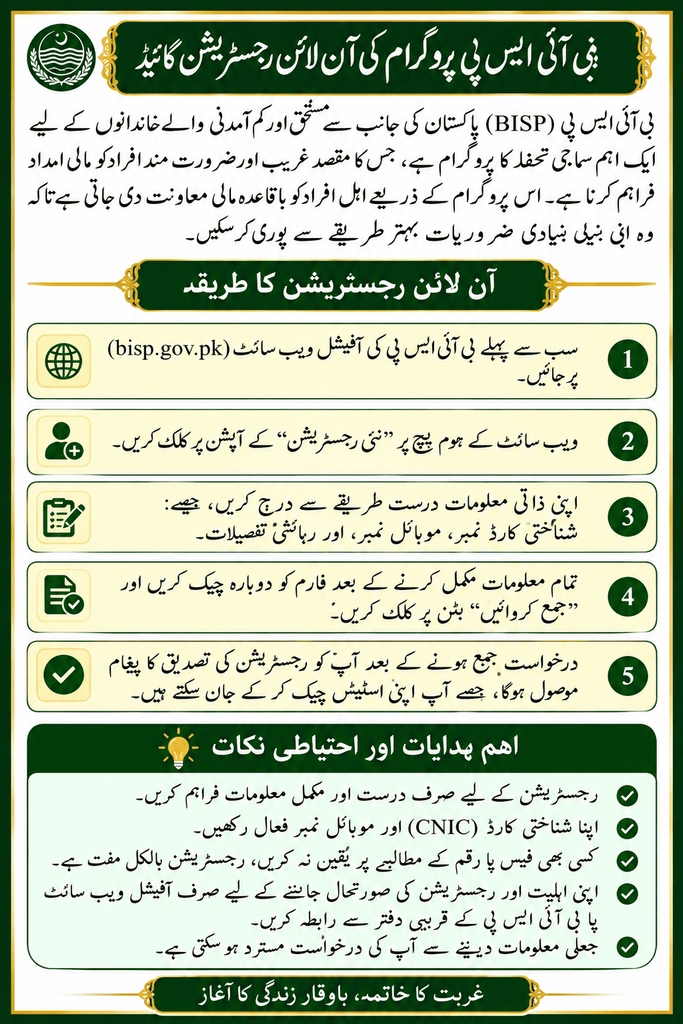
The registration process may vary according to the beneficiary’s status and the payment system being implemented in their area. The safest approach is to use only official registration instructions.
Step 1: Check Your BISP Status
Before taking any action, confirm whether you are already registered with BISP and whether you are eligible for a current payment.
Do not pay anyone simply to “activate” your BISP status.
Step 2: Keep Your CNIC Information Ready
Your CNIC is an essential identity document for BISP-related verification. Make sure your information is accurate and that the CNIC has not expired or been reported as invalid.
Step 3: Complete Required Verification
If BISP or an authorized institution requires biometric or other identity verification, complete the process through an officially designated facility.
Step 4: Follow the Assigned Wallet or Account Instructions
If you are directed to open or activate a digital wallet or account, use only the financial institution, mobile-wallet provider, or payment channel officially specified for your case.
Do not create an account based solely on a message, phone call, or social-media advertisement claiming to represent BISP.
Step 5: Confirm Activation
After completing the required process, confirm that your account or wallet has been activated according to the instructions provided by the authorized provider.
Keep any official confirmation or transaction information for your records.
How to Receive BISP Payments Through a Digital Wallet
Once the required eligibility and account procedures have been completed, the payment process generally involves several stages.
Payment Approval
BISP determines eligible beneficiaries and authorizes the relevant payment.
Electronic Transfer
The approved amount is transferred through the designated payment mechanism.
Beneficiary Notification
Depending on the system in use, beneficiaries may receive information about payment availability through an approved notification channel.
Accessing the Funds
The beneficiary can access the money using the authorized method associated with the account or wallet. This may involve a biometric verification process, an approved agent, ATM, bank channel, or another officially designated facility.
The exact withdrawal method should always be confirmed from current BISP instructions.
How to Check Your BISP Payment Status
Beneficiaries should rely on official BISP methods to check payment information.
Check Through Official BISP Channels
Use the official BISP website, designated government services, or officially announced communication channels to verify your eligibility and payment status.
If a payment message appears suspicious, do not click unfamiliar links or provide personal information.
Check Your Transaction Record
When funds are received through a digital financial account, retain the transaction confirmation or receipt. This can help establish the payment amount and date if a dispute later occurs.
What to Do If Your BISP Payment Is Missing
A delayed or missing payment does not necessarily mean that your eligibility has been cancelled.
Possible causes include:
- Verification still being processed.
- Account or biometric verification problems.
- Incorrect or outdated beneficiary information.
- Payment processing delays.
- Technical problems with the designated payment provider.
- Changes in eligibility or programme status.
Recommended Steps
First, verify your BISP status through an official channel. Then check whether your identity and account information are correct.
If the payment remains unresolved, contact BISP through its official complaint or support mechanism and keep any relevant transaction receipts or verification records.
BISP Digital Wallet and Biometric Verification
Biometric verification can be an important part of secure government-payment systems. It helps establish that the person accessing a payment is the authorized beneficiary.
If biometric verification fails, beneficiaries should not give their CNIC, PIN, or other credentials to an unofficial intermediary.
Instead, ask the authorized payment facility or BISP support channel about the available verification procedure.
Common BISP Digital Wallet Problems
Wallet Not Activated
If your wallet has not been activated after completing the required process, verify that the registration and identity-verification stages were successfully completed.
Biometric Verification Failure
Fingerprints may sometimes fail to authenticate. In such cases, follow the official procedure for resolving biometric verification problems rather than repeatedly giving your information to different agents.
Payment Not Showing
If an approved payment does not appear in the expected account, check the official payment status and contact the relevant support channel.
Incorrect Mobile Number
An incorrect or outdated mobile number can cause communication problems. Update information only through an authorized process.
Suspicious Deduction
If you believe someone has deducted money from your payment without authorization, retain the transaction evidence and report the issue through BISP’s official complaint mechanism.
How to Avoid BISP Digital Wallet Scams
The move toward digital payments also makes basic cybersecurity awareness important.
Never Share Your PIN or OTP
A legitimate representative should not need your confidential PIN, password, or one-time verification code simply to tell you that a payment is available.
Be Careful With Fake Messages
Scammers may send messages claiming that a beneficiary has won additional money, must pay a fee, or needs to click a link to unlock a BISP payment.
Treat unexpected messages with caution.
Do Not Pay for Eligibility
BISP beneficiaries should be particularly cautious of people demanding money in exchange for registration, eligibility, payment release, or wallet activation.
Use Official Sources
Always verify announcements through official BISP or government channels rather than relying on forwarded WhatsApp messages, unofficial Facebook pages, TikTok videos, or unknown websites.
Frequently Asked Questions
Is the BISP digital wallet mandatory for everyone?
Not necessarily. The applicable payment method depends on the official BISP payment arrangements and rollout applicable to the beneficiary. Follow the instructions issued for your specific case.
Can I register a BISP digital wallet through an unofficial agent?
You should use only the registration or account-opening process officially designated by BISP and its authorized financial partners. Avoid anyone who asks for unnecessary fees or confidential credentials.
What documents are needed?
A valid CNIC is a central requirement for identity verification. Additional information may be required depending on the payment arrangement.
How can I know whether a BISP payment has been issued?
Check your status through official BISP channels and use transaction information provided by the authorized payment system.
What should I do if someone asks for my PIN or OTP?
Do not share it. Treat the request as suspicious and contact the relevant official support channel if you believe your account may be at risk.
Can someone else collect my BISP payment?
Payment collection rules depend on the officially approved verification and payment procedure. Beneficiaries should not hand over account credentials or authorize informal intermediaries to collect funds on their behalf.
Important Tips for BISP Beneficiaries in 2026
Keep your CNIC and registered information up to date, monitor official payment notifications, and retain receipts or transaction records whenever you receive funds.
Most importantly, remember that you should never have to surrender your PIN, OTP, password, or other confidential security credentials to receive legitimate BISP assistance.
Final Thoughts
The BISP digital wallet initiative represents an important move toward more modern and transparent welfare payments. For beneficiaries, the key is to understand that digital-wallet access is connected to official eligibility, identity verification, and authorized payment channels.
Procedures and participating payment providers can change as the system develops, so beneficiaries should verify the latest instructions directly through official BISP sources before registering, opening an account, or attempting to withdraw a payment.
By keeping personal information accurate, following official procedures, protecting account credentials, and reporting suspicious activity, beneficiaries can use the digital payment system more safely and confidently in 2026.






Leave a Reply