

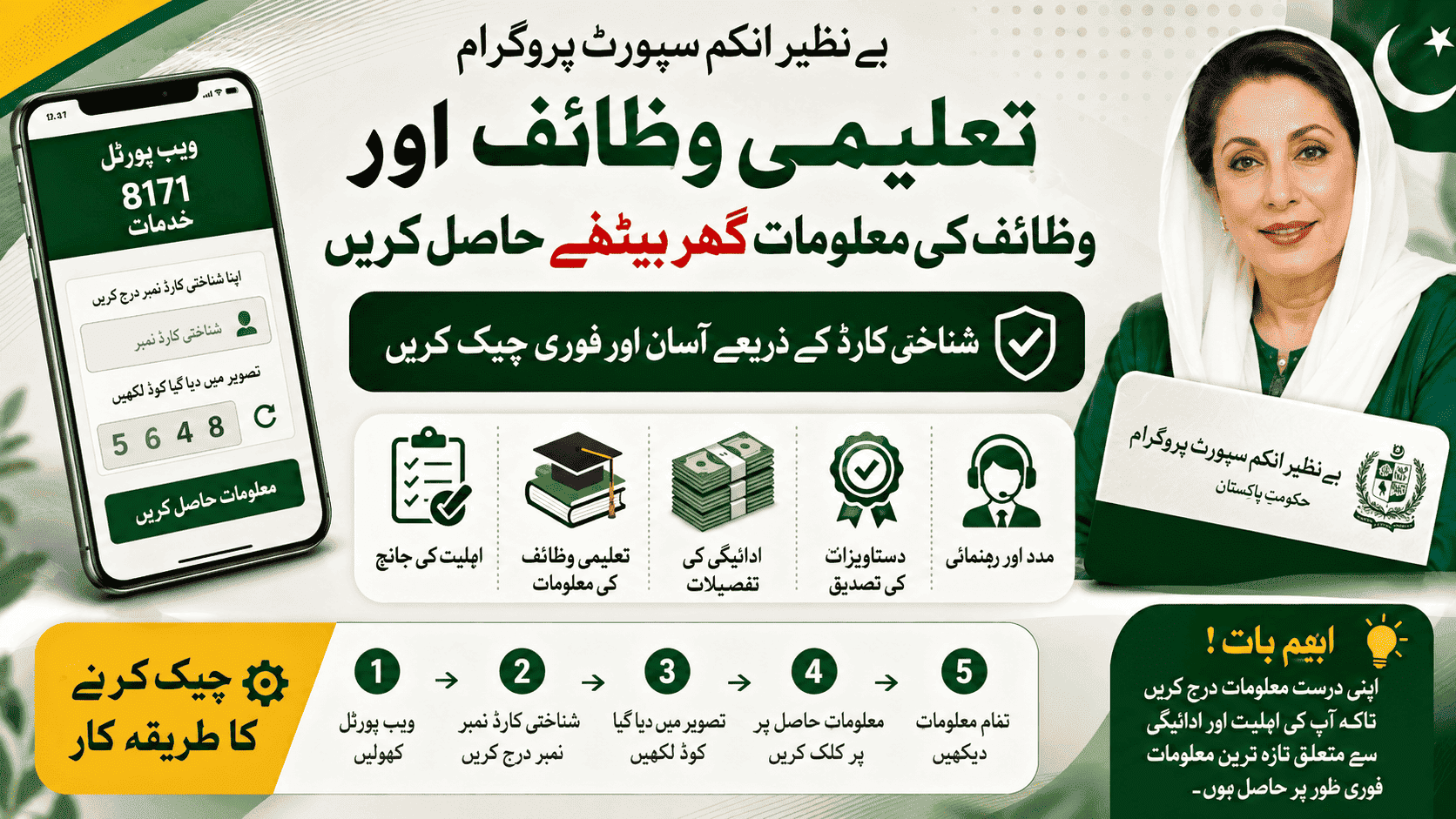
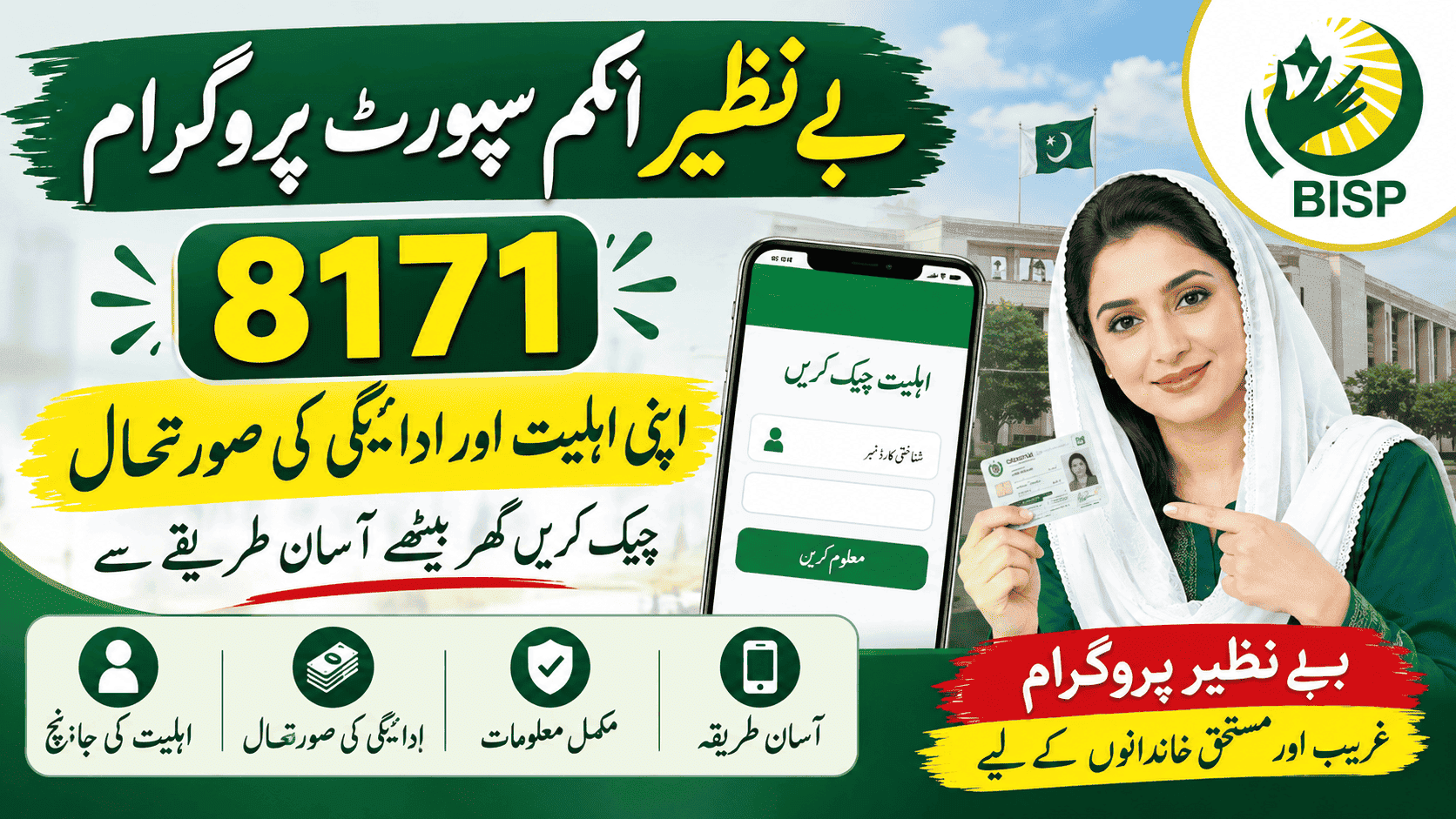
The 8171 Web Portal is an official BISP online service that allows households to check information related to their eligibility using a CNIC number. For people receiving or applying for Benazir Kafaalat, the portal can help confirm household status, while families participating in Benazir Taleemi Wazaif should also understand the separate enrollment and attendance requirements for children’s educational stipends.
This guide explains how the 8171 portal works in 2026, how to check your record by CNIC, what Kafaalat eligibility means, how Taleemi Wazaif works, and what to do if your record is missing or your information needs updating.
8171 Web Portal 2026 – Key Information at a Glance
| Key Information | Details |
|---|---|
| Programme | Benazir Income Support Programme (BISP) |
| Online Service | 8171 Web Portal |
| Main Requirement | Valid CNIC Number |
| Kafaalat Programme | Financial Assistance for Eligible Families |
| Taleemi Wazaif | Educational Financial Support for Eligible Children |
| Status Check | Online Verification Using CNIC |
| Attendance Requirement | Minimum 70% Attendance for Taleemi Wazaif |
| Important Warning | Use Official BISP Sources Only |
What Is the 8171 Web Portal?
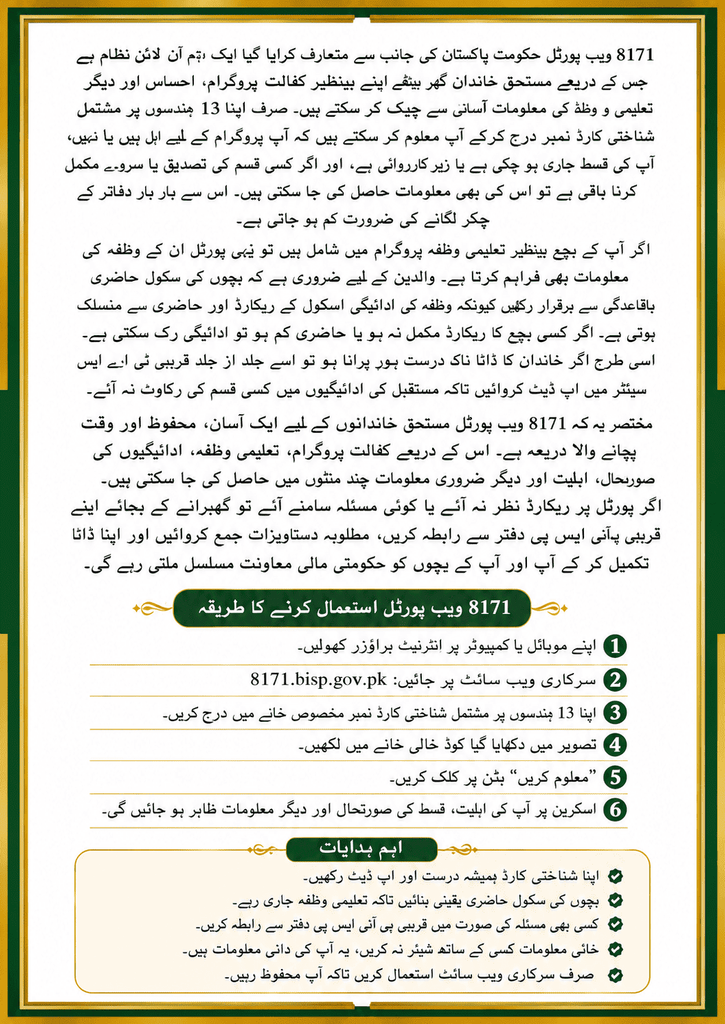
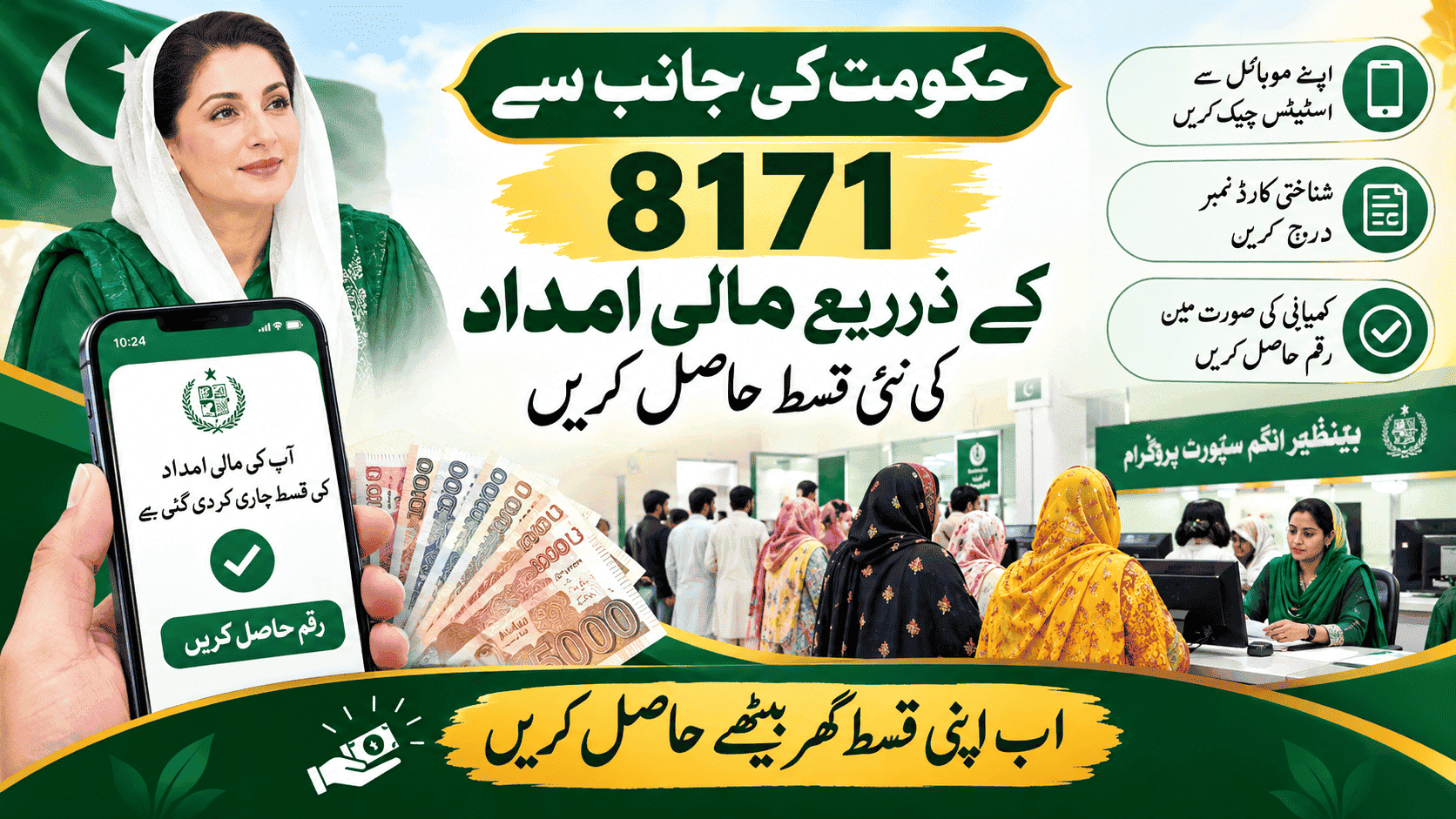
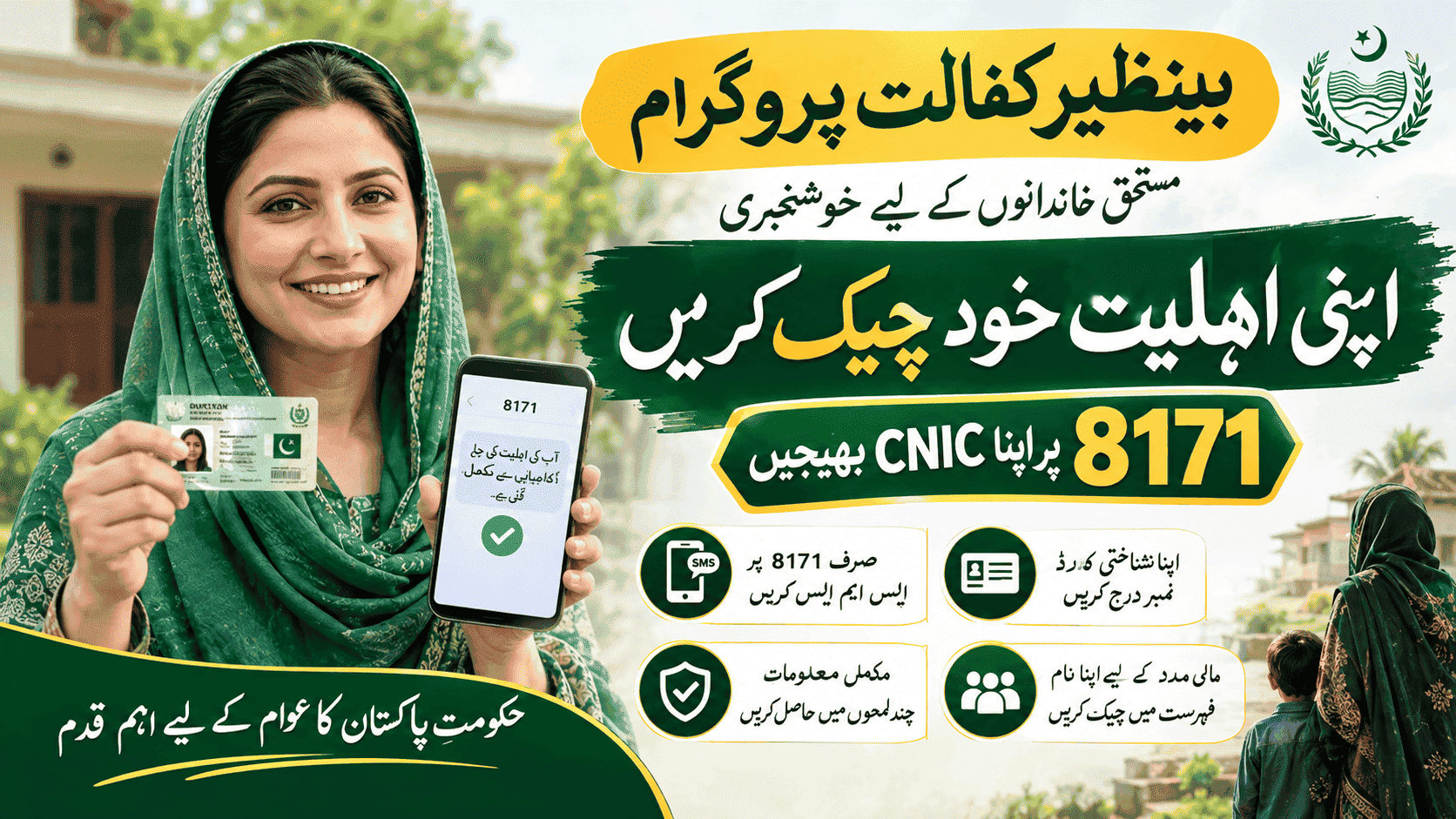
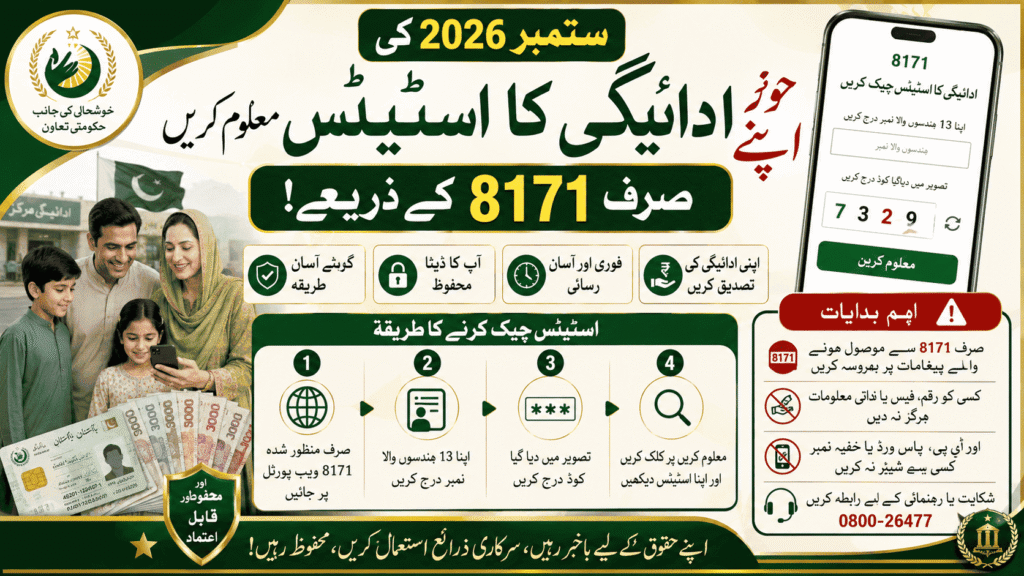
The 8171 Web Portal is an online BISP facility where users can enter their CNIC number and complete the displayed verification step to check household eligibility information. The current official portal specifically asks users to provide their CNIC number and the code shown on the page.
It is important to distinguish the portal’s household eligibility/status inquiry from the complete payment or enrollment process. A portal result should be interpreted according to the message shown on the official system rather than assuming that every person who checks a CNIC is automatically approved for a payment.
Open the Official 8171 Web Portal
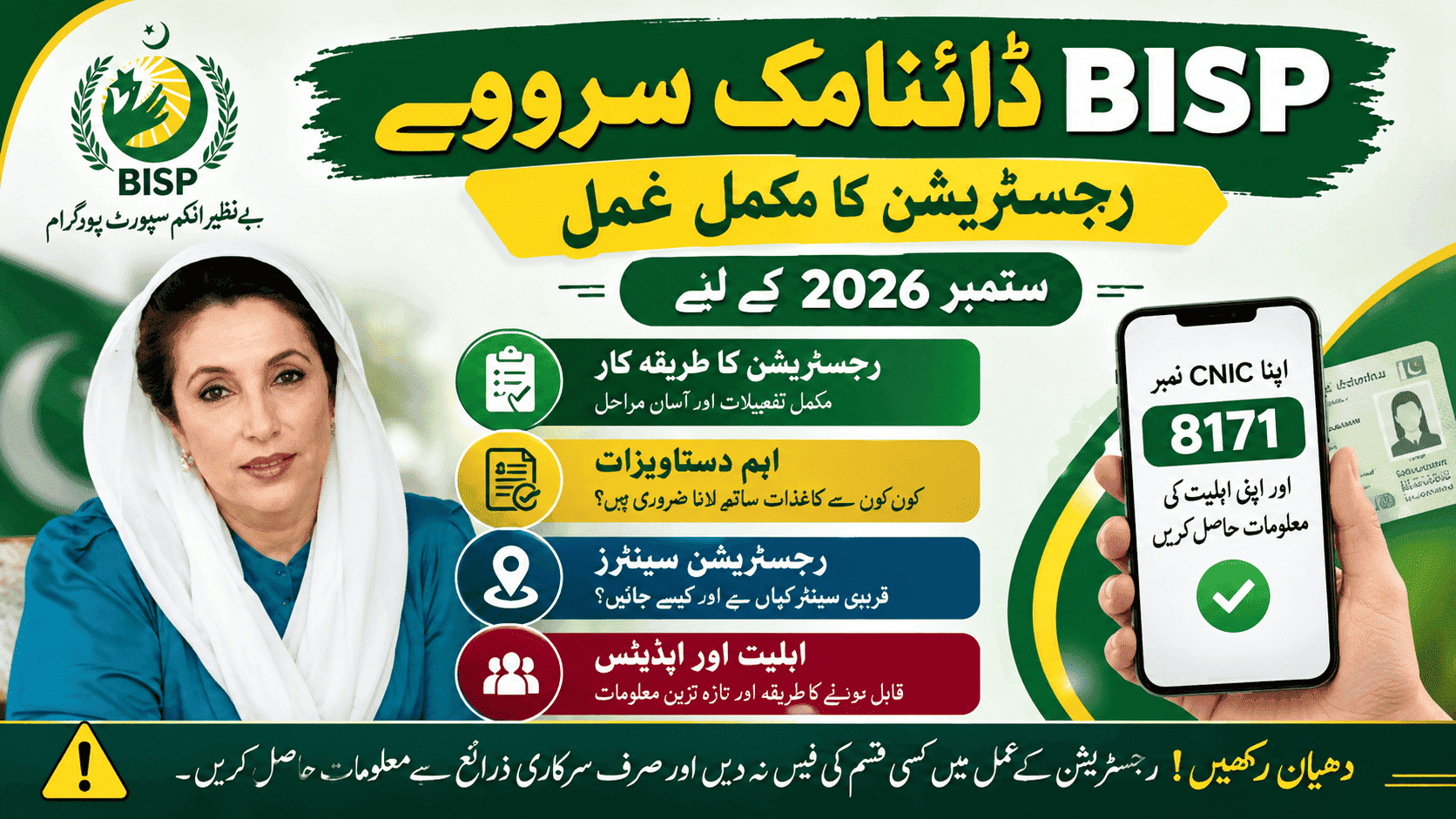
How to Check BISP 8171 Status Online by CNIC
Step 1: Keep Your CNIC Ready
Use the CNIC number associated with your BISP household record. Enter the number carefully because an incorrect digit can prevent the system from finding the relevant record.
Step 2: Open the Official 8171 Portal
Visit the official 8171 Web Portal rather than an unofficial website or social-media link. The official page provides a CNIC field and a verification-code field.
Step 3: Enter Your CNIC Number
Enter the required CNIC information in the designated field. Follow the format requested by the portal.
Step 4: Complete the Verification
Enter the security code displayed on the page and submit the inquiry.
Step 5: Read the Result Carefully
The portal may provide information about your household’s eligibility or registration status. If your record requires additional action, follow the instructions provided by BISP rather than relying on an unofficial source.
What Is Benazir Kafaalat?
Benazir Kafaalat is the core unconditional cash-transfer programme of BISP. BISP says beneficiaries are identified through the National Socio-Economic Registry (NSER) and a Proxy Means Test (PMT), with eligibility determined according to the approved criteria.
The programme is designed to provide financial assistance to eligible households, particularly to support vulnerable families and promote women’s economic empowerment.
How Kafaalat Eligibility Is Determined
According to BISP, household welfare is assessed through the NSER and PMT methodology. The approved PMT cutoff can be changed by the BISP Board depending on programme policy and available fiscal resources.
Therefore, seeing your CNIC in the 8171 system does not by itself mean that you will receive a payment. The final status depends on the official BISP record and applicable eligibility rules.
What Is Benazir Taleemi Wazaif?
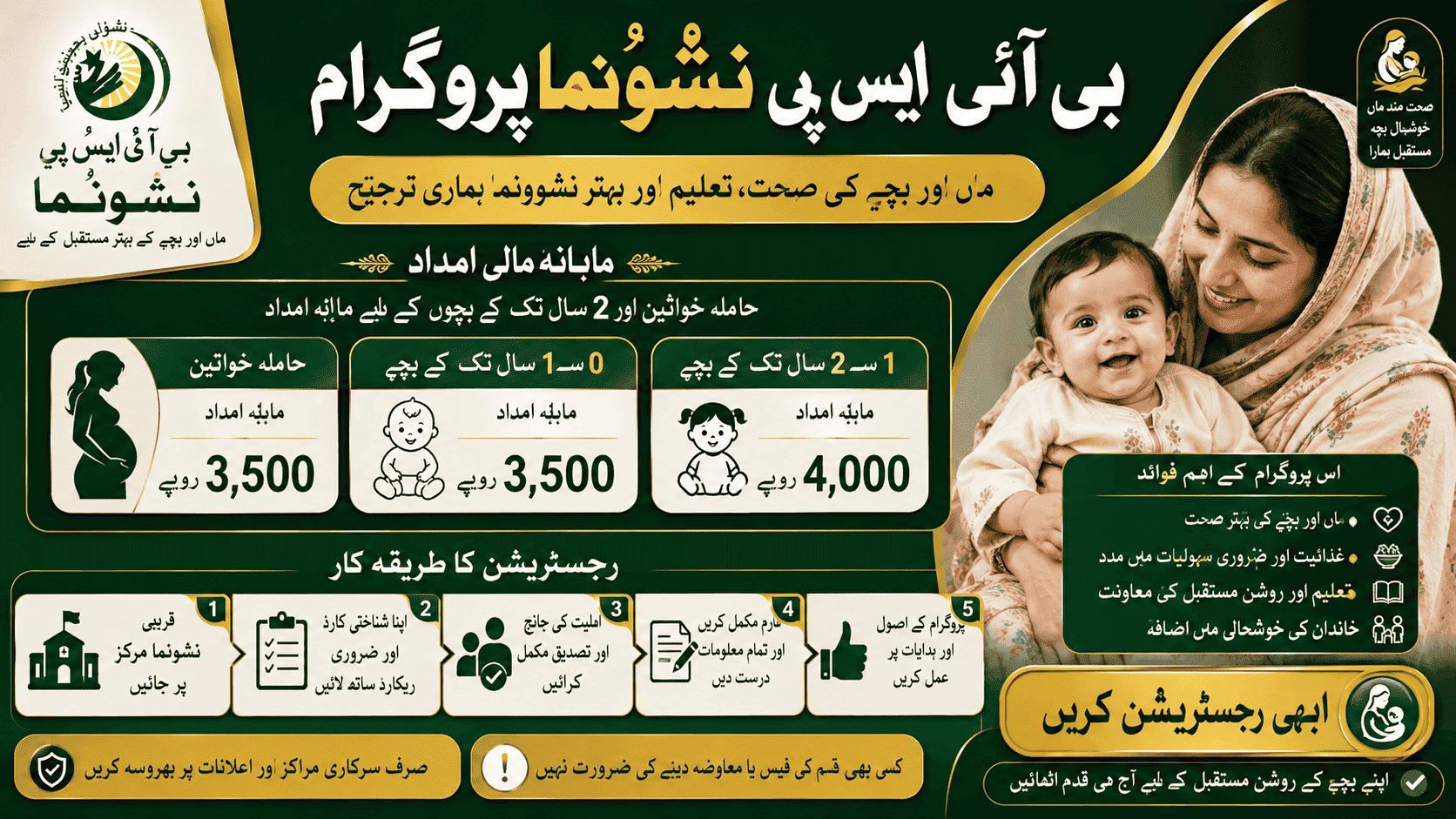
Benazir Taleemi Wazaif is a conditional cash-transfer programme designed to support the education of children belonging to active BISP Kafaalat beneficiary families. It covers education through primary, secondary and higher-secondary levels.
The programme aims to encourage school enrollment, improve attendance and reduce school dropout.
Who Can Receive Taleemi Wazaif?
The child must belong to an active BISP Kafaalat beneficiary family and satisfy the applicable education and age requirements.
BISP’s published programme information lists the following age ranges for enrollment:
- Primary education: 4–12 years
- Secondary education: 8–18 years
- Higher secondary education: 13–22 years
Enrollment also requires relevant documentation, including the beneficiary’s CNIC, the child’s NADRA-issued B-Form/CRC and a school admission slip containing school and class information.
Taleemi Wazaif Attendance Requirement
School attendance is an important condition of the educational stipend.
BISP states that children participating in Taleemi Wazaif are required to maintain at least 70% attendance. Recent BISP communication also reiterates the 70% attendance requirement for educational stipends.
This means parents should make sure that the enrolled child regularly attends school and that the school’s attendance information is correctly maintained.
Does the 8171 Portal Show Taleemi Wazaif Status?
The 8171 portal is primarily used for household eligibility/status information. Taleemi Wazaif has additional requirements involving the child’s enrollment, B-Form/CRC and school attendance.
Therefore, parents should not assume that an eligible Kafaalat household automatically means every child is enrolled in Taleemi Wazaif.
If a child’s educational stipend is missing or the enrollment information appears incorrect, the family should contact the relevant BISP office and have the child’s record checked.
What Documents May Be Needed?
For Taleemi Wazaif enrollment, BISP’s published guidance identifies several important documents:
Beneficiary’s CNIC
The CNIC of the active Kafaalat beneficiary is required for enrollment.
Child’s B-Form or CRC
The child’s B-Form/CRC issued by NADRA is required, and BISP states that verification through the NADRA database is mandatory.
School Admission Information
A school admission slip containing information such as the child’s class and school, verified by the teacher, is also part of the published enrollment requirements.
What If Your CNIC Shows No Record?
If the 8171 portal does not find your record, first make sure that the CNIC was entered correctly.
If the information is correct but no record is available, BISP’s published guidance indicates that a household member may need to visit a Benazir registration desk at a BISP Tehsil Office for a household survey or further assistance.
Do not pay an unofficial agent to create or “activate” a BISP record.
What If Your BISP Information Needs Updating?
Families whose circumstances or household information have changed may need to update their information through the appropriate BISP registration or survey process.
BISP has established Dynamic Registry Centers at tehsil level, and current BISP information says that families receiving assistance for more than three years may be required to undergo a re-survey.
For any update, use an official BISP office or authorized channel rather than giving personal information to an unknown individual.
BISP 8171 Official SMS and Fraud Protection
BISP has repeatedly warned beneficiaries that official programme messages are sent from 8171. BISP specifically advises people not to trust messages received from other numbers or sources.
Be especially careful if someone:
- Asks for money to check your eligibility.
- Claims they can guarantee BISP approval.
- Requests sensitive banking information.
- Sends a suspicious link claiming to be the 8171 portal.
- Asks for an OTP or verification code.
- Offers to “release” a payment after receiving a fee.
BISP’s official helpline is 0800-26477, and beneficiaries can also approach the nearest BISP Tehsil Office for complaints or assistance.
Important Difference Between 8171, Kafaalat and Taleemi Wazaif
These terms are related but they are not identical:
8171 Web Portal: An official online facility for checking household eligibility/status information using a CNIC.
Benazir Kafaalat: BISP’s core unconditional cash-transfer programme for eligible households.
Benazir Taleemi Wazaif: An education-focused conditional cash-transfer programme for eligible children of active Kafaalat beneficiaries, subject to enrollment and attendance requirements.
Understanding this difference can prevent confusion when checking a BISP record.
Frequently Asked Questions
Can I check my BISP status online with my CNIC?
Yes. The official 8171 Web Portal provides a CNIC-based household eligibility/status inquiry.
Is the 8171 Web Portal an official BISP website?
Yes. The official portal is hosted at 8171.bisp.gov.pk.
Can every BISP beneficiary automatically receive Taleemi Wazaif?
No. Taleemi Wazaif has separate child enrollment and education requirements. The child must belong to an active Kafaalat beneficiary family and meet the applicable conditions.
What attendance is required for Taleemi Wazaif?
BISP states that a minimum of 70% school attendance is required for the educational stipend.
What should I do if my CNIC has no record?
Check the CNIC again. If the result remains unavailable, contact a BISP Tehsil Office or use the official registration/survey process for further assistance.
What is the BISP helpline number?
BISP lists 0800-26477 as its toll-free helpline for complaints and queries.
Final Words
The 8171 Web Portal 2026 provides a convenient way to check BISP household eligibility/status information online using a CNIC. For families connected with Benazir Kafaalat, the portal can help them check their official record, while Benazir Taleemi Wazaif requires additional child enrollment and attendance conditions.
For accurate information, always use the official BISP website, the official 8171 portal, BISP Tehsil Offices, or the BISP helpline. Avoid unofficial agents and never pay anyone simply to check your eligibility or status.





Leave a Reply