

Introduction
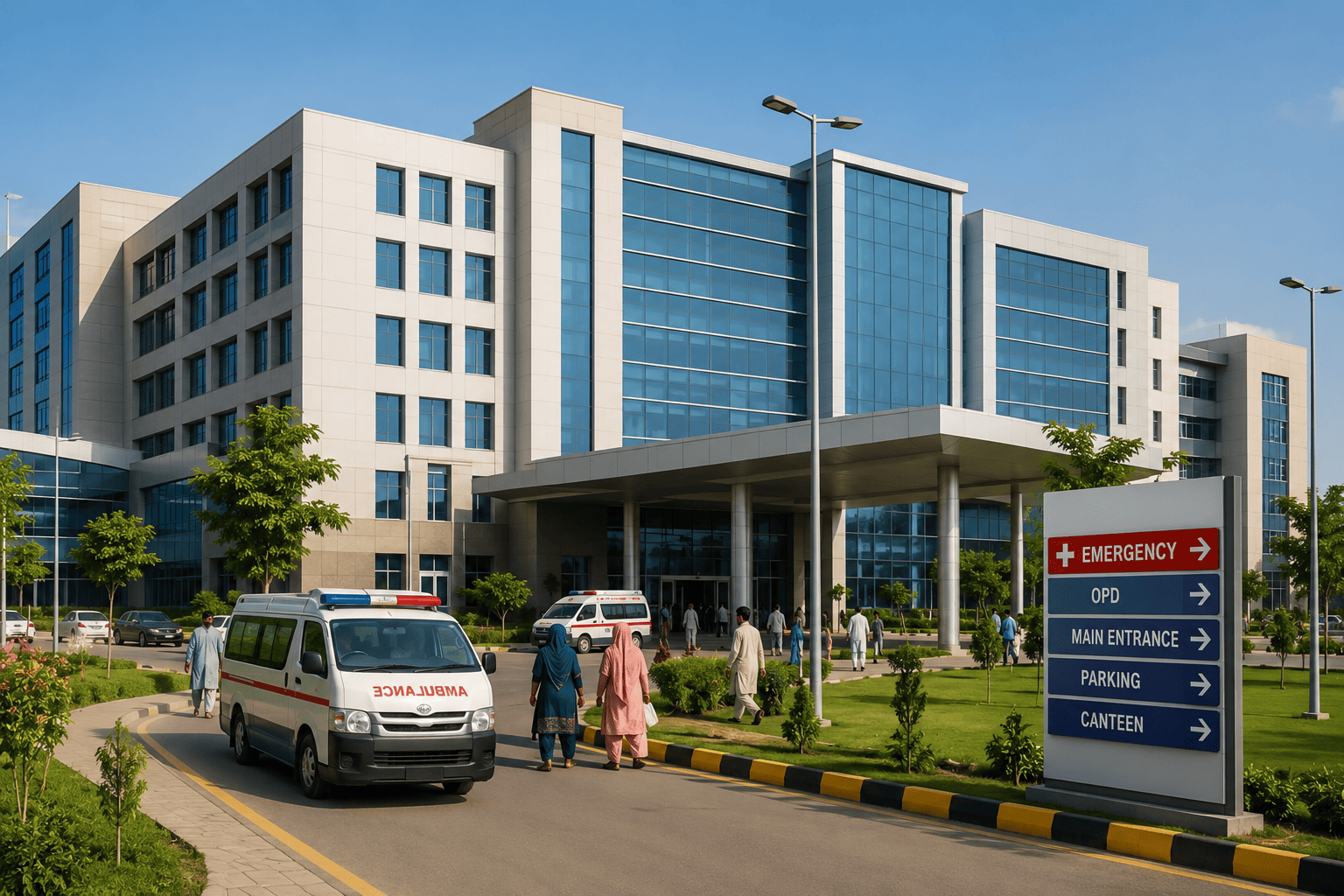
The Government of Punjab is expanding its healthcare infrastructure through a broad portfolio of major hospital, medical education, specialist-care and tertiary healthcare projects. These developments are intended to increase treatment capacity, improve access to specialised medical services and reduce the pressure on existing major hospitals.
The 2026 healthcare development programme includes several high-profile projects covering cancer treatment, cardiology, children’s healthcare, medical education and large-scale hospital infrastructure. Official Punjab planning documents also list new tertiary-care initiatives, critical-care expansion and the procurement of advanced medical equipment.
This article explains the major Punjab Mega Hospital Projects 2026, their objectives, expected healthcare benefits, important locations and what these developments could mean for patients and medical students across the province.
What Are the Punjab Mega Hospital Projects 2026?
The term Mega Hospital Projects refers to a group of large-scale healthcare infrastructure developments being planned, constructed, upgraded or expanded by the Punjab Government.
Punjab’s healthcare development is also part of a wider effort to improve access, participation, and support for communities across the province. For readers interested in related inclusion initiatives, our detailed guide to the Punjab Inclusivity Program 2026 explains its objectives, Special Talent Hunt, eligibility information, competition categories, prizes, deadline, and application guidance.
Rather than being a single financial assistance scheme, this is a broader healthcare development effort. It involves hospitals, specialist institutes, medical colleges, teaching hospitals, cancer centres and improvements to existing tertiary-care facilities.
Punjab’s health authorities have stated that a network of new hospitals is being developed across the province, with major projects being monitored for timely completion. Projects reviewed during 2026 include the Nawaz Sharif Institute of Cancer Treatment and Research in Lahore, Nawaz Sharif Medical District Lahore, the University of Child Health Sciences, Maryam Nawaz Institute of Cardiology Gujranwala, Maryam Nawaz Sharif Medical College and Teaching Hospital Mianwali and Children’s Hospital Bahawalpur.
Why Is Punjab Expanding Hospital Infrastructure?
Punjab has a very large population and patients from smaller cities frequently travel to major urban centres for specialised treatment. Large-scale healthcare projects can help distribute specialist services more evenly across the province.
The expansion programme focuses on several major healthcare challenges, including:
- Limited access to specialised treatment outside major cities.
- Pressure on existing tertiary-care hospitals.
- Growing demand for cancer treatment.
- Need for additional cardiac-care facilities.
- Greater demand for specialised children’s healthcare.
- Need for modern medical education and teaching hospitals.
- Expansion of emergency and critical-care capacity.
- Modernisation of outdated hospital infrastructure.
Major Hospital Projects in Punjab
The current healthcare development pipeline includes several major projects in different parts of Punjab. Some are new institutions, while others involve expansion, reconstruction or modernisation of existing healthcare facilities.
| Major Project | Location | Main Focus |
|---|---|---|
| Maryam Nawaz Institute of Cardiology | Gujranwala | Specialised cardiac treatment |
| Children’s Hospital | Bahawalpur | Specialised children’s healthcare |
| Maryam Nawaz Sharif Medical College & Teaching Hospital | Mianwali | Medical education and tertiary healthcare |
| Kulsoom Nawaz Cancer Hospital | Dera Ghazi Khan | Cancer diagnosis and treatment |
| Nawaz Sharif Medical District | Lahore | Large-scale integrated healthcare development |
| Nawaz Sharif Institute of Cancer Treatment & Research | Lahore | Advanced cancer treatment and research |
| University of Child Health Sciences | Lahore | Children’s medical education and healthcare |
These projects are part of a wider healthcare-development pipeline rather than one standalone hospital scheme. Official and reported planning information identifies multiple major facilities in Lahore, Gujranwala, Mianwali, Bahawalpur and Dera Ghazi Khan.
Maryam Nawaz Institute of Cardiology Gujranwala
One of the prominent proposed healthcare projects is the Maryam Nawaz Institute of Cardiology in Gujranwala.
The project is designed to strengthen specialised cardiac-care capacity in the region. Reported 2026 planning figures put the estimated project cost at approximately Rs. 14 billion.
The Punjab Cabinet had earlier approved the establishment of the institute, while healthcare officials have subsequently reviewed it as part of the province’s wider hospital development programme.
Once developed and operational, such a facility could provide patients in Gujranwala and surrounding areas with greater access to specialised cardiac services without requiring every patient to travel to Lahore or other major centres.
New Children’s Hospital in Bahawalpur
Children’s healthcare is another major focus of the development programme. A new Children’s Hospital in Bahawalpur has been included among the major healthcare projects proposed for Punjab.
Reported planning documents put the estimated project cost at approximately Rs. 23.37 billion. The facility is intended to increase specialised healthcare capacity for children in Bahawalpur and the wider southern Punjab region.
A dedicated children’s hospital can bring paediatric specialists, diagnostic services, emergency treatment and specialised procedures into a single healthcare environment. This can be particularly important for families who currently have to travel long distances for advanced paediatric care.
Maryam Nawaz Medical College and Teaching Hospital Mianwali
Mianwali is also included in the province’s healthcare and medical-education expansion. The government has announced plans involving a Maryam Nawaz Medical College and Teaching Hospital.
The project combines two important objectives: improving healthcare services for the local population and creating infrastructure for the education and clinical training of future medical professionals.
In February 2026, the Punjab Chief Minister announced a medical college and teaching hospital for Mianwali. The government had also announced the development of other educational institutions in the district.
More recently, rehabilitation and improvement work associated with the establishment of the medical college and teaching hospital has been advertised through the Punjab procurement system, indicating that implementation-related activity is continuing.
Kulsoom Nawaz Cancer Hospital in Dera Ghazi Khan
Another major project is the proposed Kulsoom Nawaz Cancer Hospital in Dera Ghazi Khan. The project is intended to expand access to specialised cancer services in South Punjab.
The estimated project cost has been reported at approximately Rs. 15.21 billion, with the facility expected to strengthen cancer diagnosis and treatment services for patients who currently may need to travel to larger cities.
In June 2026, the Punjab Health Department reviewed progress on the cancer hospital along with other healthcare initiatives in southern Punjab and directed officials to maintain timely and transparent execution.
Nawaz Sharif Medical District Lahore
Lahore remains a major centre of Punjab’s healthcare infrastructure strategy. One of the largest proposed projects is the Nawaz Sharif Medical District.
Budget reporting has placed the estimated project cost at around Rs. 169 billion, making it one of the most significant proposed healthcare developments in the province.
The project is intended to create a large-scale healthcare environment capable of bringing multiple medical and specialist functions together.
Nawaz Sharif Institute of Cancer Treatment and Research
Cancer treatment is receiving particular attention in Punjab’s healthcare development plans. The Nawaz Sharif Institute of Cancer Treatment and Research in Lahore is among the major projects being developed in the province.
The facility is intended to strengthen specialised cancer treatment and research capacity and form part of Punjab’s broader efforts to expand oncology services.
The Punjab health authorities have repeatedly included the project in reviews of major ongoing healthcare developments.
Expansion of Critical Care Services
Mega hospital development is not limited to constructing new buildings. Punjab’s official health planning documents also include projects designed to expand the capacity of existing tertiary-care hospitals.
One listed initiative concerns the expansion of critical services through the addition of 150 ICU beds, ventilators and essential accessories in tertiary-care hospitals across Punjab.
Increasing intensive-care capacity is particularly important because critically ill patients require specialised equipment, trained staff and continuous monitoring.
Modern Medical Equipment Under the Healthcare Development Plan
Hospital infrastructure is only one component of a modern healthcare system. Punjab’s development plans also include investment in advanced diagnostic and treatment equipment.
Official planning material includes proposals for MRI machines, lithotripters, gamma cameras and cath labs at tertiary-care facilities in different Punjab cities.
Such equipment can improve diagnostic accuracy and expand treatment options for patients who otherwise might have to travel to another city.
Expected Benefits of the Mega Hospital Projects
1. Better Access to Specialist Treatment
New specialist hospitals can bring advanced treatment closer to communities that have historically depended on major metropolitan hospitals.
2. Reduced Travel for Patients
Cancer, cardiac and paediatric patients may benefit from receiving more specialised treatment within their own region.
3. Increased Hospital Capacity
New facilities can increase the number of beds, treatment units, operating facilities and diagnostic services available to patients.
4. Improved Emergency Care
Expanded tertiary-care and critical-care facilities can strengthen the ability of the healthcare system to manage serious and emergency cases.
5. Medical Education Opportunities
Teaching hospitals connected with medical colleges can provide clinical training environments for future doctors and healthcare professionals.
6. Employment Opportunities
Once new healthcare institutions become operational, they can create demand for doctors, nurses, technicians, pharmacists, administrative employees and support personnel.
7. Modern Diagnostic Services
New medical equipment and upgraded facilities can improve access to advanced diagnostics and specialised procedures.
Who Can Benefit From These Hospital Projects?
Unlike schemes that provide direct cash payments, the Mega Hospital Projects are infrastructure developments intended to benefit the general population.
Potential beneficiaries include:
- Patients requiring specialised medical treatment.
- Cancer patients needing oncology services.
- Heart patients requiring cardiac care.
- Children requiring specialised paediatric treatment.
- Emergency and critical-care patients.
- Residents of underserved districts.
- Medical students and healthcare trainees.
- Doctors, nurses and other healthcare professionals.
Is This a Cash Assistance Scheme?
No. The Punjab Mega Hospital Projects are not a direct cash assistance programme for individual citizens.
The term refers to public-sector healthcare infrastructure projects involving the construction, establishment, expansion or modernisation of hospitals and medical institutions.
Therefore, citizens do not normally submit an application to receive money under this programme. Instead, the public benefit is delivered through healthcare services when the relevant facilities become operational.
How Will Citizens Access These Facilities?
Once a hospital or healthcare facility becomes operational, patients will normally access services through the institution’s own registration, outpatient, emergency or referral procedures.
The exact services, eligibility requirements, charges, referral arrangements and appointment systems can vary from one hospital to another. Citizens should therefore check the official hospital or Punjab Health Department information when a particular facility begins providing services.
Important Development Areas
The wider Punjab healthcare development programme covers several areas:
- Cancer Care: New and expanded oncology facilities.
- Cardiology: Development of specialised cardiac institutes and cath-lab capacity.
- Paediatrics: Expansion of specialised children’s healthcare.
- Medical Education: New medical colleges and teaching hospitals.
- Critical Care: Additional ICU beds and essential equipment.
- Diagnostics: MRI, CT-related and other advanced diagnostic infrastructure.
- Hospital Modernisation: Renovation and rehabilitation of existing facilities.
Punjab Hospital Projects and Healthcare Modernisation
The province’s healthcare strategy also includes the modernisation of existing hospitals. Official planning documents list programmes for strategic transformation of selected tertiary-care facilities, rehabilitation of hospitals and hospital information and queue-management systems.
This approach is important because healthcare improvement depends not only on constructing new hospitals but also on ensuring that existing facilities have appropriate equipment, digital systems, emergency capacity and functional infrastructure.
What Should Patients Expect?
Patients should understand that a hospital project may take considerable time to move from planning and construction to full clinical operation. A project announcement does not necessarily mean that all services are immediately available.
Before visiting a newly announced facility, patients should confirm whether construction has been completed, whether clinical departments have opened and whether appointments or referrals are currently being accepted.
Frequently Asked Questions
1. What are the Punjab Mega Hospital Projects?
They are a group of major healthcare infrastructure projects involving new hospitals, specialist institutes, medical colleges, teaching hospitals and upgrades to existing tertiary-care facilities across Punjab.
2. Is Mega Hospital Projects a cash scheme?
No. It is a healthcare infrastructure development programme rather than a direct cash assistance scheme.
3. Which major hospitals are being developed?
Major projects include the Maryam Nawaz Institute of Cardiology in Gujranwala, Children’s Hospital Bahawalpur, Maryam Nawaz Sharif Medical College and Teaching Hospital Mianwali, the Kulsoom Nawaz Cancer Hospital in Dera Ghazi Khan and major healthcare developments in Lahore.
4. What is the purpose of the Gujranwala cardiology institute?
The project is intended to increase specialised cardiac-care capacity in Gujranwala and surrounding areas.
5. What is planned for Mianwali?
The Punjab Government has announced a medical college and teaching hospital project in Mianwali, combining medical education with healthcare services.
6. What is the purpose of the Kulsoom Nawaz Cancer Hospital?
The proposed hospital in Dera Ghazi Khan is intended to provide advanced cancer-care services closer to residents of South Punjab.
7. Can ordinary citizens apply for these projects?
There is no general citizen application form for the construction projects themselves. They are government infrastructure developments. Patients will access healthcare services through the relevant hospitals once those facilities become operational.
8. Will these projects provide free treatment?
The availability and cost of treatment will depend on the specific hospital, service and applicable Punjab Government healthcare policies. Citizens should verify the latest official information before assuming that a particular service is free.
9. Where can I find official Punjab Government updates?
Citizens should use the official Punjab Government portal and the relevant Punjab healthcare department websites for verified announcements and service information.
10. Are the projects already operational?
Not all projects are at the same stage. Some are under construction, some are in development or planning stages, and others involve upgrades to existing facilities. Citizens should verify the operational status of a specific project before visiting.
Conclusion
The Punjab Mega Hospital Projects 2026 represent a broad effort to strengthen public healthcare infrastructure across the province. Instead of focusing on one hospital or one type of treatment, the development pipeline covers cardiac care, cancer treatment, children’s healthcare, medical education, critical care, diagnostics and modernisation of existing hospitals.
Projects in Gujranwala, Bahawalpur, Mianwali, Dera Ghazi Khan and Lahore could significantly expand access to specialised healthcare if completed and fully operationalised as planned. The wider programme also includes investments in equipment and tertiary-care capacity.
For patients, the most important benefit is the possibility of receiving specialised treatment closer to home. For medical students and healthcare professionals, new teaching institutions can create additional training opportunities. For Punjab’s healthcare system as a whole, these projects are intended to increase capacity and modernise medical infrastructure.
Because individual projects can change in scope, funding, timelines and operational status, readers should check official Punjab Government announcements for the latest information before making decisions based on a particular project.
Check Official Punjab Government Updates
The Mega Hospital Projects are government infrastructure initiatives rather than an individual cash-application scheme. Visit the official Punjab Government portal to check verified healthcare announcements, departments and public services.
Apply NowNote: There is no general application form for the hospital-construction programme. The button above directs readers to the official Punjab Government portal for verified information and available public services.


Leave a Reply