
Expanding Social Welfare Programs and Ration Card Benefits for Low-Income Families
Updated: October 27, 2026 · By Sardar Article
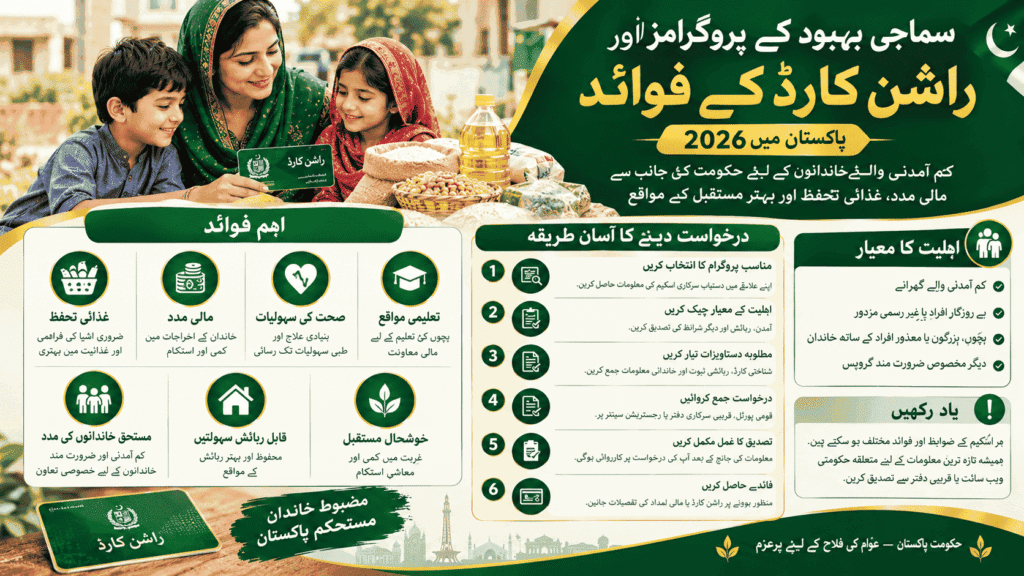
Social welfare programs and ration card benefits are important tools for helping low-income families manage essential expenses, improve food security, and cope with financial hardship. As households face challenges related to rising living costs, limited employment opportunities, and irregular incomes, access to reliable government assistance can make a meaningful difference in their daily lives.
Expanding social welfare programs can help more eligible households access food assistance, financial support, healthcare services, and educational opportunities. Ration card initiatives, in particular, can reduce the cost of essential food items or provide designated subsidies, depending on the rules of each program.
For these initiatives to succeed, governments must establish transparent eligibility criteria, simplify registration, improve benefit distribution, and ensure that deserving families understand how to apply. In Pakistan, federal and provincial social protection initiatives serve different purposes, making it important for applicants to verify the requirements of each scheme through official sources.
This article explains the importance of social welfare expansion, the potential benefits of ration cards, eligibility considerations, application procedures, implementation challenges, and opportunities to improve support for vulnerable households.
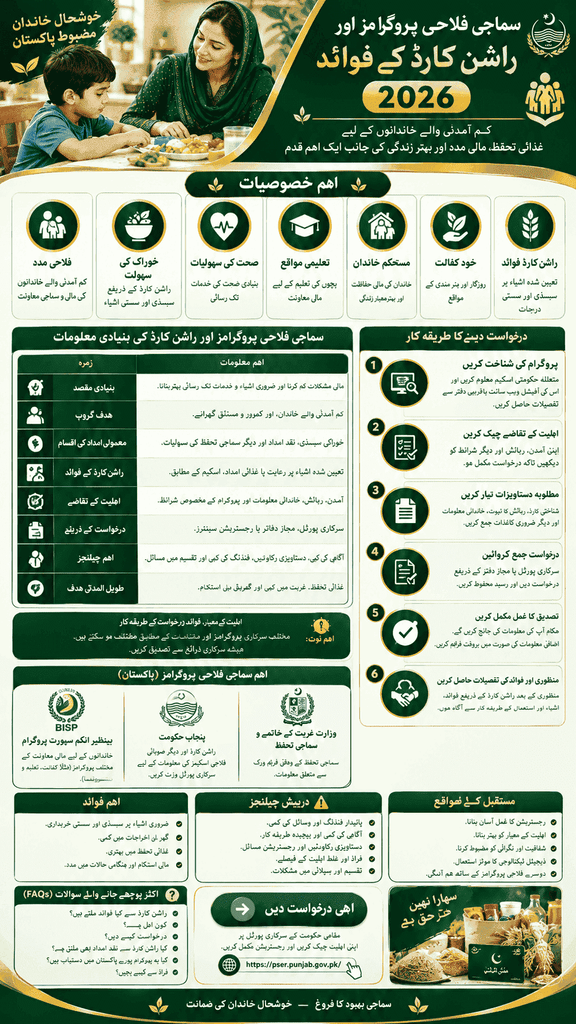
Key Information About Social Welfare and Ration Card Benefits
Social Welfare & Ration Card Benefits
Key information about government assistance, eligibility, food security, and support for low-income families.
| Category | Key Information |
|---|---|
| Main Objective | Reduce financial hardship and improve access to essential goods and services. |
| Target Population | Eligible low-income families and vulnerable households requiring financial or social assistance. |
| Common Forms of Assistance | Food subsidies, cash assistance, and other social protection services. |
| Ration Card Benefits | Access to designated subsidized goods or food assistance, depending on the scheme. |
| Eligibility Requirements | May include household income, residency, family information, and program-specific conditions. |
| Application Channels | Official government portals, authorized offices, or designated registration centers. |
| Main Challenges | Limited awareness, documentation barriers, funding constraints, and distribution problems. |
| Long-Term Goal | Improve food security, reduce poverty, and strengthen household financial stability. |
Understanding Social Welfare Programs
Social welfare programs are government initiatives designed to support people experiencing financial difficulties or facing barriers to essential services. They may provide direct financial assistance, subsidized food, educational support, healthcare services, or other forms of protection.
These programs are particularly important for families whose incomes are insufficient to cover basic living expenses.
Why Social Welfare Programs Matter
Low-income households often spend a large proportion of their income on food, housing, electricity, transportation, and healthcare. When prices increase or employment becomes unstable, families may struggle to meet these expenses.
Social welfare assistance can help reduce this pressure by providing eligible households with financial resources or access to essential goods and services.
For example, a family receiving food assistance may be able to allocate more of its limited income toward school expenses, utility bills, or necessary medical treatment.
Although assistance alone cannot eliminate poverty, well-designed programs can help households manage immediate needs while supporting broader efforts to improve economic security.
The Role of Social Protection in Poverty Reduction
Poverty involves more than limited income. It can also restrict access to nutritious food, education, healthcare, housing, and employment opportunities.
Social protection programs can address some of these challenges by helping households meet basic needs and access additional services.
Cash assistance may help families manage essential expenses, while educational support can reduce financial barriers to school attendance. Healthcare and nutrition initiatives can address other vulnerabilities.
Combining these services can create a more comprehensive approach to poverty reduction than relying on a single benefit.
What Is Ration Card Expansion?
Ration card expansion refers to efforts to increase access to ration card assistance, improve program coverage, or make existing benefits more effective.
Depending on the scheme, expansion may involve registering additional eligible households, reaching underserved communities, improving food distribution, or introducing more accessible ways to verify eligibility and receive benefits.
Traditional ration card systems may provide access to specified food items through designated distribution channels. Other schemes use cards or digital systems to administer subsidies or financial assistance.
The exact purpose of a ration card therefore depends on the program under which it is issued.
Why Expanding Ration Card Coverage Is Important
When eligible families cannot access existing assistance because of complicated registration procedures, limited awareness, or inadequate distribution facilities, the intended benefits may not reach those who need them.
Expanding coverage can help address these gaps by making application procedures more accessible and improving outreach to vulnerable communities.
Potential benefits include:
- Greater access to essential food items for eligible households.
- Lower spending on designated necessities.
- Improved food security for vulnerable families.
- Better support during periods of unemployment or financial hardship.
- More inclusive assistance for underserved communities.
However, expanding coverage requires adequate funding, reliable supply chains, accurate eligibility assessments, and effective monitoring to ensure that benefits are delivered consistently.
Major Benefits of Ration Cards for Low-Income Families
Ration card programs can provide practical support to eligible households, although their actual benefits depend on the relevant scheme.
1. More Affordable Essential Food Items
One of the main purposes of many ration card programs is to improve access to essential food products.
Depending on the program, assistance may cover items such as flour, rice, cooking oil, sugar, pulses, or other household necessities.
By reducing the cost of designated products, these programs can help families manage their food budgets more effectively.
The specific items, subsidy levels, purchase limits, and distribution arrangements should always be confirmed through official program information.
2. Reduced Household Expenses
Food is a recurring expense, so even modest assistance can help families manage their monthly budgets.
When eligible households spend less on subsidized products, they may have more money available for transportation, education, healthcare, and utility bills.
The amount of relief depends on household size, local prices, the value of the benefit, and how frequently assistance can be used.
3. Improved Food Security
Food security means having reliable access to sufficient, safe, and nutritious food.
Families with limited incomes may struggle to maintain adequate food supplies when prices rise or earnings decline. Ration card assistance can help reduce this pressure by improving access to selected food items.
However, food assistance should ideally be complemented by nutrition education and access to a balanced diet. Staple foods alone may not meet every nutritional requirement, particularly for children, older adults, and other vulnerable individuals.
4. Greater Financial Stability
Unexpected expenses, job losses, illness, and economic disruptions can place considerable pressure on household finances.
Social welfare assistance can help eligible families manage some of these challenges and reduce the need to sacrifice essential spending.
Consistent and accessible support is particularly important for households that have limited savings or irregular earnings.
Who May Qualify for Social Welfare and Ration Card Benefits?
Eligibility depends on the specific government program. There is no single set of requirements that applies to every social welfare or ration card scheme.
Applicants should review the official rules of the program they intend to join.
Low-Income Households
Many assistance programs prioritize households with limited incomes or significant financial needs.
Authorities may consider household income, family size, assets, or other socioeconomic information when assessing eligibility.
The relevant income limits and assessment methods vary by scheme and may change over time.
Unemployed Individuals and Informal Workers
People experiencing unemployment, irregular employment, or seasonal income fluctuations may face difficulties covering essential expenses.
Some programs consider these circumstances when assessing household vulnerability. However, unemployment or informal employment does not automatically guarantee eligibility.
Families With Dependents
Households supporting several children, older adults, or individuals with disabilities may have higher living expenses.
Depending on the program, household composition and dependency may be considered when determining eligibility or calculating assistance.
Other Vulnerable Groups
Some social protection initiatives may prioritize widows, persons with disabilities, older adults, or families affected by emergencies.
Applicants should check whether their circumstances fall within the official eligibility criteria of the relevant program.
How to Apply for Social Welfare and Ration Card Assistance
Although application procedures differ between programs, the following steps can help applicants prepare.
Step 1: Identify the Relevant Program
Begin by identifying the government assistance scheme available in your area.
Check the responsible department’s official website, authorized registration center, or published announcements to confirm that the program is operating and accepting applications.
Do not assume that every ration card or social welfare initiative is available nationwide.
Step 2: Check the Eligibility Requirements
Review the program’s eligibility criteria before applying.
Check any requirements concerning income, residency, identity documents, household registration, and existing benefits.
Confirming these details in advance can help prevent incomplete applications and unnecessary visits to registration offices.
Step 3: Prepare the Required Documents
Depending on the scheme, applicants may need:
- A valid national identity card or another accepted identification document.
- Proof of residence, if required.
- Family or household registration information.
- Income details or other information used to assess eligibility.
- Existing program registration details, where applicable.
These are examples rather than universal requirements. Applicants should follow the official document checklist for their specific program.
Step 4: Submit the Application Through an Authorized Channel
Applications may be submitted through an official online portal, designated government office, or authorized registration center.
Complete the application accurately and check the information before submitting it.
If a receipt or reference number is provided, keep it for future inquiries.
Step 5: Complete Verification
The relevant authority may verify an applicant’s identity, household details, residency, or financial circumstances.
Respond to legitimate requests for additional information and use official channels to check application progress.
Submitting an application does not automatically mean that benefits have been approved.
Step 6: Confirm Approval and Benefit Details
If the application is approved, confirm how and when assistance will be provided.
For ration card programs, check the participating retailers or distribution centers, eligible products, purchase restrictions, and any renewal requirements.
If the benefit is delayed or incorrect, contact the relevant authority through its official complaint or support process.
How Digital Technology Can Improve Ration Card Programs
Digital systems can help governments administer social welfare programs more efficiently when they are secure, reliable, and accessible.
Online Registration and Application Tracking
Online registration can reduce the need for repeated visits to government offices.
Where available, digital services may allow applicants to submit information, update records, and check application progress more conveniently.
However, alternative registration methods remain important for people who lack internet access, smartphones, or digital literacy.
Electronic Benefit Distribution
Depending on the program, electronic systems may support digital vouchers, authorized payment channels, or electronic records of subsidized purchases.
These systems can make transactions easier to track and help authorities investigate missing benefits or irregularities.
Strong security measures and accessible support services are necessary to protect beneficiaries.
Accurate Records and Fair Verification
Reliable records can help identify eligible households and reduce administrative errors.
Nevertheless, digital databases may contain outdated or incorrect information. Programs should provide clear procedures for correcting records and appealing decisions.
Technology should make social assistance more accessible rather than exclude deserving families because of technical problems or documentation difficulties.
Challenges in Expanding Social Welfare and Ration Card Benefits
Expanding a program can improve access, but its effectiveness depends on how well it is funded, administered, and monitored.
Limited Funding and Resources
A larger number of beneficiaries requires sufficient financial resources, administrative capacity, and reliable supplies of essential goods.
If funding does not keep pace with demand, benefits may become less effective or distribution may become inconsistent.
Governments should assess costs carefully and review benefit levels as economic conditions change.
Lack of Public Awareness
Some eligible households may not know that assistance is available or understand how to apply.
Clear public information, community outreach, and accessible guidance can help people identify relevant programs and avoid misleading claims.
Information should be available in appropriate local languages and through channels that reach underserved communities.
Documentation and Registration Barriers
People with incomplete records, outdated identification, disabilities, or limited access to registration facilities may face difficulties applying.
Simplified procedures, accessible service centers, and appropriate assistance can reduce these barriers while maintaining necessary verification safeguards.
Fraud and Incorrect Eligibility Decisions
Poorly managed systems can experience duplicate records, unauthorized deductions, incorrect approvals, or unfair exclusions.
Governments should establish transparent eligibility rules, regular audits, secure information systems, and accessible complaint mechanisms.
Applicants should also be able to request corrections when inaccurate information affects their eligibility.
Distribution and Supply Problems
An approved ration card provides limited practical value if designated products are unavailable or distribution centers are difficult to reach.
Authorities should monitor stock availability, retailer participation, distribution schedules, and beneficiary complaints to identify problems and improve service delivery.
Strategies for Improving Social Welfare Programs
Effective expansion requires more than increasing the number of registered households. Governments must ensure that eligible families can access assistance fairly and reliably.
Simplify Registration Procedures
Application forms and eligibility instructions should be clear and easy to understand.
Where possible, authorities should remove unnecessary administrative steps and provide accessible methods for updating household information.
Clear procedures can reduce delays and make programs easier to use.
Improve Eligibility Assessments
Eligibility criteria should reflect the program’s objectives and the financial circumstances of its intended beneficiaries.
Authorities should review assessment methods periodically and establish procedures for correcting inaccurate information or appealing decisions.
These measures can help balance responsible use of public funds with fair access for vulnerable households.
Strengthen Transparency and Accountability
Regular monitoring can help authorities assess whether benefits are reaching eligible families.
Useful indicators include application processing times, distribution reliability, complaint resolution, and beneficiary feedback.
Independent reviews and transparent reporting can further strengthen public confidence.
Coordinate Different Forms of Assistance
Food assistance may be more effective when combined with appropriate financial, healthcare, educational, and employment support.
For example, a family receiving food subsidies may also need help accessing medical services or keeping children in school.
Coordinating relevant programs can address multiple household needs without assuming that one benefit can resolve every aspect of poverty.
Use Community Feedback
Feedback from beneficiaries and local service providers can reveal practical problems that administrative records may not capture.
Consultations can help authorities understand why people struggle to register, why benefits are difficult to use, and which changes would improve access.
This feedback should complement formal monitoring and independent evaluation.
Social Welfare and Ration Card Programs in Pakistan
In Pakistan, federal and provincial governments administer different forms of social protection and assistance. These initiatives have distinct objectives, eligibility criteria, and administrative arrangements.
People seeking support should identify the program relevant to their circumstances and confirm current information through official sources.
Benazir Income Support Programme (BISP)
The Benazir Income Support Programme is a federal social protection initiative that provides assistance to eligible households through designated programs.
Its services include initiatives such as Benazir Kafaalat, Benazir Taleemi Wazaif, and Benazir Nashonuma. Each program has its own purpose and eligibility requirements.
People seeking assistance should consult official BISP information or an authorized registration center for current guidance.
Registration for one program does not automatically establish eligibility for every other welfare scheme or ration card initiative.
Punjab Ration Card and Social Protection Initiatives
Residents of Punjab can consult the official Punjab Government portal for information about provincial assistance initiatives, including published information about the CM Punjab Ration Card Program.
Program details, eligibility conditions, application arrangements, and benefit availability should be verified through current official announcements before applying.
Applicants should not rely solely on social media posts or third-party websites when checking registration dates or benefit amounts.
How to Avoid Welfare Registration Scams
People seeking government assistance should take precautions when sharing personal information or submitting applications.
- Use official government websites and authorized registration centers.
- Verify eligibility requirements and application deadlines through current announcements.
- Never share passwords or verification codes with unverified individuals.
- Be cautious of anyone promising guaranteed approval in exchange for payment.
- Keep application receipts and official correspondence.
- Report suspected fraud or unauthorized deductions to the responsible authority.
Applicants should also verify any phone number or text-message service through the official department before using it.
Frequently Asked Questions (FAQs)
What is the purpose of expanding social welfare programs?
The purpose is to help more eligible households access essential assistance, reduce financial hardship, improve food security, and strengthen support for vulnerable individuals.
What benefits can a ration card provide?
Depending on the scheme, a ration card may provide access to subsidized food products or other designated assistance. The available benefits, restrictions, and distribution methods vary by program.
Who is eligible for ration card benefits?
Eligibility depends on the relevant scheme. Authorities may consider income, residency, household information, and other specified conditions. Applicants should consult the official eligibility criteria before applying.
How can low-income families apply for government assistance?
Families should identify the relevant program, review its requirements, prepare the necessary documents, and submit an application through an authorized office or official online service where available.
Does a ration card guarantee cash assistance?
No. Ration card benefits and cash assistance may be provided through separate programs. Eligibility for one does not automatically guarantee eligibility for another.
Are ration card benefits available throughout Pakistan?
Availability depends on the specific program and its implementation. Federal and provincial initiatives may operate under different rules, so applicants should confirm which schemes are available in their area.
Can ration card programs help reduce poverty?
Ration card programs can help reduce food expenses and improve access to essential goods. Long-term poverty reduction generally requires broader measures, including education, healthcare, employment opportunities, and sustainable income growth.
How can applicants check whether a welfare scheme is genuine?
Applicants should verify the program through the responsible government department’s official website or authorized registration center. They should be cautious of unofficial agents, misleading messages, and requests for unauthorized fees.
Conclusion
Expanding social welfare programs and ration card benefits can help low-income families manage essential expenses, improve food security, and cope with financial difficulties. By improving access to assistance, simplifying registration, and strengthening distribution systems, governments can make social protection more inclusive and effective.
Successful expansion requires adequate funding, transparent eligibility rules, reliable records, accessible complaint procedures, and regular program evaluation. Digital services can improve administration, but alternative access channels are also necessary for people who face technological or documentation barriers.
In Pakistan, applicants should verify current program details through the relevant federal or provincial government authority before registering or relying on specific benefit claims.
Ultimately, effective social welfare and ration card initiatives should do more than provide short-term relief. When combined with education, healthcare, and employment opportunities, they can help build greater household stability and support a more inclusive approach to economic development.
Official References
- Benazir Income Support Programme (BISP) — official information about federal social protection programs.
- Government of Punjab — provincial government information and announcements.
- Ministry of Poverty Alleviation and Social Safety — information about Pakistan’s federal social protection framework.