

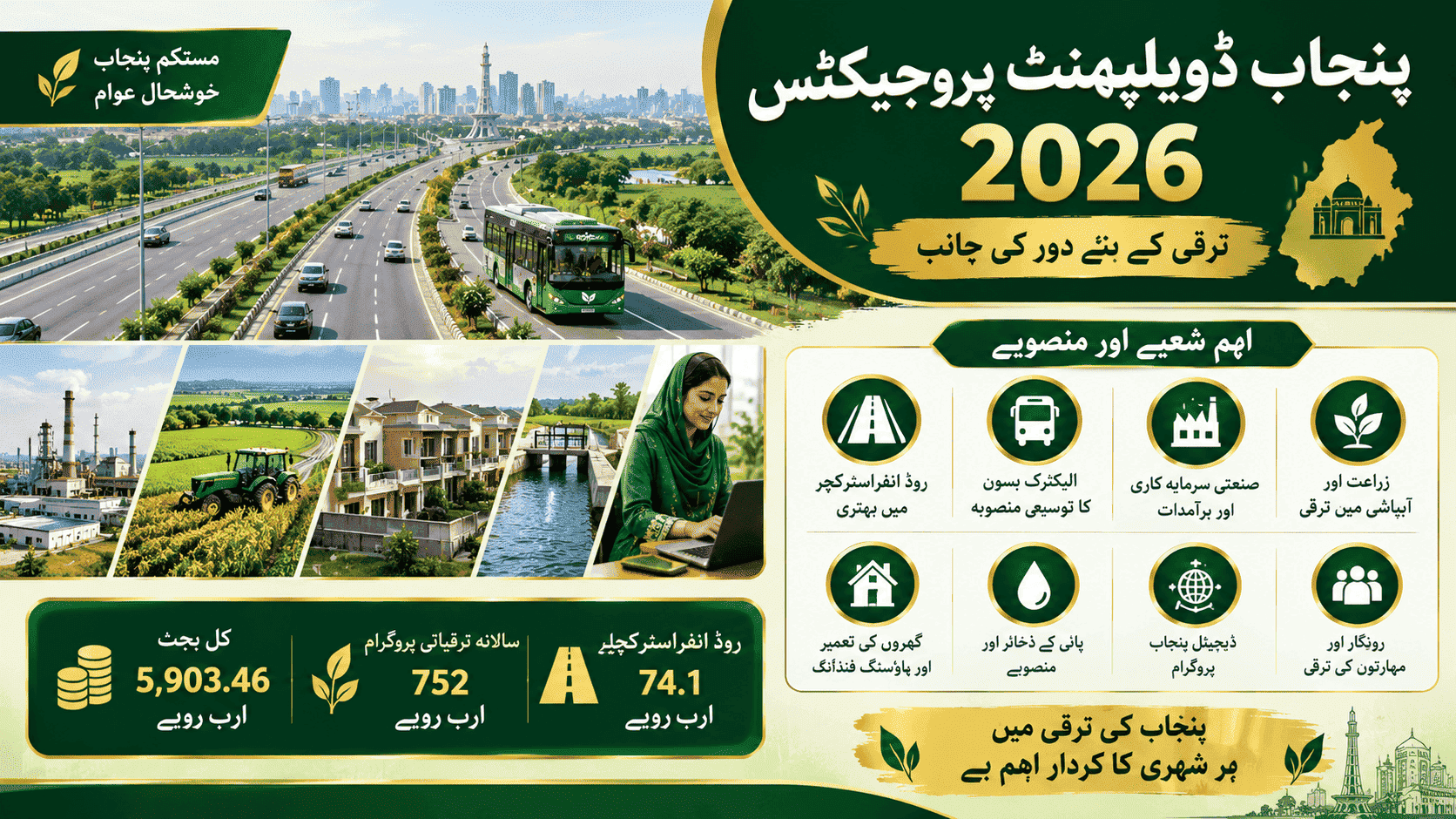
Punjab’s development agenda in 2026 focuses on improving infrastructure, strengthening industrial activity, modernizing agriculture, expanding digital connectivity, and improving essential public services. The provincial government’s 2026–27 budget includes development spending across roads, agriculture, transport, housing, industry, water management, and other sectors.
Recent announcements have also highlighted an industrial and export promotion programme, agricultural support measures, housing finance, and plans to expand electric bus services. These initiatives could create opportunities for businesses, farmers, commuters, and job seekers as implementation progresses.
However, an announced project, a budget allocation, and a completed development are not the same thing. Understanding each project’s current status is essential for residents who want reliable information about government plans, expected benefits, and possible opportunities.
This guide explains the major Punjab development priorities for 2026, the relevant budget figures, the sectors involved, and how readers can verify official updates.
Punjab Development Projects 2026: Key Information
Key Infrastructure & Economic Development Information
| Information | Details |
|---|---|
| Main Topic | Punjab infrastructure and economic development |
| Development Period | Financial Year 2026–27 |
| Provincial Budget | Rs 5,903.46 billion |
| Annual Development Programme | Rs 752 billion |
| Road Infrastructure Allocation | Rs 74.1 billion for Communication and Works |
| Digital Development | Connected Punjab programme |
| Industrial Priorities | Manufacturing, exports, industrial infrastructure and value addition |
| Agricultural Priorities | Mechanization, irrigation, water storage and agricultural processing |
| Housing Initiative | Apni Chhat, Apna Ghar |
| Transport Priorities | Road improvements and electric bus expansion |
| Official Information | Punjab Government Official Website |
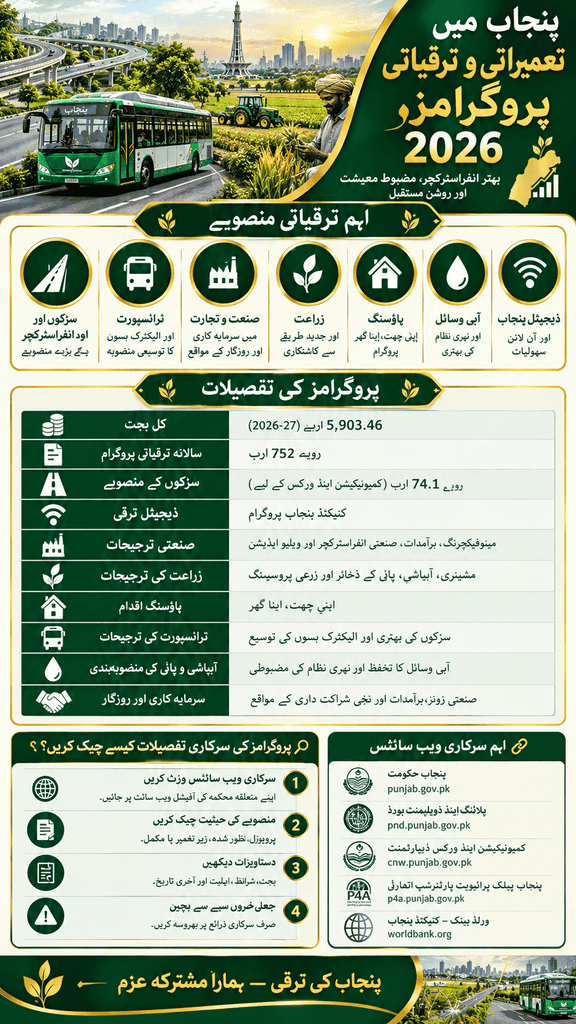
The Punjab government presented a Rs5,903.46 billion budget for 2026–27, including Rs752 billion for the Annual Development Programme. These are announced budget figures rather than evidence that the entire amount has already been spent. <Cite refs={[“turn940666search3″,”turn940666search4”]}/>
1. Punjab’s Industrial and Economic Development Programme
Industrial development is an important part of Punjab’s economic strategy because manufacturing, exports, and agricultural processing can support businesses and employment.
On October 20, 2026, reports on a provincial cabinet meeting described an industrial and export promotion programme envisaging approximately Rs1.995 trillion in investment and more than 162,000 jobs. The reported financing plan includes Rs1.089 trillion from the provincial government and Rs906 billion from the private sector. <Cite refs={[“turn940666search0″,”turn940666search5”]}/>
The programme’s stated priorities include:
- Industrial infrastructure and cluster development.
- Export competitiveness and value addition.
- Modernization of agricultural and livestock production.
- Support for existing industries.
- E-commerce and digital business.
- Garment manufacturing and industrial facilities.
- Testing and certification services for selected manufacturing sectors.
- Public-private partnerships and skills development.
The programme has been reported under differing acronym spellings, so the descriptive name is used here to avoid presenting an unverified spelling as definitive.
How Industrial Development Could Benefit Punjab
Industrial investment can create opportunities throughout the supply chain. Manufacturers may require workers, machinery, packaging, transportation, maintenance, and professional services. Export-oriented businesses may also need better product testing, certification, and access to international markets.
Agricultural processing can connect farmers with businesses that process fruit, vegetables, milk, meat, and other products. Better facilities and storage can help businesses improve product quality and reduce avoidable losses.
However, the announced investment and employment figures represent programme ambitions. They should not be presented as funds already spent or jobs already created.
Businesses should check official announcements for project approvals, financing conditions, procurement opportunities, and any published application procedures.
2. Road Infrastructure and Connectivity Projects
Road development is essential for connecting urban centres, rural communities, commercial markets, and public facilities. Better roads can improve travel conditions and help businesses move goods more efficiently.
For the 2026–27 financial year, the Punjab government allocated Rs74.1 billion to the Communication and Works sector. According to Associated Press of Pakistan reporting, this allocation covers 1,260 development projects, comprising 1,218 ongoing schemes and 42 new initiatives. <Cite refs={[“turn940666search1”]}/>
The reported priorities include the Chief Minister’s Priority Roads Improvement Programme and the Integrated Road Infrastructure Improvement Programme.
Expected Benefits of Road Improvements
Road rehabilitation and upgrading can support:
- Safer and more reliable journeys.
- Better access to schools, hospitals, and government offices.
- Improved connections between agricultural areas and markets.
- Easier movement of commercial vehicles.
- Greater access to employment and business opportunities.
- Improved connectivity for smaller towns and rural communities.
The benefits will depend on the condition of the existing roads, the location of each project, construction quality, and the maintenance arrangements established after completion.
How to Check Road Project Progress
Residents can visit the Punjab Communication and Works Department to look for project information and departmental announcements.
Before sharing a completion date, confirm whether the road is proposed, approved, under construction, or operational. A budget allocation alone does not establish that work has started or that a project has been completed.
3. Electric Buses and Public Transportation
Public transport is an important part of urban development. Reliable bus services can make it easier for residents to reach workplaces, educational institutions, hospitals, and commercial areas.
Punjab’s development announcements have included electric bus expansion and arrangements for 1,500 electric buses at the tehsil level. The October 20 cabinet reporting described approval of operational arrangements for this expansion. This should not be interpreted as confirmation that all 1,500 buses are already operating. <Cite refs={[“turn940666search5”]}/>
Potential Benefits of Electric Bus Services
Electric bus services may offer several benefits:
- More transport options for commuters.
- Better access to jobs and educational institutions.
- Reduced dependence on private vehicles for some journeys.
- Lower tailpipe emissions compared with conventional diesel buses.
- Potential improvements in transport accessibility.
Actual benefits depend on routes, service frequency, passenger fares, charging infrastructure, maintenance, and the number of buses placed into service.
Passengers should follow official transport department announcements for confirmed routes, service launch dates, fares, and operational arrangements.
4. Agriculture, Irrigation and Farmer Support
Agriculture remains an important part of Punjab’s economy. Investment in farm machinery, irrigation, water storage, agricultural processing, and livestock production can help improve productivity and support rural businesses.
The 2026–27 provincial budget reporting identifies agriculture as a major part of the production sector, with Rs60 billion allocated to agriculture. This is a sectoral budget allocation and should not be confused with a single farmer subsidy scheme. <Cite refs={[“turn940666search4”]}/>
Agricultural Transformation in Thal
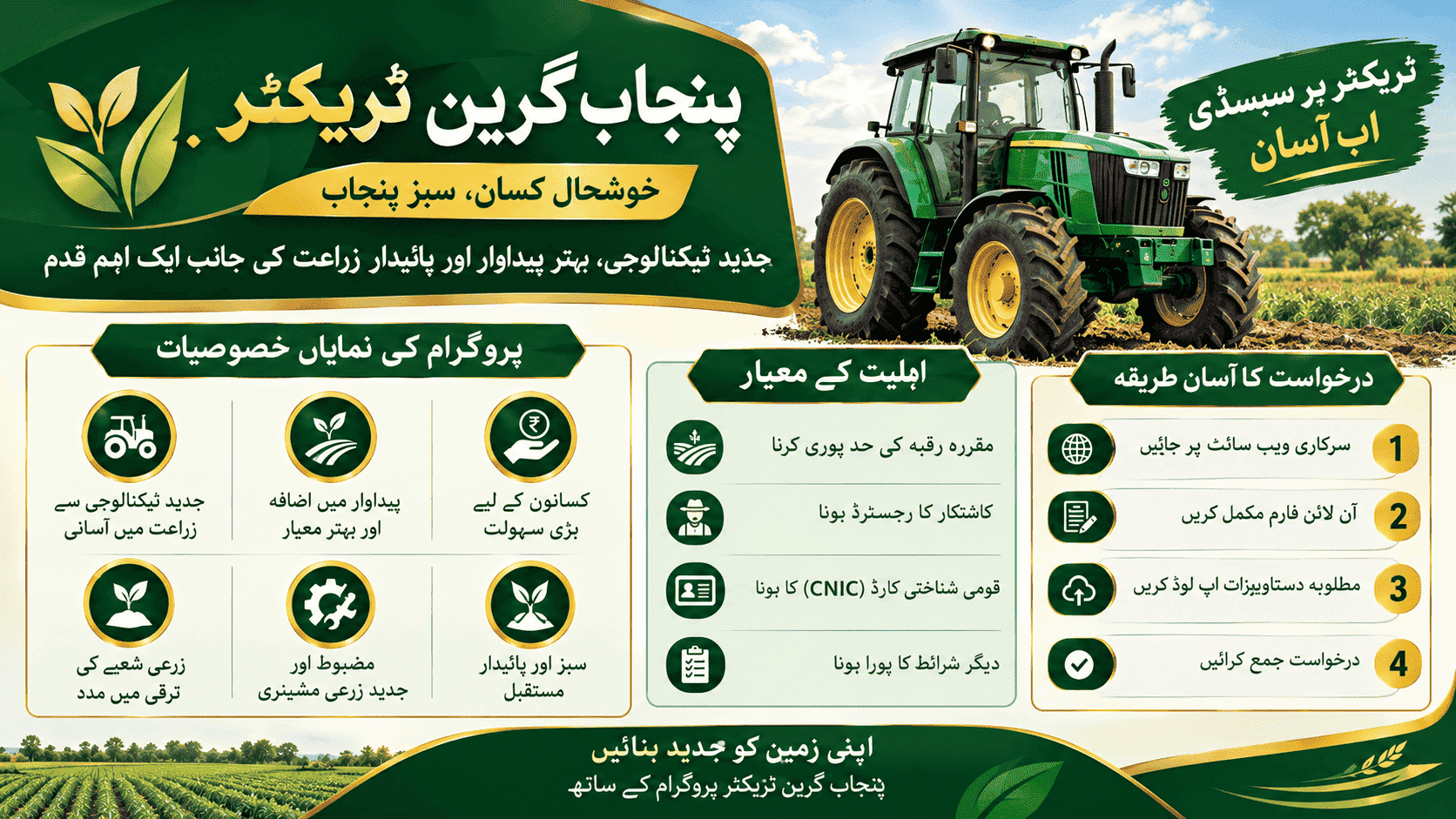
A provincial cabinet announcement reported Rs7.6 billion in support for an agricultural transformation project covering 10,000 acres in Mankera and Layyah. The reported facilities include drip irrigation, solar power, water storage, and related agricultural infrastructure. The cabinet also approved subsidies for 10,000 tractors under Phase IV of the low-powered Green Tractor Programme. <Cite refs={[“turn940666search0″,”turn940666search5”]}/>
These measures are intended to support more efficient farming and improve agricultural productivity. Their actual impact will depend on implementation, the distribution of approved facilities, farmer participation, and the suitability of the technology for local conditions.
Green Tractor Programme
Tractor subsidies can help eligible farmers access machinery that might otherwise be difficult to afford. However, different phases of the Green Tractor Programme have different rules and eligibility requirements.
Farmers should verify:
- Which phase is currently open.
- Whether their district is included.
- The required landholding or other eligibility conditions.
- The registration and selection process.
- The official subsidy amount and farmer contribution.
- The deadline and required documents.
Use official Agriculture Department announcements rather than relying on unverified social media claims. Do not pay unofficial agents who promise guaranteed selection.
5. Connected Punjab: Digital Infrastructure and Online Services
Digital connectivity can improve access to education, business services, government information, and online transactions. It is therefore an important part of modern infrastructure development.
On June 30, 2026, the World Bank announced approval of US$70 million for the Connected Punjab programme. The programme aims to expand broadband access, improve digital public services, and support cashless transactions. The wider government investment programme is valued at US$278 million, including US$208 million in Punjab government counterpart funding. <Cite refs={[“turn940666search2”]}/>
The programme’s longer-term targets include expanding fixed broadband coverage from 7.8 million to 9.9 million people by June 2031 and enabling at least US$50 million in private investment in digital infrastructure.
These are future targets, not completed results.
Current Implementation Status
A report published on October 16, 2026, stated that the programme’s financing and implementation agreements remained unsigned, delaying certain preparatory steps. It also reported that some project components had received Provincial Development Working Party approval. <Cite refs={[“turn940666search6”]}/>
This distinction matters: World Bank approval of financing does not necessarily mean that all implementation arrangements are complete or that every planned activity has started.
What Digital Development Could Mean for Residents
If implemented successfully, the programme could help expand internet access, improve digital government services, support cashless payments, and strengthen public-sector digital infrastructure.
Businesses may benefit from improved connectivity and digital tools, while residents could gain easier access to online services. The results will depend on implementation, affordability, digital literacy, and the availability of reliable services.
Readers can follow the World Bank’s Connected Punjab announcement for programme objectives and funding information.
6. Housing Development and Apni Chhat, Apna Ghar
Housing is another important part of Punjab’s development agenda. Access to suitable housing can improve household stability and create demand for construction materials, skilled workers, and related services.
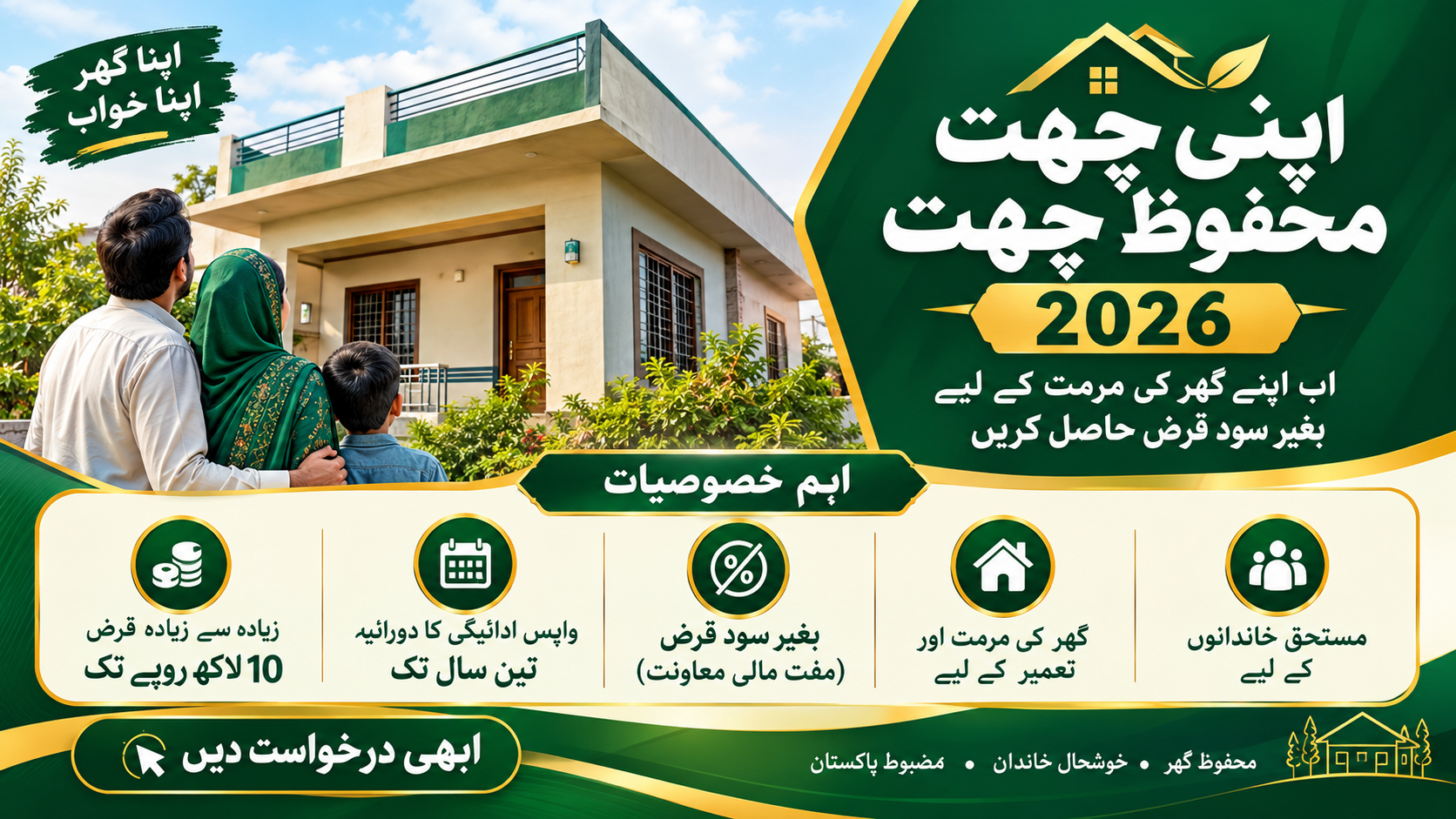
On October 20, 2026, cabinet reporting described approval of the Apni Chhat, Apna Ghar housing programme under which the Bank of Punjab is expected to extend 40,000 loans through an allocation of Rs60 billion. <Cite refs={[“turn940666search0″,”turn940666search5”]}/>
The reported figures describe the announced programme arrangements. They do not mean that 40,000 loans have already been disbursed.
What Applicants Should Verify
People interested in housing assistance should confirm:
- Whether applications are currently open.
- The official eligibility criteria.
- Any property ownership or income requirements.
- Loan limits, repayment terms, and applicable conditions.
- Required documents and application procedures.
- The official portal or authorized bank channel.
Applicants should never assume that they qualify solely because they live in Punjab. They should also avoid anyone promising guaranteed approval in exchange for an unofficial fee.
7. Water Management and Irrigation Infrastructure
Water availability and efficient irrigation are important to agriculture, household needs, and economic development. Water-related infrastructure can include irrigation channels, storage facilities, drainage, and water conservation systems.
Punjab’s 2026–27 budget reporting identifies irrigation as a separate development sector, with Rs30 billion allocated to it. <Cite refs={[“turn940666search4”]}/>
Investment in water management can help improve irrigation reliability, reduce waste where systems are upgraded effectively, and support agricultural production. Nevertheless, a sector allocation is not the same as funding for a particular dam, canal, or district project.
Why Water Projects Matter
Well-designed water infrastructure can help:
- Improve the delivery of irrigation water.
- Support agricultural production in suitable areas.
- Improve water storage and management.
- Reduce certain risks associated with inefficient distribution.
- Support more sustainable use of available resources.
The results depend on engineering design, environmental considerations, local water availability, maintenance, and effective management.
Residents and farmers should consult official irrigation department documents for project locations, implementation stages, and eligibility for any related assistance.
8. Industrial Zones, Exports and Private Investment
Punjab’s economic development also depends on creating an environment in which businesses can expand, modernize, and reach new markets.
The provincial industrial and export promotion programme identifies industrial infrastructure, manufacturing support, export competitiveness, and agricultural value chains among its priorities. These areas can help connect smaller businesses with larger supply chains and improve opportunities for value-added production. <Cite refs={[“turn940666search0″,”turn940666search5”]}/>
Potential Investment Opportunities
Depending on the projects formally launched, relevant opportunities may arise in:
- Manufacturing and industrial services.
- Agricultural processing and storage.
- Logistics and commercial transportation.
- Product testing and certification.
- Digital commerce and business technology.
- Export-oriented production.
- Infrastructure developed through public-private partnerships.
The availability of an investment opportunity must be established through official project documents. A policy announcement does not automatically mean that applications, tenders, or investment agreements are open.
Businesses should review the Punjab Public-Private Partnership Authority for project information and formal notices.
9. Employment and Skills Development
Infrastructure and industrial development can support employment in construction, manufacturing, transportation, logistics, agriculture, and technical services.
The employment target reported for the provincial industrial and export promotion programme is more than 162,000 jobs. This figure is an announced target, not a verified count of people already hired. <Cite refs={[“turn940666search0″,”turn940666search5”]}/>
How Job Seekers Can Find Genuine Opportunities
People interested in development-related jobs should:
- Identify the sector and role that match their qualifications.
- Monitor official recruitment notices from relevant departments and organizations.
- Check educational requirements, age limits, location, and application deadlines.
- Prepare the required documents before applying.
- Submit applications only through the specified official channel.
- Keep a copy of the application and any official reference number.
Some opportunities may be offered by private contractors rather than government departments. Job seekers should verify the employer and the employment terms before sharing personal information.
No development programme should be treated as a guarantee of employment for every applicant.
10. How to Check Official Punjab Development Updates
Different departments manage different projects. Checking the relevant authority is therefore more reliable than relying on a single social media post.
Official Sources & Useful Links
Verify Punjab Development Projects and Economic Updates
| Official Source | Information to Look For |
|---|---|
| Punjab Government ↗ | Provincial announcements and department links |
| Planning and Development Board ↗ | Development planning and programme information |
| Communication and Works Department ↗ | Road and infrastructure project information |
| Punjab Public-Private Partnership Authority ↗ | Partnership projects and procurement information |
| World Bank: Connected Punjab ↗ | Digital programme objectives and financing |
Before relying on any announcement, check the publication date, responsible department, geographical coverage, approval status, and any applicable deadline.
For a financial assistance scheme, also verify the official application portal, eligibility criteria, required documents, and whether applications are currently being accepted.
11. Challenges That May Affect Project Implementation
Even when a project has been announced or approved, several factors can influence its delivery.
Funding and Expenditure
A budget allocation identifies planned funding, while actual expenditure depends on releases, procurement, and implementation. These figures should be reported separately.
Procurement and Construction
Tendering, contractor selection, land acquisition, and construction quality can affect the cost and timeline of infrastructure projects.
Coordination Between Departments
Large projects may require coordination between provincial departments, local authorities, utility providers, financial institutions, and private-sector partners.
Maintenance and Service Quality
Infrastructure needs ongoing maintenance. Roads, electric buses, water facilities, and digital systems must remain operational to deliver lasting benefits.
Transparency and Progress Reporting
Public access to project documents, procurement notices, budgets, and progress updates helps residents understand whether announcements are translating into results.
Evaluating these factors provides a more realistic picture of Punjab’s development progress than relying on investment targets alone.
Frequently Asked Questions
1. What are the major Punjab development projects in 2026?
Major priorities include road infrastructure, industrial and export development, agriculture, irrigation, electric bus expansion, housing, and digital connectivity. Each initiative has its own budget, eligibility requirements, and implementation timeline.
2. What is the total Punjab development budget for 2026–27?
The Punjab government presented a total budget of Rs5,903.46 billion for 2026–27, including Rs752 billion under the Annual Development Programme. These figures describe the announced budget and do not represent total expenditure already completed. <Cite refs={[“turn940666search3”]}/>
3. How much has Punjab allocated for road development?
The Communication and Works sector received a reported allocation of Rs74.1 billion for 2026–27, covering 1,260 development projects. Readers should consult official project documents for individual scheme costs and progress. <Cite refs={[“turn940666search1”]}/>
4. What is the Connected Punjab programme?
Connected Punjab is a digital development programme supported by US$70 million in World Bank financing. It aims to expand broadband access, improve digital public services, and support cashless transactions. Its implementation arrangements and progress should be checked through official updates. <Cite refs={[“turn940666search2″,”turn940666search6”]}/>
5. Can residents apply for all Punjab development projects?
No. Many development projects involve construction, procurement, or public services rather than individual applications. Subsidies, housing loans, training programmes, and other assistance schemes have separate eligibility requirements and application periods.
6. Will Punjab’s development plans guarantee jobs?
No. Announced employment targets indicate intended outcomes, not guaranteed jobs for every resident. Actual recruitment depends on implementation, employer requirements, available positions, and applicants’ qualifications.
7. How can I avoid fake government scheme announcements?
Use official government websites, verify the responsible department, and confirm that the application period is open. Avoid unofficial agents promising guaranteed approval or jobs for money. Never share banking passwords or one-time verification codes.
Conclusion
Punjab Development Projects 2026 cover several important areas of infrastructure and economic policy, including road improvements, industrial development, agricultural modernization, housing finance, electric bus expansion, and digital connectivity.
The 2026–27 budget provides a framework for public investment, while individual programme announcements identify potential opportunities for residents and businesses. However, each project must be assessed according to its actual implementation status, funding, published conditions, and measurable results.
Residents, farmers, businesses, and job seekers should follow the relevant government departments for reliable updates rather than treating every announcement as a completed project or an open application opportunity.
Sardar Article will help readers understand these developments by explaining announced initiatives, eligibility requirements where applicable, and official sources for further verification.
Disclaimer: Sardar Article is an independent informational website and is not affiliated with any government department. Project budgets, targets, eligibility conditions, and implementation timelines may change. Readers should confirm important information through the relevant official government authority before making financial or application-related decisions.



Leave a Reply