

Introduction
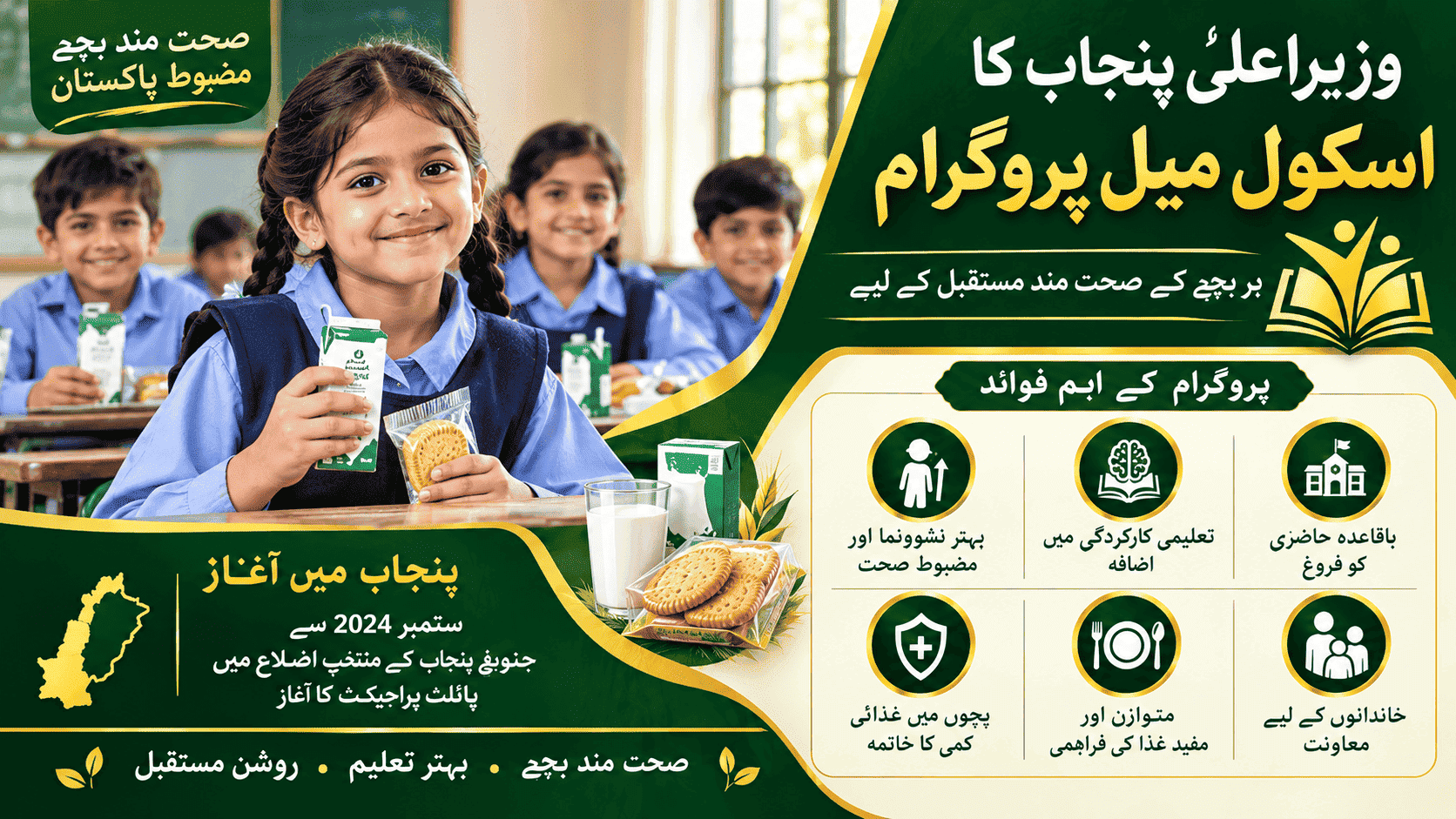
The CM School Meal Program is a child nutrition initiative launched by the Government of Punjab, Pakistan, under the leadership of Chief Minister Maryam Nawaz Sharif. The program aims to address childhood malnutrition, improve students’ access to nutritious food, and support a healthier learning environment in government schools.
The initiative began as a school nutrition pilot in South Punjab in September 2024. According to the official Punjab government portal, the program was designed to support children’s health, concentration, learning, and school attendance. The initial initiative included the distribution of milk packs and biscuits to participating students.
Access to nutritious food is important for children’s physical growth, cognitive development, and classroom participation. When students have access to appropriate nutrition, they may be better equipped to concentrate on lessons and participate in school activities. The CM School Meal Program seeks to address nutritional needs while strengthening the connection between children’s health and educational opportunities.
This article explains the program’s objectives, reported implementation, potential benefits, nutritional importance, and the role of schools and families in supporting student well-being.
CM School Meal Program – Key Details and Overview
Explore the key information, objectives, implementation, and expected benefits of the Punjab CM School Meal Program.
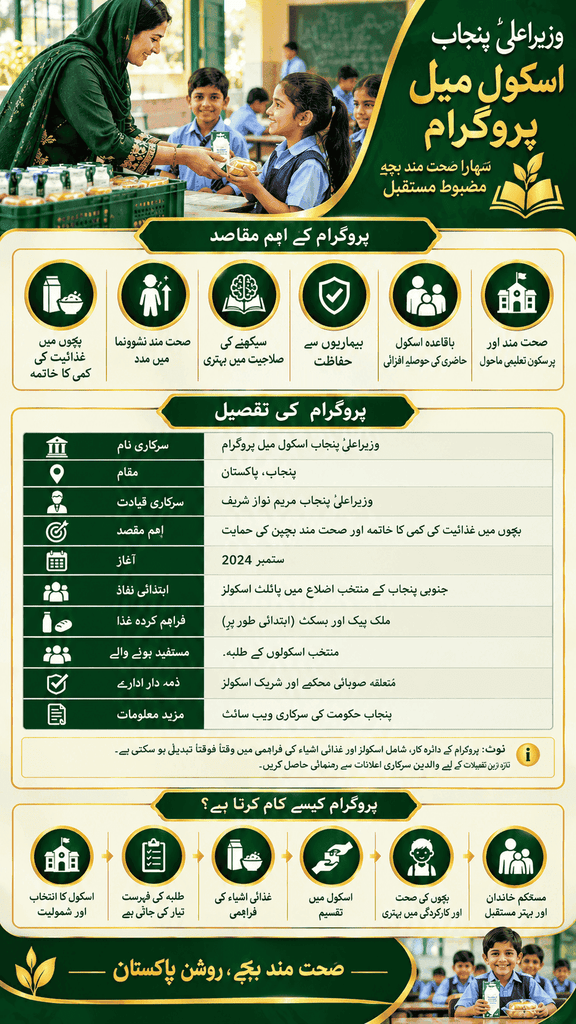
| Key Detail | Information |
|---|---|
| Official Program Name | Chief Minister Punjab School Meal Program |
| Location | Punjab, Pakistan |
| Government Leadership | Chief Minister Maryam Nawaz Sharif |
| Main Objective | Address childhood malnutrition and support student well-being. |
| Initial Launch | September 2024 |
| Initial Implementation | Pilot schools in South Punjab |
| Food Provided | Milk packs; official descriptions of the broader initiative also mention biscuits. |
| Intended Beneficiaries | Students in participating schools |
| Expected Benefits | Better access to nutrition, support for healthy development, and improved learning conditions. |
| Responsible Implementation | Relevant provincial departments and participating schools |
| Official Information | Visit Punjab Government Portal → |
Note: Program coverage, participating schools, and food distribution arrangements may change. Check official government announcements for the latest information.
What Is the CM School Meal Program?
The CM School Meal Program is a government initiative intended to improve children’s access to food through participating schools in Punjab. It recognizes that students’ health and educational experiences are closely connected, particularly during the primary school years.
Children need sufficient energy and essential nutrients to support normal growth, physical activity, and learning. However, some children face nutritional challenges because of household financial difficulties, limited access to balanced meals, or other circumstances affecting food security.
By providing food during the school day, the program aims to address part of this challenge and create a more supportive environment for students.
According to the Punjab government’s official announcement, the initiative was inaugurated in September 2024 at a government primary school in Dera Ghazi Khan. The initial pilot covered three districts in South Punjab: Dera Ghazi Khan, Rajanpur, and Muzaffargarh.
The government subsequently reported broader implementation across additional districts. Its CM School Meal Program information page describes implementation in eight districts and reports that more than 400,000 undernourished students had benefited across 3,527 government schools.
These figures reflect information published by the government and should not be interpreted as a real-time count of students currently receiving meals.
Main Objectives of the Program
The initiative focuses on several important objectives:
- Addressing childhood malnutrition: Improving access to food that contributes to children’s nutritional needs.
- Supporting healthy development: Helping children obtain nutrients important for normal growth.
- Improving learning conditions: Reducing hunger during school hours so students can participate more comfortably in lessons.
- Encouraging school attendance: Supporting an environment that makes regular participation in education easier.
- Promoting nutritional awareness: Increasing understanding of healthy eating and the importance of balanced diets.
- Supporting families: Helping reduce some of the pressure associated with providing food during the school day.
These objectives demonstrate how school nutrition can form part of a wider approach to improving children’s health and educational opportunities.
Latest Reported Coverage of the CM School Meal Program
The program has developed through different implementation phases, making it important to distinguish between the original pilot and subsequent expansion announcements.
Initial Pilot in South Punjab
The initial school nutrition initiative was inaugurated on September 5, 2024. It focused on primary schoolchildren in selected districts of South Punjab, where improving children’s nutritional well-being was a key objective.
The initial arrangement included providing milk packs to students. The government described the initiative as an effort to address nutritional deficiencies and improve children’s health.
Expansion to Additional Districts
The Punjab government’s program page later identified eight districts participating in the initiative:
- Bahawalnagar
- Bhakkar
- Dera Ghazi Khan
- Layyah
- Mianwali
- Muzaffargarh
- Rahim Yar Khan
- Rajanpur
A subsequent School Education Department recruitment notice also referred to an extension into Chiniot, Lodhran, and Vehari districts.
Separately, the Punjab Food Authority’s Phase II announcement reported a school nutrition initiative involving 70 public schools and 20,000 students in Lahore.
These announcements describe developments across different stages and implementation arrangements. For this reason, the precise current number of participating schools and students should be confirmed through the latest official notification.
Benefits of the CM School Meal Program
A well-managed school meal initiative can support children’s well-being in several ways. The actual results depend on the nutritional quality of the food, the consistency of delivery, and students’ overall dietary needs.
1. Better Access to Nutrition
Adequate nutrition is essential during childhood. Children need a variety of nutrients to support their bones, muscles, immune system, and normal development.
The provision of milk and other approved food items can contribute to students’ nutritional intake. Milk, for example, provides protein and calcium, along with other nutrients, depending on the product’s composition.
However, one food item cannot meet every nutritional requirement. School meals should be considered part of a child’s overall diet, alongside appropriate food at home.
2. Support for Healthy Growth
Children experience rapid physical development during their early years. Sufficient energy, protein, vitamins, and minerals help support normal growth and the maintenance of body tissues.
By improving access to suitable food, school nutrition initiatives may help address some dietary gaps. Their effectiveness depends on the amount and quality of food provided and the nutritional needs of the students receiving it.
3. Better Conditions for Learning
Hunger can make it harder for children to concentrate, follow instructions, and participate in classroom activities.
Providing food during the school day may help reduce hunger-related distractions and support students’ ability to engage with lessons. Nevertheless, academic performance is influenced by many factors, including teaching quality, school facilities, attendance, and family circumstances.
The program should therefore be viewed as one part of a broader effort to improve educational outcomes.
4. Support for School Attendance
Access to food may provide additional support for families and encourage students to participate regularly in school activities.
However, attendance depends on several factors, such as transportation, household responsibilities, school accessibility, and the quality of education. Reliable data are needed to determine how much the meal program itself contributes to changes in attendance.
5. Assistance for Families
Families managing limited incomes may find it difficult to provide balanced meals consistently. Food provided through participating schools can help reduce some school-day food expenses.
This assistance may be particularly useful for households with multiple school-aged children. The level of financial support depends on the frequency of food distribution and the needs of each household.
6. Greater Awareness of Healthy Eating
School nutrition programs can also provide opportunities to teach children about balanced diets, hydration, food hygiene, and healthy eating habits.
When teachers reinforce these lessons, students may become more aware of the importance of different food groups and appropriate dietary choices. Parents can support this learning by encouraging balanced meals at home.
Nutritional Importance of Milk in School Meals
Milk is an important component of the Punjab initiative because it can provide several nutrients required for children’s growth and development.
Protein for Growth and Tissue Maintenance
Milk contains protein, which contributes to the growth and maintenance of body tissues. Protein is particularly important during childhood, when the body is developing rapidly.
Other suitable sources of protein include eggs, lentils, beans, chickpeas, and other foods selected according to individual dietary needs.
Calcium for Bones and Teeth
Calcium supports the development and maintenance of bones and teeth. Milk can be a useful source of calcium, making it a practical option for school nutrition initiatives where safe storage and distribution can be maintained.
Children who cannot consume milk because of allergies or other dietary considerations may require appropriate alternatives under the relevant program’s guidelines.
Energy and Other Nutrients
Milk also provides energy and other nutrients, with the exact composition depending on the product. Fortified products may contain additional vitamins or minerals.
The nutritional value of a particular school milk pack should be assessed using its product label and the applicable program specifications rather than assuming that all milk products have identical nutritional content.
Why a Balanced Diet Still Matters
Milk can contribute to a child’s nutritional needs, but it does not replace a varied diet.
Children also need appropriate sources of carbohydrates, healthy fats, fruits, vegetables, and other essential nutrients. A comprehensive approach to nutrition should take account of the child’s age, overall food intake, and any special dietary requirements.
Implementation and Food Safety
The success of the CM School Meal Program depends on reliable delivery, appropriate food quality, and effective monitoring.
Safe Food Handling
Food and beverages provided to students should meet relevant safety standards. Milk products must be stored and distributed according to their packaging instructions and applicable temperature requirements.
Schools and suppliers should ensure that:
- Food comes from approved and reliable sources.
- Packaging remains intact and suitable for consumption.
- Products are stored and transported appropriately.
- Expiry dates and product labels are checked.
- Damaged, contaminated, or unsuitable items are not distributed.
- Students and staff have access to appropriate hygiene facilities.
These precautions help reduce food safety risks and protect students’ health.
Monitoring Program Delivery
Effective monitoring helps ensure that approved food items reach participating schools as intended.
Relevant authorities may review delivery records, inspect food quality, assess compliance with distribution procedures, and respond to complaints. Accurate records also help identify interruptions and improve planning.
Recycling and Environmental Responsibility
The Punjab government’s program information also describes collecting used milk packs for recycling, with funds generated intended to support the welfare and development of participating schools.
Such arrangements can help reduce packaging waste when recycling is managed safely and transparently. Schools should provide clear collection procedures and ensure that used packaging is handled hygienically.
Challenges and Possible Improvements
School meal initiatives can face operational challenges even when their objectives are clear. Addressing these challenges is essential for maintaining public confidence and achieving meaningful results.
Consistent Food Distribution
Deliveries may be affected by transport problems, supply shortages, or administrative delays.
Possible improvement: Establish reliable delivery schedules, maintain accurate records, and create procedures for reporting and resolving interruptions.
Maintaining Food Quality
Products must remain safe and suitable for consumption throughout storage and distribution.
Possible improvement: Apply clear procurement standards, inspect deliveries, and ensure that storage and handling follow the manufacturer’s instructions and applicable food safety requirements.
Monitoring Student Needs
Children differ in age, nutritional requirements, allergies, and dietary circumstances.
Possible improvement: Use appropriate nutritional guidance and established school procedures to identify relevant needs while protecting students’ privacy.
Ensuring Transparent Management
Public programs require responsible financial management and clear accountability.
Possible improvement: Maintain auditable records, conduct appropriate inspections, publish verified progress updates, and provide channels for reporting concerns.
Measuring Actual Results
The number of meals or food packs distributed indicates program activity, but it does not by itself establish improvements in health or education.
Possible improvement: Evaluate relevant indicators, such as delivery consistency, student participation, food safety, dietary quality, and attendance trends. Health and academic outcomes should be assessed carefully without attributing every change to the meal program.
Role of Parents, Teachers, and Schools
The program can be more effective when families and educational institutions work together.
Parents and Caregivers
Parents can encourage healthy eating at home, inform schools about relevant dietary concerns, and provide feedback about the food their children receive.
They should also confirm program participation and eligibility through the child’s school or the appropriate government department.
Teachers
Teachers can help students understand the importance of nutrition and hygiene. They may also communicate practical concerns about food distribution or student participation to school administrators.
School Administrators
School administrators can coordinate with the relevant authorities, maintain accurate records, follow food safety procedures, and ensure that students are treated fairly.
Government Departments
The responsible departments play an important role in planning, procurement, distribution, monitoring, and evaluating the initiative. Coordination between education and food safety authorities can help improve consistency and accountability.
How to Find Official Information About the CM School Meal Program
Parents and other interested readers should use official government sources when seeking information about the program.
The following resources provide relevant information:
- Punjab Government: CM School Meal Program — overview, objectives, and reported coverage.
- Punjab Government: Original School Nutrition Program Announcement — information about the initial launch.
- Punjab Food Authority: School Nutrition Program, Phase II — information about a later implementation phase in Lahore.
- Punjab Education Sector Reforms Programme — education-sector information and relevant official notices.
For questions about eligibility, school participation, delivery schedules, or registration, parents should contact the administration of the relevant government school or the responsible education authority.
Readers should not assume that a separate online registration form is required unless the government has officially announced one.
Frequently Asked Questions (FAQs)
What is the CM School Meal Program in Punjab?
The CM School Meal Program is a Government of Punjab initiative intended to improve schoolchildren’s access to nutrition and support their health and learning environment. The original pilot was launched in September 2024.
Who launched the CM School Meal Program?
The initiative was launched under the leadership of Punjab Chief Minister Maryam Nawaz Sharif.
Which districts are included in the program?
The Punjab government’s program page has listed Bahawalnagar, Bhakkar, Dera Ghazi Khan, Layyah, Mianwali, Muzaffargarh, Rahim Yar Khan, and Rajanpur. Subsequent announcements have referred to further expansion. The latest participating districts should be confirmed through official government notices.
What food is provided through the program?
Official program information describes the distribution of milk packs, while the broader program page also mentions biscuits. The exact items and distribution arrangements may vary by phase and should be checked against the relevant official announcement.
What are the main benefits of the CM School Meal Program?
The program aims to address childhood malnutrition and improve access to food during the school day. Potential benefits include support for healthy growth, reduced hunger during lessons, and better conditions for classroom participation.
Does the program guarantee better academic results?
No. Adequate nutrition can support learning, but academic performance also depends on teaching quality, school resources, attendance, and family circumstances. The program’s specific educational impact requires reliable evaluation.
How can parents confirm whether their child’s school participates?
Parents should contact the school administration or relevant district education authority. They should rely on official information for current eligibility rules and participating schools.
Is the program available throughout Punjab?
The initiative has been expanded beyond its original pilot in stages, according to official announcements. However, the availability of food support at a particular school should be verified rather than assumed.
Conclusion
The CM School Meal Program: Benefits, Nutrition, and Student Well-Being reflects the importance of addressing children’s nutritional needs as part of a broader commitment to education and public health.
Launched in Punjab in September 2024, the initiative began with a pilot in South Punjab and has subsequently been associated with expansion efforts in additional districts and schools. Its central objective is to improve access to nutrition and support a healthier environment for schoolchildren.
The program’s long-term value will depend on consistent implementation, safe food distribution, responsible management, and reliable evaluation. Continued attention to nutritional quality and students’ needs can help ensure that the initiative supports its intended beneficiaries.
By combining school nutrition with family involvement, educational support, and transparent oversight, the Government of Punjab and participating schools can work toward healthier children and stronger educational opportunities.




Leave a Reply