

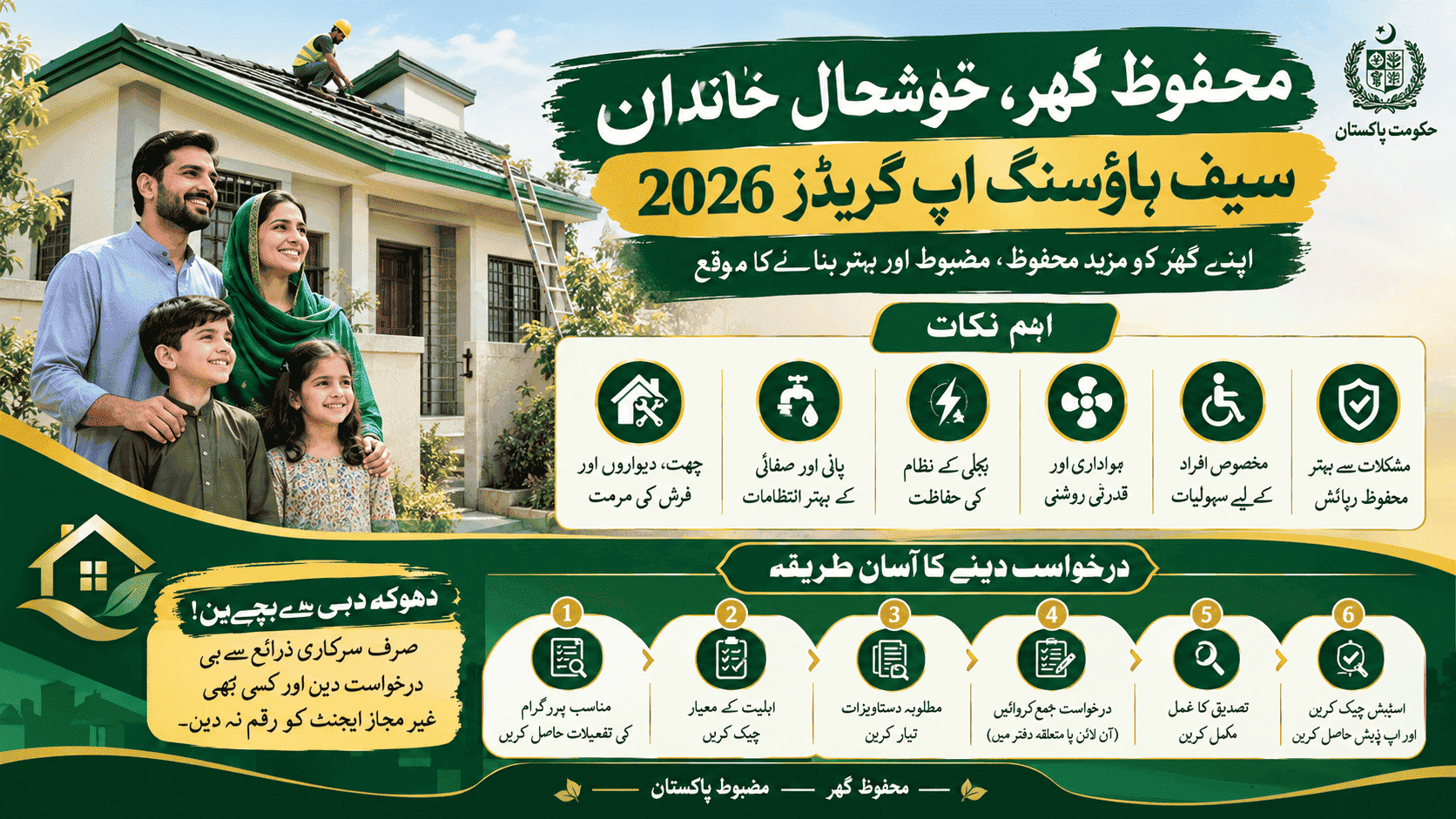
Safe Housing Upgrades are improvements made to an existing home to make it safer, healthier, more comfortable, and better prepared for structural, environmental, and everyday household risks. These improvements can include roof repairs, structural strengthening, better sanitation, electrical safety work, improved ventilation, accessibility modifications, drainage improvements, and other essential repairs.
In 2026, housing-upgrade initiatives are increasingly linked with climate resilience, basic services, disaster risk reduction, and the improvement of existing housing rather than focusing only on new construction. UN-Habitat’s 2026 analysis identifies affordable and safe housing, settlement upgrading, resilient infrastructure, drainage, water, and sanitation as important elements of housing and climate planning.
It is important to understand that Safe Housing Upgrades 2026 is a general housing-support term rather than a universally confirmed name of one Pakistan-wide government scheme. Therefore, eligibility, financial assistance, documents, and application procedures can vary depending on the specific housing program, province, department, or organization providing support.
Key Details of Safe Housing Upgrades 2026
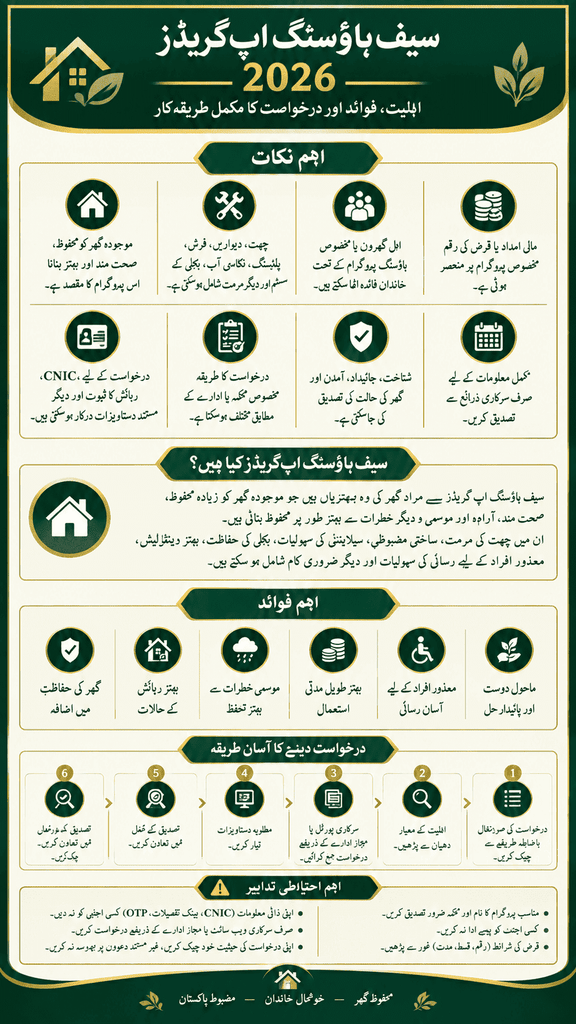
What Are Safe Housing Upgrades?
Safe Housing Upgrades are improvements designed to address problems that can make a home unsafe, unhealthy, or unsuitable for the people living in it.
Unlike constructing an entirely new house, an upgrade normally improves an existing property. The work can be small, such as repairing damaged flooring, or more substantial, such as strengthening a roof or improving structural components.
Housing upgrades can also be used to improve resilience against environmental hazards. Current housing and climate research emphasizes the connection between safe housing and improvements to infrastructure, drainage, water, sanitation, and climate-resilient construction.
Common Types of Housing Upgrades
Depending on the property’s condition and the rules of the relevant program, upgrades may include:
- Roof repair and strengthening
- Wall and structural repairs
- Floor improvements
- Plumbing repairs
- Sanitation improvements
- Drainage improvements
- Electrical safety upgrades
- Ventilation improvements
- Doors and window repairs
- Accessibility modifications
- Weather and climate resilience improvements
- Energy-efficiency improvements
Why Are Safe Housing Upgrades Important?
A home can gradually develop safety problems because of age, poor construction, weather exposure, lack of maintenance, flooding, moisture, or other environmental conditions.
Addressing these problems early can help improve household safety and reduce the risk of more serious damage.
Improved Structural Safety
Damaged roofs, walls, foundations, or other structural components can create risks for residents. Appropriate repairs and strengthening can help improve the condition of an existing home.
Major structural work should always be assessed and carried out by qualified professionals.
Better Water and Sanitation
Safe housing also requires appropriate access to water, sanitation, drainage, and other basic services. Housing-related climate planning increasingly connects safe housing with these supporting systems.
Protection From Weather Risks
Roofing, drainage, ventilation, insulation, and other improvements can help a property deal more effectively with weather-related challenges when they are properly designed for local conditions.
Improved Accessibility
Some housing upgrades can make a home easier and safer to use for older residents or people with mobility limitations. Examples include ramps, handrails, wider access routes, and appropriately designed bathrooms.
Who May Be Eligible for Safe Housing Upgrades?
There is no single universal eligibility list for every Safe Housing Upgrade initiative.
The requirements depend on the specific program providing the assistance.
Homeowners
Some housing-improvement programs are designed primarily for people who own the property they want to repair or improve.
Applicants may be required to provide ownership or possession documents.
Low-Income Households
Certain housing-support programs are targeted toward households with limited financial resources. Where an income requirement exists, the program should clearly publish the applicable income threshold and verification process.
Households Living in Unsafe Properties
A housing initiative may prioritize properties requiring essential repairs or safety improvements. The exact definition of an unsafe or inadequate home depends on the responsible authority.
Applicants Meeting Program-Specific Conditions
Other requirements may include:
- Valid identification
- Proof of residence
- Property documentation
- Household information
- Income information
- Compliance with construction requirements
- Location within the program’s coverage area
Applicants should not assume that meeting one of these conditions automatically guarantees assistance.
What Improvements May Be Included?
The exact scope depends on the relevant housing initiative and its funding rules.
Roof and Ceiling Improvements
Roof problems can allow water to enter a property and can contribute to structural deterioration. Possible work may include:
- Repairing damaged roofing
- Replacing deteriorated materials
- Strengthening roof structures
- Improving waterproofing
- Repairing ceilings damaged by leakage
Structural Repairs
Structural work can involve:
- Repairing damaged walls
- Strengthening weak sections
- Addressing certain foundation problems
- Repairing cracks where technically appropriate
- Improving structural resistance to identified hazards
Structural defects should be evaluated by a qualified engineer or construction professional.
Plumbing and Sanitation
Possible improvements can include:
- Repairing water pipes
- Improving toilets
- Fixing wastewater problems
- Improving drainage
- Repairing leaks
- Upgrading sanitation facilities
Electrical Safety
Electrical upgrades may include replacing damaged wiring, correcting unsafe connections, improving circuits, and addressing other identified electrical hazards.
Electrical work should be performed by a qualified electrician.
Accessibility Improvements
Depending on the program, housing improvements can include:
- Ramps
- Handrails
- Safer entrances
- Accessible bathrooms
- Improved pathways
- Other mobility-related modifications
Benefits of Safe Housing Upgrades
Safe housing improvements can provide practical benefits for households and communities.
Safer Living Conditions
Repairing hazards can make an existing home safer for its residents.
Improved Comfort
Ventilation, flooring, roofing, windows, sanitation, and other improvements can make daily living conditions more comfortable.
Better Resilience
Properly designed upgrades can help homes cope with certain climate and disaster risks.
Longer Useful Life of Existing Homes
Repairing and strengthening an existing property can extend its useful life and prevent avoidable deterioration.
Research from Build Change indicates that upgrading existing homes can require substantially less embodied carbon than constructing equivalent new housing, although the actual environmental impact depends on the type and scale of work.
Better Accessibility
Appropriate modifications can make homes easier to use for people with mobility or accessibility requirements.
Documents That May Be Required
There is no universal document list because requirements vary between programs.
However, an application for housing assistance may require some of the following:
- Valid CNIC or other accepted identification
- Proof of residence
- Property ownership documents
- Property or plot information
- Household details
- Income information, where applicable
- Bank information, where required
- Photographs or details of the property
- Application forms or supporting declarations
Applicants should submit only the documents requested by the official program.
How to Apply for Safe Housing Upgrades in 2026
Because the phrase Safe Housing Upgrades can refer to different types of housing assistance, applicants should first identify the exact program before applying.
Step 1: Identify the Exact Housing Program
Do not apply through a website simply because it uses the words “Safe Housing Upgrades.”
Confirm:
- Official program name
- Responsible department
- Geographic coverage
- Eligibility criteria
- Type of assistance
- Application deadline
- Official application channel
Step 2: Check the Official Eligibility Criteria
Read the current eligibility requirements carefully.
Check whether the program requires:
- Property ownership
- A specific income range
- A particular location
- A particular type of housing
- Specific structural conditions
- Valid identification
- Additional documentation
Step 3: Prepare the Required Documents
Collect the documents listed by the responsible authority.
Make sure names, CNIC numbers, property information, and contact details are accurate.
Step 4: Submit the Application Through the Official Channel
Use the official website, government office, bank, authorized organization, or other channel specifically identified by the program.
Avoid submitting sensitive information through unknown websites or social-media accounts.
Step 5: Complete Verification
Some housing programs may inspect the property or verify:
- Applicant identity
- Property ownership
- Household information
- Income
- Housing condition
- Other eligibility requirements
Step 6: Check the Application Status
Use the official status-checking method provided by the program.
Do not consider an application approved merely because an unofficial person or website claims that it has been accepted.
How to Avoid Housing Scheme Scams
Housing assistance can attract fraudulent websites and individuals who claim they can guarantee approval.
Verify the Official Source
Before entering your CNIC or other personal information, confirm that the website or application channel belongs to the responsible authority.
Avoid Unofficial Payment Demands
Do not pay an unknown agent for a guaranteed approval, registration, or release of funds.
If a legitimate program has an official processing charge, the amount and payment method should be clearly communicated by the responsible authority.
Protect Personal Information
Never share sensitive information such as:
- OTP codes
- Banking passwords
- ATM PINs
- Online banking credentials
- Unnecessary identity documents
with unknown people.
Check the Terms Before Accepting Financing
If assistance is provided as a loan rather than a grant, carefully review:
- Financing amount
- Repayment period
- Monthly installment
- Applicable charges
- Late-payment conditions
- Security requirements
- Eligibility conditions
Safe Housing Upgrades vs New Construction
Housing upgrades and new construction have different purposes.
Research on resilient housing has found that improving existing homes can be more material-efficient than constructing equivalent new homes in many circumstances.
Important Points Before Applying
Applicants should keep the following points in mind:
- Confirm the exact program name before applying.
- Check the current eligibility requirements.
- Do not assume a general housing-upgrade term represents a particular government scheme.
- Verify financing amounts directly from the responsible authority.
- Keep property documents available if ownership verification is required.
- Never provide banking credentials or OTPs to unofficial agents.
- Use only verified application channels.
- Read loan or financing terms carefully before accepting an offer.
- Get major structural work assessed by qualified professionals.
Frequently Asked Questions
What are Safe Housing Upgrades?
Safe Housing Upgrades are improvements to an existing home that can improve safety, structural condition, sanitation, accessibility, comfort, or resilience.
Is Safe Housing Upgrades 2026 a specific government scheme?
The term should not automatically be treated as the official name of one nationwide government scheme. It is a general description of housing improvements, and individual programs may use different official names and eligibility rules.
What types of work can be included?
Depending on the specific initiative, work may include roof repairs, structural strengthening, plumbing, sanitation, drainage, electrical safety, accessibility improvements, and other essential repairs.
Who can apply?
Eligibility depends on the particular housing program. Potential requirements can include property ownership, valid identification, income criteria, residence requirements, and the condition of the property.
Is financial assistance guaranteed?
No. Assistance is subject to the eligibility rules, available funding, verification process, and terms of the specific program.
What documents may be needed?
Applicants may need identification, proof of residence, property documents, household information, and income or financial records where required by the relevant program.
How can I find the official application method?
First identify the exact housing initiative and its responsible authority. Then use the official website, government office, bank, or authorized organization specified by that program.
Should I pay an agent to apply?
Applicants should be cautious about unofficial agents who demand money or promise guaranteed approval. Use the official application channel and follow the published payment requirements, if any.
Final Thoughts
Safe Housing Upgrades can help improve existing homes by addressing structural problems, sanitation issues, accessibility needs, electrical hazards, weather exposure, and other housing deficiencies. Modern housing policy also increasingly connects housing safety with climate resilience, infrastructure, drainage, water, and sanitation.
However, Safe Housing Upgrades 2026 should not be presented as a single confirmed Pakistan-wide government scheme unless an official authority specifically identifies it by that name. Eligibility, financial assistance, documents, and application procedures must be checked against the exact program being offered.
Before applying, verify the official program name, responsible department, eligibility criteria, and application channel. This helps applicants avoid outdated information, unofficial agents, and fraudulent registration websites.











Leave a Reply