

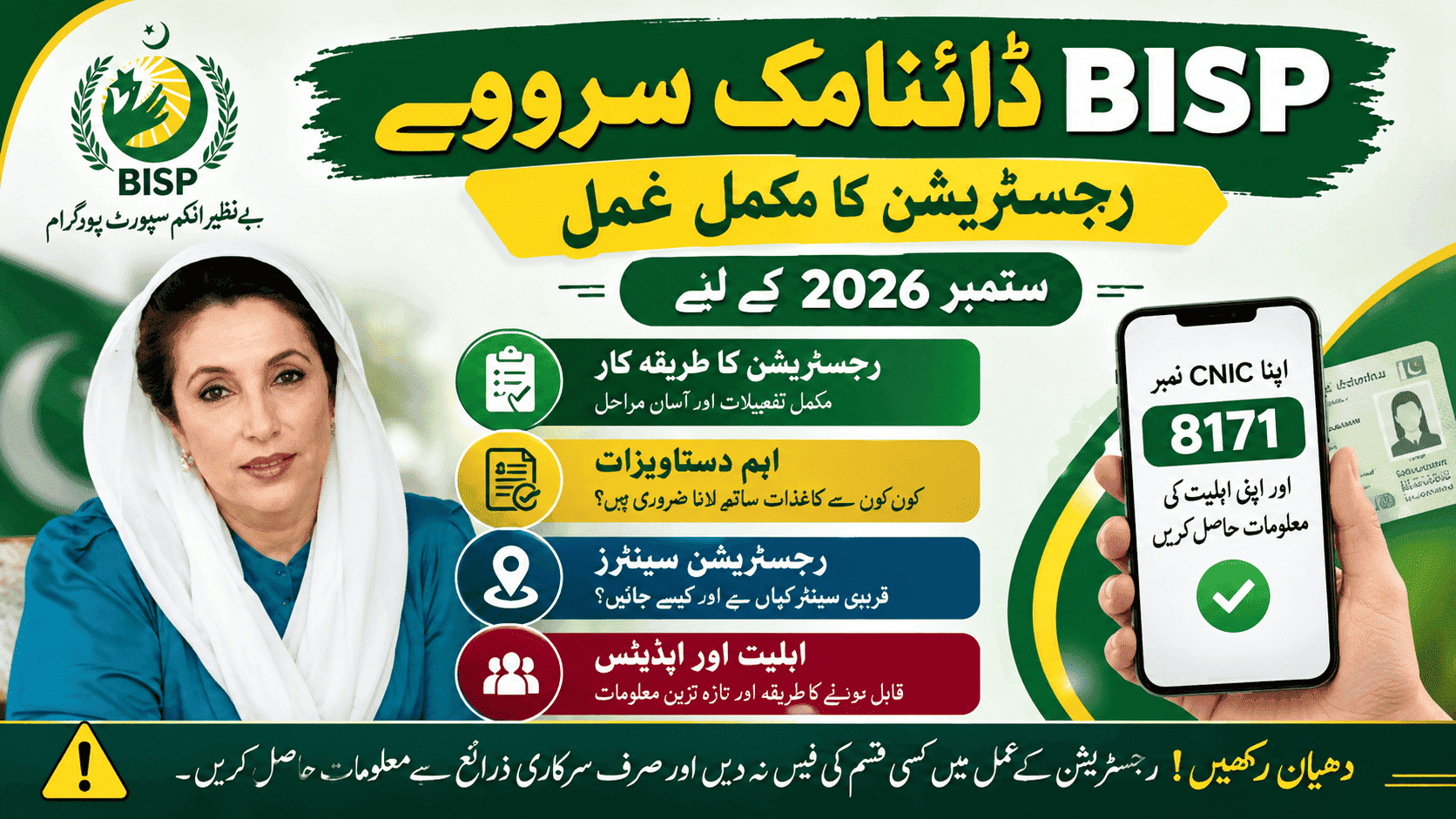
The BISP Dynamic Survey is part of the Benazir Income Support Programme’s National Socio-Economic Registry (NSER), which allows household information to be registered and updated on an ongoing basis. Unlike the earlier approach that relied heavily on large-scale door-to-door surveys, the dynamic registry provides registration and information-update facilities through Dynamic Registry Centers at the tehsil level.
For September 2026, applicants should use official BISP channels to check their survey status, provide accurate household information, and follow the registration or update process applicable to their circumstances. Registration in the survey does not automatically guarantee BISP financial assistance; eligibility is determined through the programme’s prescribed assessment process.
BISP Dynamic Survey at a Glance
| Detail | Information |
|---|---|
| Programme | Benazir Income Support Programme (BISP) |
| Registry | National Socio-Economic Registry (NSER) |
| Survey Type | Dynamic Socio-Economic Survey |
| Registration Facility | Dynamic/Benazir Registration Centers |
| Location | Tehsil-level registration centers |
| Main Purpose | New household registration and updating household information |
| Important Document | Valid CNIC |
| Children’s Information | B-Form/child registration details may be required |
| Status Check | Official 8171 BISP portal and designated BISP channels |
| Eligibility | Determined after assessment of household information |
| September 2026 | Applicants should rely on current BISP announcements and official channels for location-specific instructions. |
What Is the BISP Dynamic Survey?
The BISP Dynamic Survey is connected to the National Socio-Economic Registry (NSER), the database used to record socioeconomic information about households. BISP developed the dynamic registry to allow household information to be updated more regularly rather than depending exclusively on periodic nationwide door-to-door surveys.
The system is designed to accommodate people who were missed during earlier data collection as well as households whose circumstances or information have changed. BISP says the dynamic registry operates through registration centers at the tehsil level, with verification and validation linked to the national citizen registry maintained by NADRA.
Who May Need Dynamic Survey Registration?
The dynamic survey can be relevant to households that:
- Have not previously been surveyed through NSER.
- Were missed during earlier registration activities.
- Need to correct or update household information.
- Have experienced changes in family circumstances.
- Need to update information such as births, deaths, marital status, or disability status.
- Are instructed to undergo a resurvey or reassessment.
BISP’s dynamic registry framework specifically includes mechanisms for missed information, CNIC discrepancies, roster updates and periodic socioeconomic reassessment.
New Applicants
A household that has not previously been surveyed may be directed toward the new survey process at a registration center. BISP’s published registration procedure explains that applicants are screened first and then issued a token for a new survey when the system shows that they have not already been surveyed.
Existing Households Requiring Updates
People who already have an NSER record may need a roster update rather than a completely new registration. BISP identifies changes such as births, deaths, marital status and disability status as examples of information that may require updating.
BISP Dynamic Survey Registration Process
The registration process generally involves several stages.
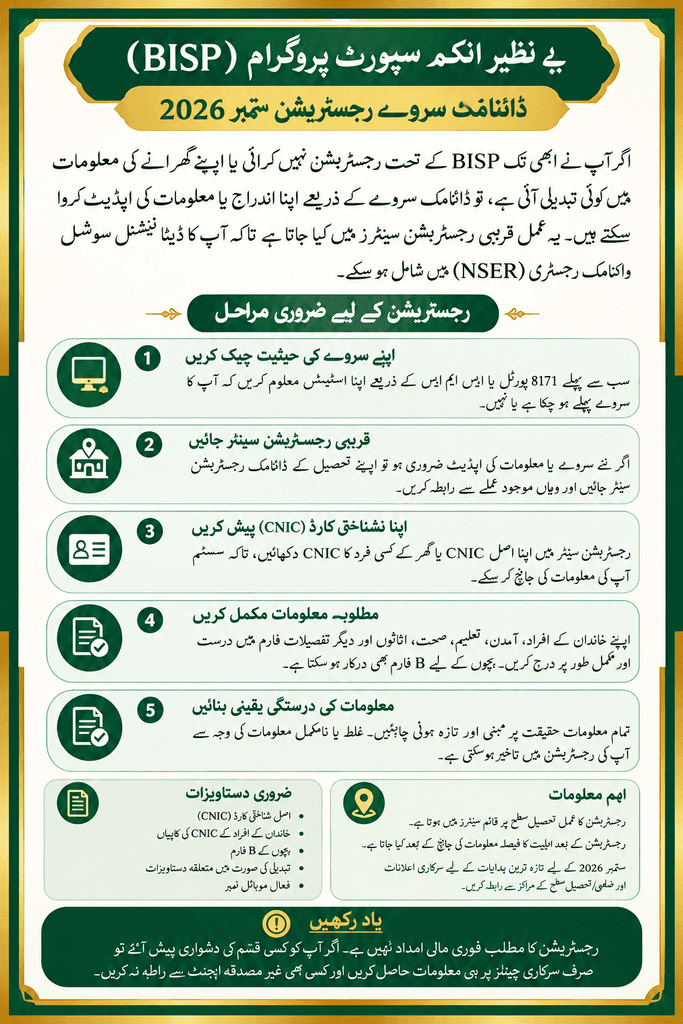
1. Check Your Existing Survey Status
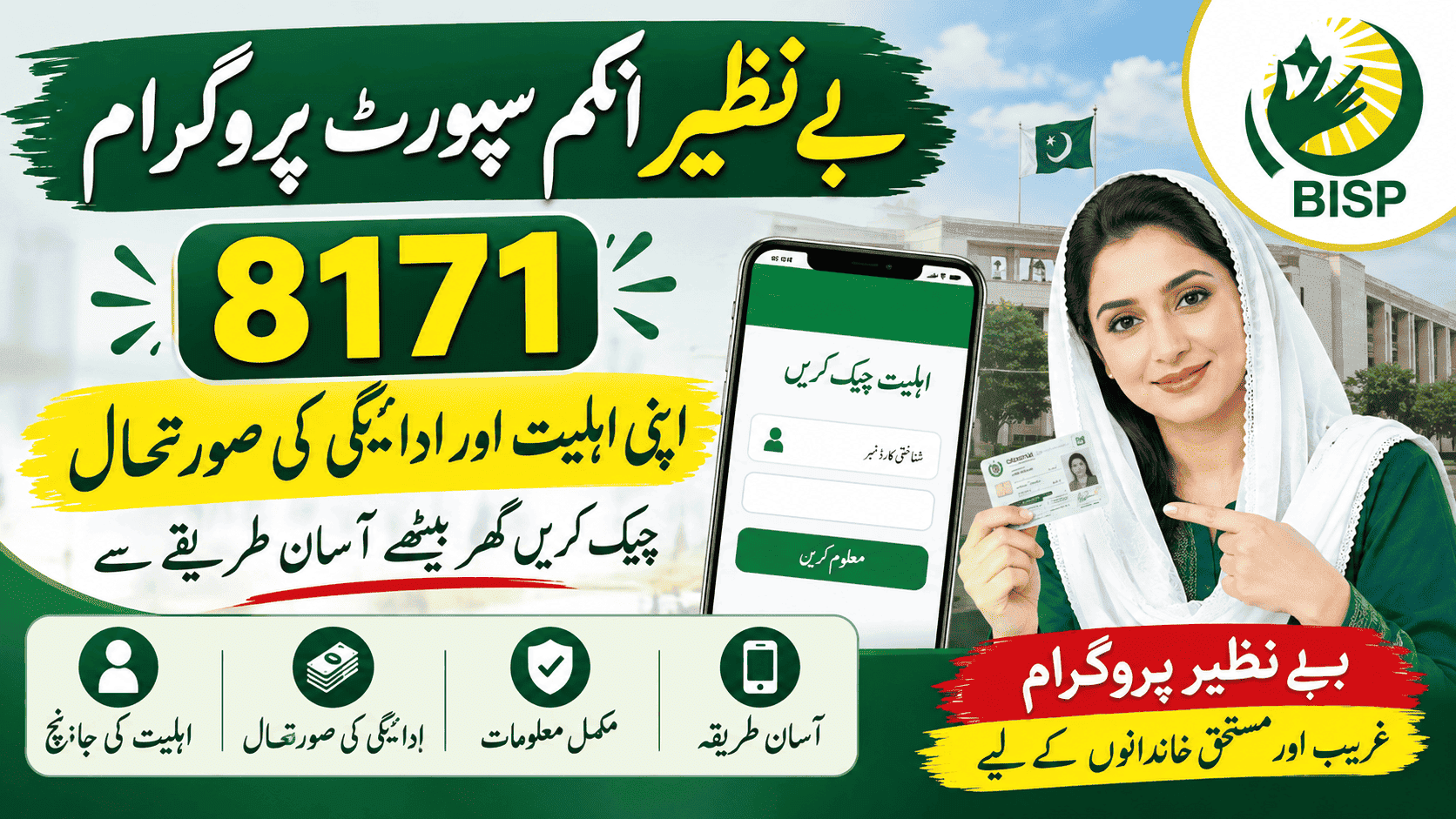
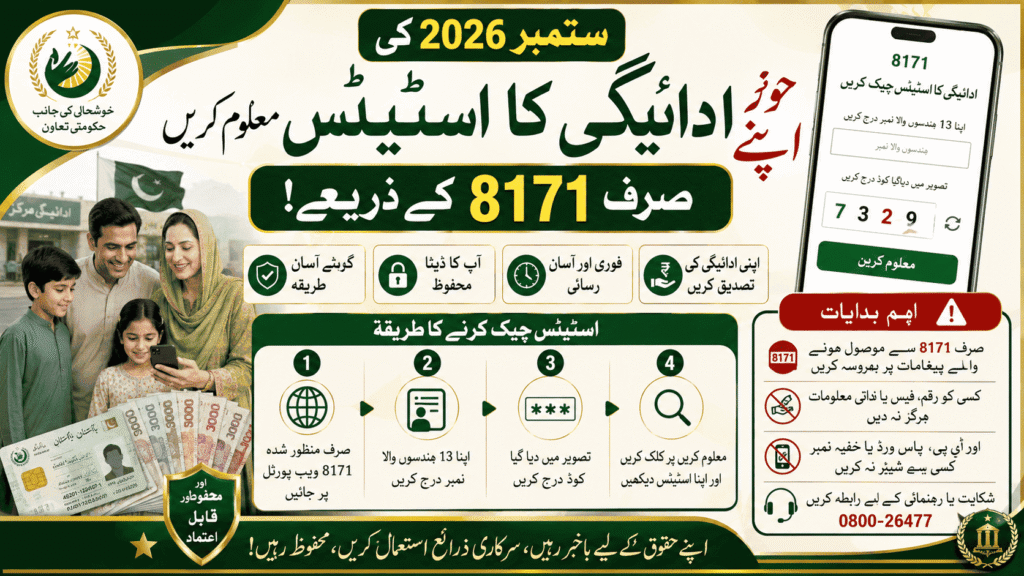
Before visiting a registration center, applicants can check their BISP/NSER status through the official 8171 web portal or the designated SMS facility.
The BISP registration documentation states that survey and eligibility status can be checked through the 8171 portal and by sending the CNIC number to 8171.
This initial check can help determine whether the household already has a survey record or whether further action may be required.
2. Visit the Relevant BISP Registration Center
If a new survey or information update is required, applicants should visit the relevant BISP Dynamic Registry/Registration Center at the tehsil level.
BISP has established registration centers to facilitate ongoing socioeconomic data collection and updates. Its NSER documentation describes the dynamic registry as providing access to registration centers across tehsils.
3. Provide Your CNIC for Screening
At the center, the applicant’s CNIC is used for initial screening. BISP’s published process indicates that applicants should provide their CNIC or the CNIC of a household member at the information counter. The system determines whether the household needs a new survey or an update.
4. Receive a Token
Where applicable, the registration center issues a token for the appropriate service.
For example, BISP’s documented process distinguishes between:
- New Survey for households not previously surveyed.
- Roster Update for households whose existing information needs updating.
Applicants should wait for their turn according to the token and instructions provided by the center.
5. Complete the Household Data Collection
At the data-entry stage, applicants provide information about their household. BISP’s registration documentation states that questions can cover areas such as:
- Household members
- Education
- Health
- Income
- Assets
- Other socioeconomic circumstances
CNICs of household members and B-Forms for children may also be requested.
6. Ensure the Information Is Accurate
Applicants should carefully provide truthful and up-to-date information. CNIC information should correspond with the household’s current circumstances in NADRA records.
This is particularly important when there has been a change in:
- Marital status
- Widow status
- Disability status
- Household membership
- Births
- Deaths
BISP’s dynamic registry framework specifically links several roster updates with NADRA information.
Documents to Keep Ready
Applicants should generally keep relevant original documents available when visiting a registration center.
Important Documents
Depending on the household’s circumstances, these may include:
- Original valid CNIC
- CNIC information of household members
- B-Forms/child registration documents for children
- Relevant documents reflecting changes in family status, where applicable
- An active mobile number for communication
BISP’s published registration instructions specifically mention CNICs of household members and B-Forms for children during the data-entry process.
How to Check BISP Survey or Eligibility Status
The official 8171 system provides an online method for checking household status.
Applicants can enter their CNIC number on the official BISP 8171 portal and complete the required verification shown on the page.
The status displayed through the official system should be treated as more reliable than information circulating through unofficial websites, social media posts or third-party agents.
Does Dynamic Survey Registration Guarantee BISP Payments?
No. Completing an NSER/Dynamic Survey does not by itself mean that a household will automatically receive BISP payments.
BISP uses socioeconomic information from NSER to identify households for relevant social protection programmes. For Benazir Kafaalat, BISP states that household welfare is assessed using a Proxy Means Test (PMT) and that the applicable eligibility threshold is determined through the programme’s policy process.
Therefore, applicants should distinguish between:
Survey registration → socioeconomic assessment → eligibility determination → programme enrollment/payment, where applicable.
Registration is an important part of the process, but it is not the same thing as approval for financial assistance.
What Information Can Be Updated Through the Dynamic Registry?
The dynamic registry is designed to accommodate several types of updates.
Family and Roster Changes
BISP identifies updates involving:
- Birth registration
- Death registration
- Marital status
- Gender information
- Differently abled person status
- CNIC information
These updates are connected with NADRA data where applicable.
Socioeconomic Changes
The dynamic system is also intended to capture changes in household socioeconomic circumstances through periodic updates and reassessments. BISP describes periodic resurvey mechanisms for non-beneficiary households and recertification for existing beneficiaries.
Why Accurate Information Matters
The NSER database is used as a targeting platform for BISP and other social protection initiatives. Consequently, inaccurate household information can affect how a household is assessed.
Applicants should therefore avoid:
- Providing false income information
- Hiding household members
- Using another person’s CNIC
- Giving incorrect marital-status information
- Providing inaccurate asset or employment details
- Paying an unofficial person to alter survey information
The safest approach is to provide the information requested by the authorized registration staff accurately and consistently.
Important Advice for September 2026 Applicants
People planning to complete a BISP Dynamic Survey in September 2026 should keep the following points in mind:
Use Official BISP Channels
Check information through BISP’s official website, the official 8171 portal, or an authorized registration center. BISP’s official website provides links for NSER registration, BISP beneficiary services and registration centers.
Keep CNIC Information Updated
If your family circumstances have changed, make sure the relevant NADRA information is properly updated where required before or during the BISP survey process.
Do Not Assume Registration Means Approval
A completed survey should not be described as guaranteed approval for a BISP payment. Eligibility depends on the applicable BISP assessment and programme requirements.
Avoid Unofficial Agents
Applicants should be cautious about anyone claiming they can guarantee BISP approval, increase a poverty score, or obtain payment in exchange for money.
Common Questions About BISP Dynamic Survey
Is BISP Dynamic Survey registration available at tehsil level?
Yes. BISP’s dynamic registry model uses registration centers at the tehsil level to facilitate ongoing registration and household information updates.
Can an already surveyed family update its information?
Yes. The dynamic registry includes mechanisms for roster and other household information updates. These can include changes involving births, deaths, marital status and disability status.
What if my household was never surveyed?
BISP’s registration procedure provides for a new survey for households that have not previously been surveyed.
Can I check my status online?
Yes. BISP provides the official 8171 web portal for checking household status using a CNIC number.
Does registration guarantee a BISP payment?
No. Registration places household information into the relevant assessment process; eligibility and programme enrollment are determined according to BISP’s applicable criteria.
Final Words
The BISP Dynamic Survey Registration Process for September 2026 is centered on keeping the NSER household database current and allowing households to register or update information through BISP’s registration infrastructure. The process generally involves checking existing status, visiting the appropriate registration center when required, completing household information collection and ensuring that CNIC and family details are accurate.
For the latest September 2026 instructions, applicants should rely on official BISP and 8171 channels, because registration arrangements, programme criteria and operational instructions can change. The official BISP website and 8171 portal are the appropriate sources for current status and programme information.





Leave a Reply