
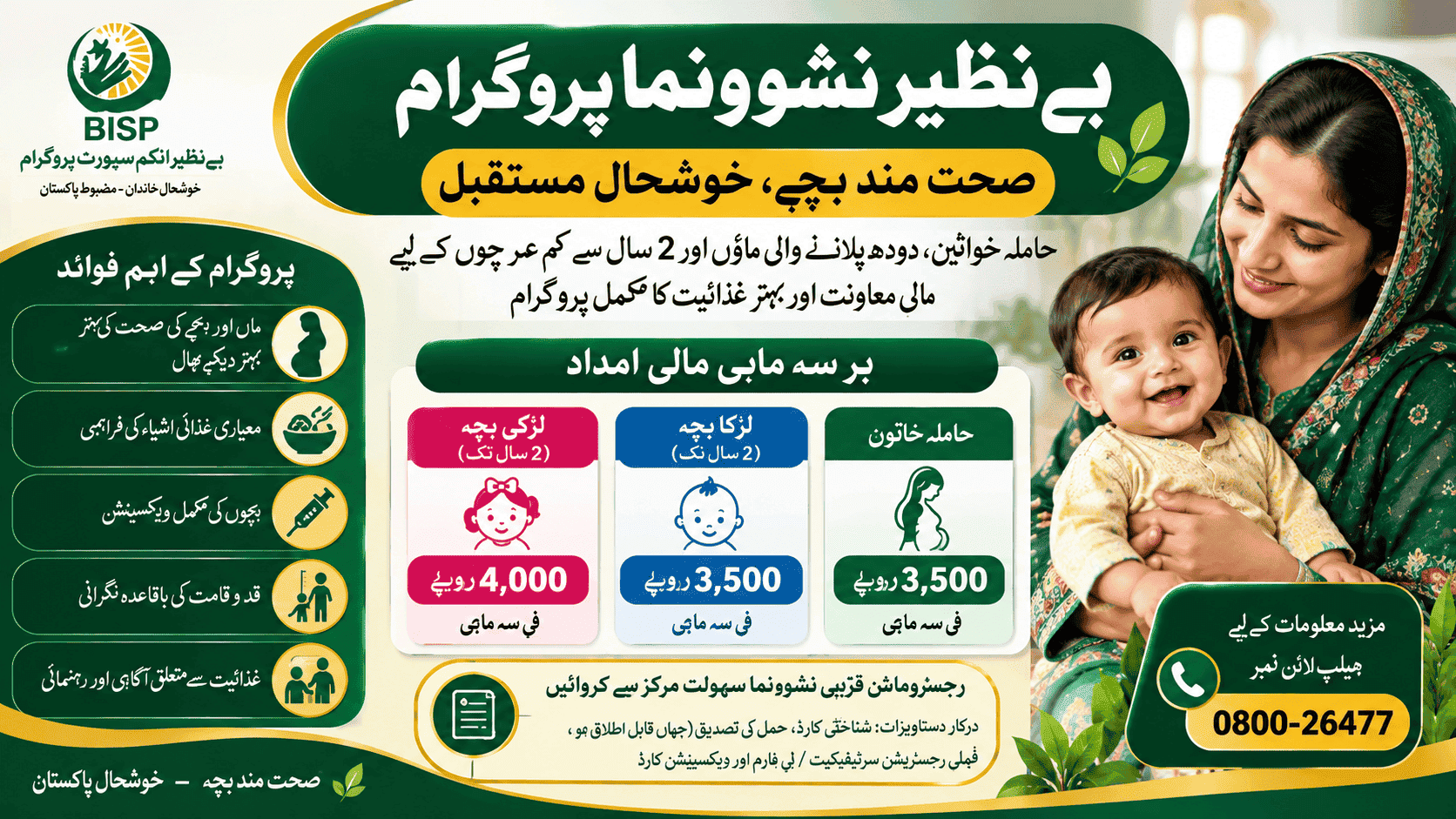
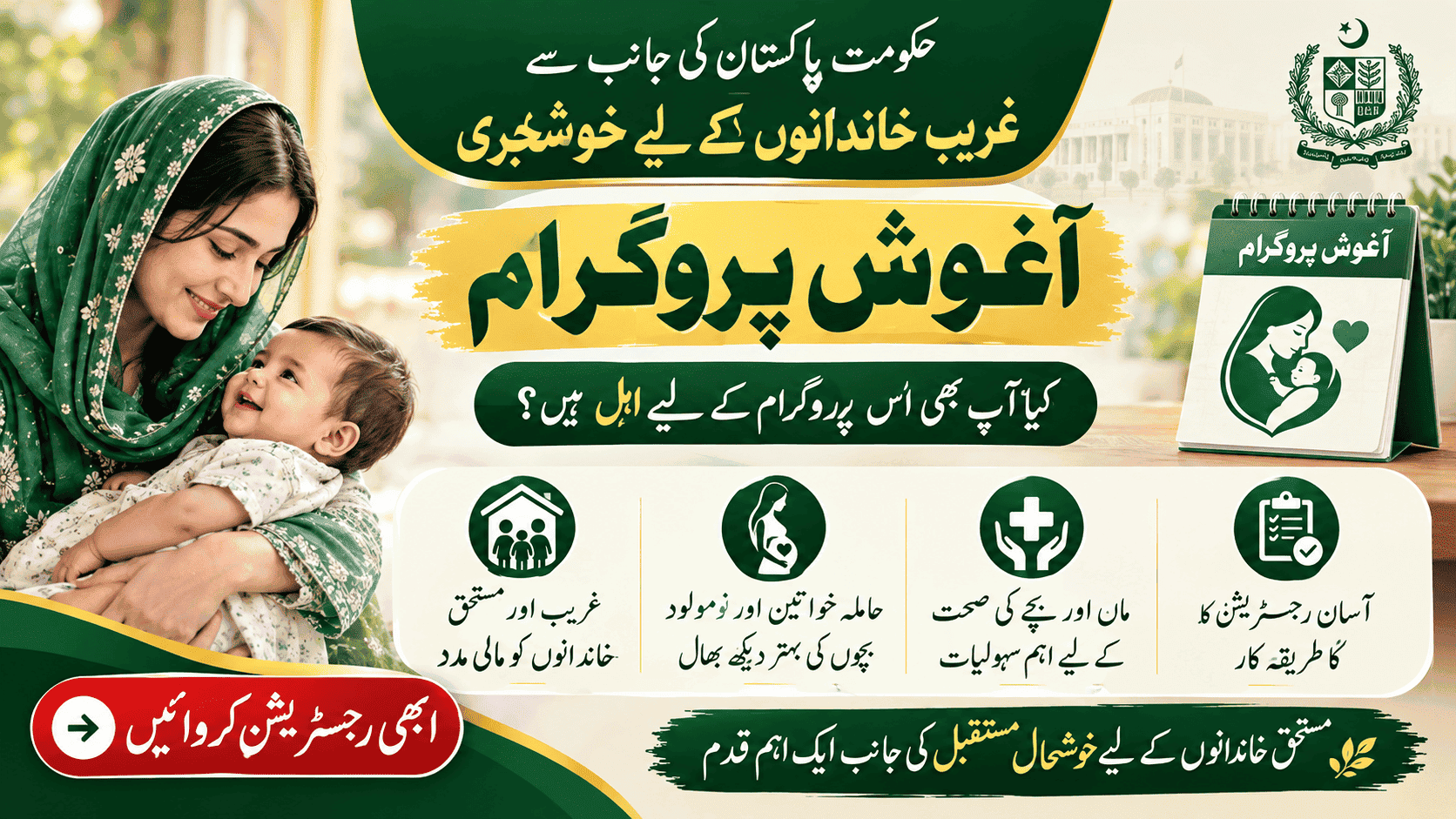
The Benazir Nashonuma Programme (BNP) 2026 is a conditional cash transfer initiative operated by the Benazir Income Support Programme (BISP) to improve the health and nutrition of pregnant women, breastfeeding mothers, and children under two years of age. The programme focuses on the critical first 1,000 days of a child’s life and combines financial assistance with health checks, nutrition support, immunization, growth monitoring, and awareness sessions.
According to the latest information published by BISP, the programme is currently operational across 158 districts through more than 558 Nashonuma Facilitation Centres, with a digital system supporting registration, verification, compliance tracking, and payments.
BISP Nashonuma Program 2026 – Quick Information
| Programme Name | Benazir Nashonuma Programme |
| Year | 2026 |
| Department | Benazir Income Support Programme (BISP) |
| Main Purpose | Maternal and child nutrition and stunting prevention |
| Target Group | Pregnant/lactating women and children under 2 |
| Basic Eligibility | Beneficiary must already be enrolled under BISP Kafaalat |
| Coverage | 158 districts |
| Facilitation Centres | 558+ centres, including mobile units |
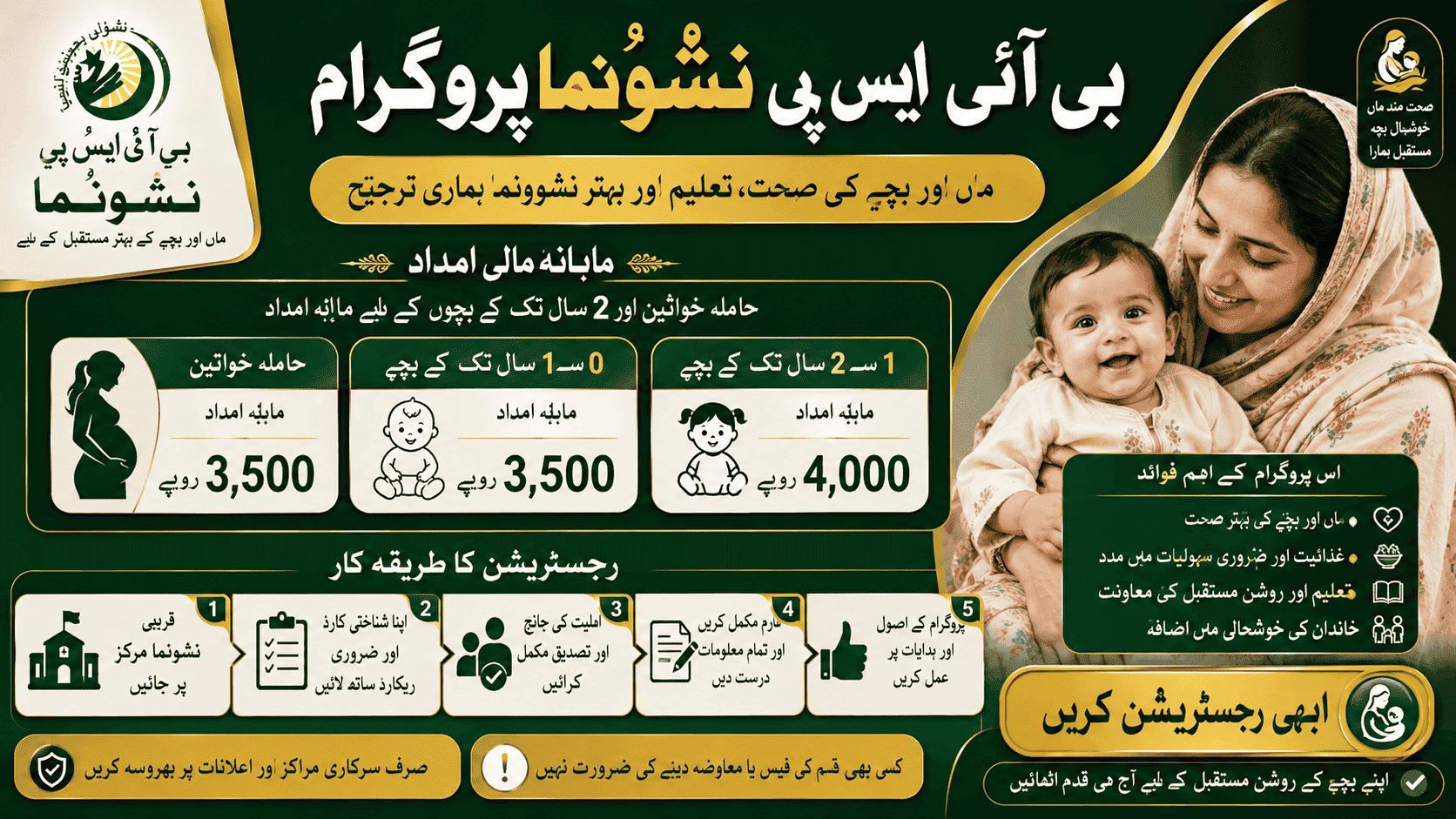
| Pregnant Woman Payment | Rs. 3,500 per quarter |
| Boy Child Under 2 | Rs. 3,500 per quarter |
| Girl Child Under 2 | Rs. 4,000 per quarter |
| Registration | Through a Nashonuma Facilitation Centre |
| Required Documents | CNIC, pregnancy evidence where applicable, FRC/B-Form and immunization record |
| Payment Type | Conditional Quarterly Cash Transfer |
| Official Helpline | 0800-26477 |
Payment figures and programme details above reflect the latest information currently published by BISP.
What Is the BISP Nashonuma Programme?
The Benazir Nashonuma Programme is designed to address malnutrition and prevent stunting among young children while supporting mothers during pregnancy and breastfeeding.
Rather than providing cash assistance without conditions, Nashonuma links the additional payment to important health and nutrition activities. These include antenatal and postnatal care, nutrition counselling, specialized nutritious food, routine immunization, and regular growth monitoring.
The programme was launched as a pilot in 2020 and has subsequently expanded nationwide. BISP’s current programme information states that it now operates in 158 districts with more than 558 Facilitation Centres.
BISP Nashonuma Payment 2026
One of the most important updates for beneficiaries is the current quarterly stipend structure published by BISP.
Current Quarterly Payment
| Beneficiary Category | Payment Per Quarter |
|---|---|
| Pregnant Woman | Rs. 3,500 |
| Boy Child Under 2 Years | Rs. 3,500 |
| Girl Child Under 2 Years | Rs. 4,000 |
BISP describes Nashonuma payments as conditional cash transfers, meaning beneficiaries must meet the programme’s required health and nutrition conditions to remain eligible for the relevant payment.
Why Is the Girl Child Stipend Higher?
The current BISP structure provides a higher quarterly amount for girls under two years of age. BISP identifies this as part of the programme’s gender-responsive design.
Is Nashonuma Payment Monthly?
No. The programme is structured around quarterly payments, rather than a fixed monthly stipend. Payment eligibility is connected with completion and verification of required health and nutrition activities.
Who Is Eligible for BISP Nashonuma 2026?
The latest BISP eligibility information identifies the following main categories.
1. Pregnant Women
A woman may qualify if she:
- Is already enrolled under the BISP Kafaalat programme.
- Is within the programme’s specified age range.
- Is pregnant and can have the pregnancy verified at a registered health facility.
- Lives in an area covered by the Nashonuma Programme.
The current BISP page specifies pregnant or lactating women aged 18–59 years who are already enrolled under Kafaalat.
2. Breastfeeding Mothers
Lactating women belonging to eligible BISP Kafaalat households may also be included, subject to the programme’s verification and compliance requirements.
3. Children Under Two Years
Children under two years of age belonging to a BISP Kafaalat beneficiary household can also be enrolled in Nashonuma if the required documentation and health conditions are fulfilled.
Important Requirement: BISP Kafaalat Status
One of the most important points for applicants is that Nashonuma is not a general cash programme open to every household.
The current BISP eligibility criteria state that the pregnant/lactating woman must already be enrolled under BISP Kafaalat, while children under two must belong to a Kafaalat beneficiary.
Therefore, simply being pregnant or having a child under two does not automatically guarantee Nashonuma payments.
Documents Required for Nashonuma Registration
Applicants should keep the relevant original documents and evidence available when visiting a Nashonuma Facilitation Centre.
For Pregnant Women
BISP’s current information lists:
- Valid CNIC
- Pregnancy screening/confirmation from a registered health facility
- Immunization record where applicable
For Child Registration
The programme may require:
- Child’s B-Form/FRC-related family documentation
- Valid CNIC of the BISP beneficiary
- Immunization record
BISP specifically lists CNIC, Family Registration Certificate (FRC), pregnancy screening evidence and immunization documentation among the required evidence for enrolment.
Practical tip: Carry the original documents and, where possible, copies as well. Make sure the name and family information are consistent across NADRA and BISP records.
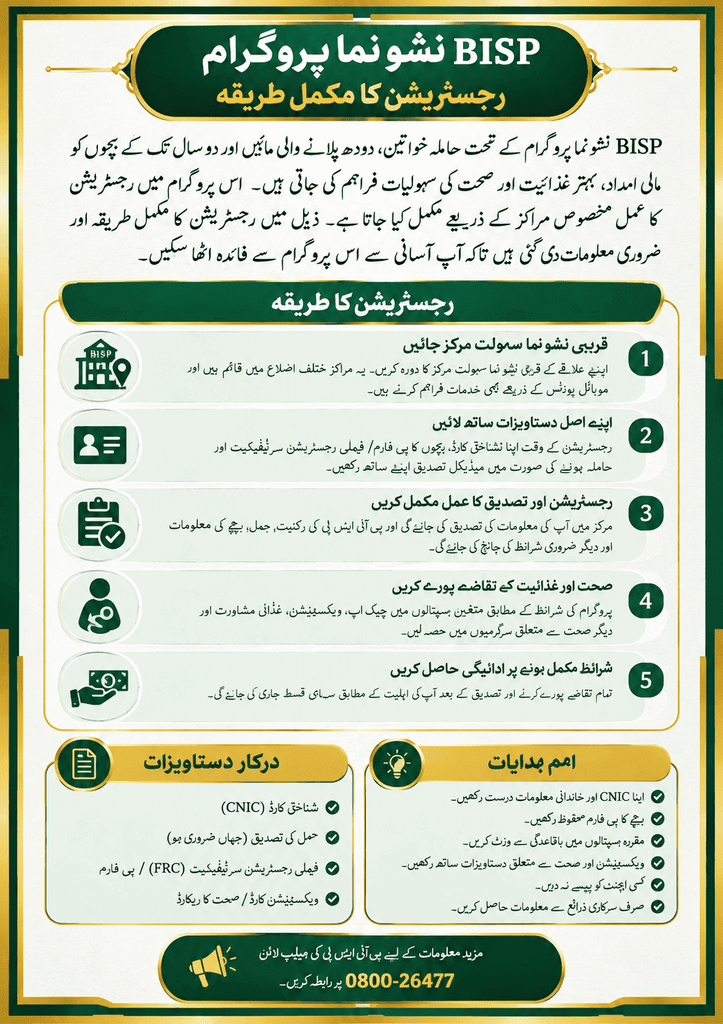
How to Register for BISP Nashonuma 2026
Nashonuma registration is primarily handled through Nashonuma Facilitation Centres, rather than through a normal online application form.
Step 1: Confirm Your BISP Kafaalat Status
First, make sure the household is already included in the BISP Kafaalat programme.
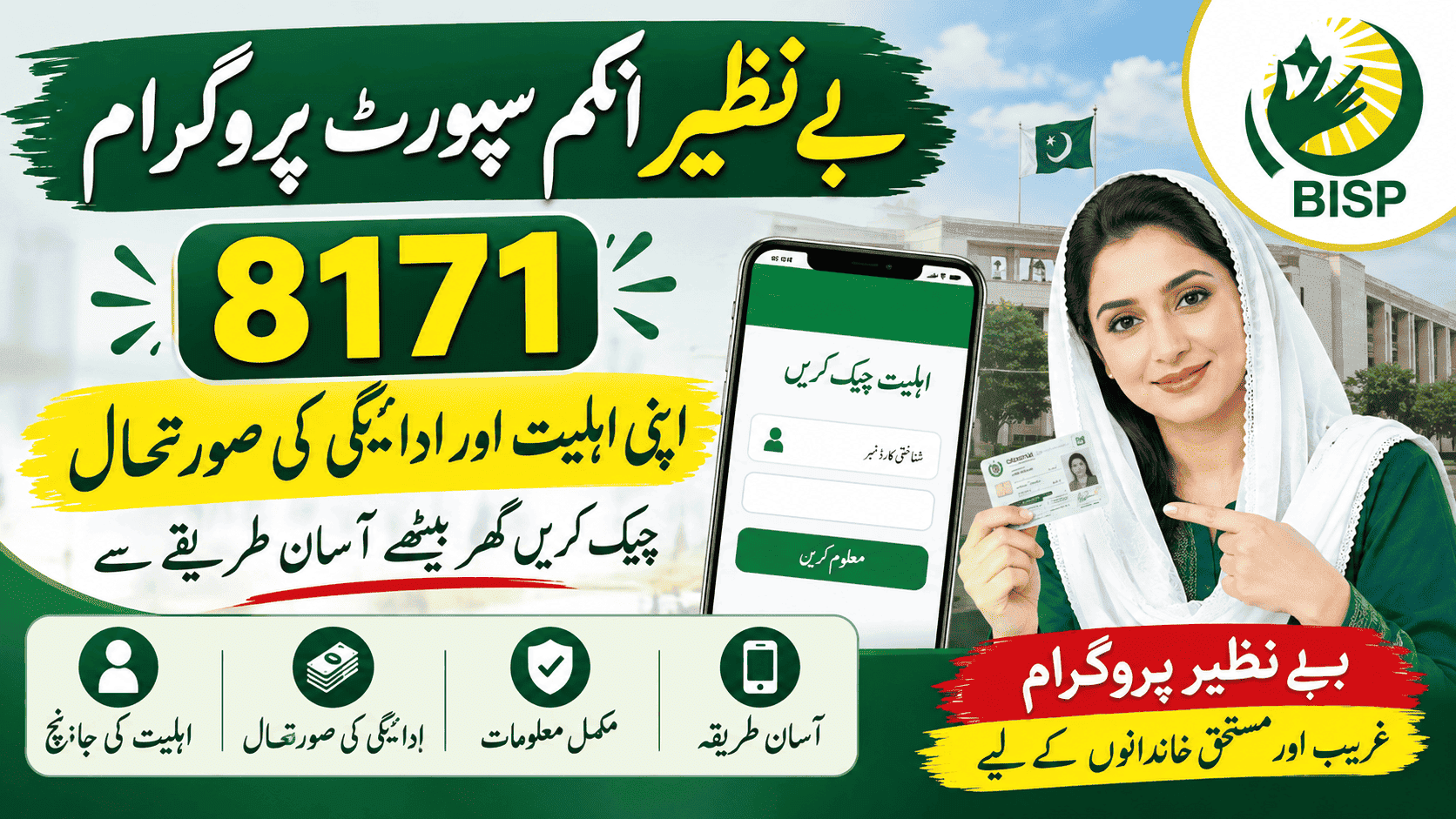
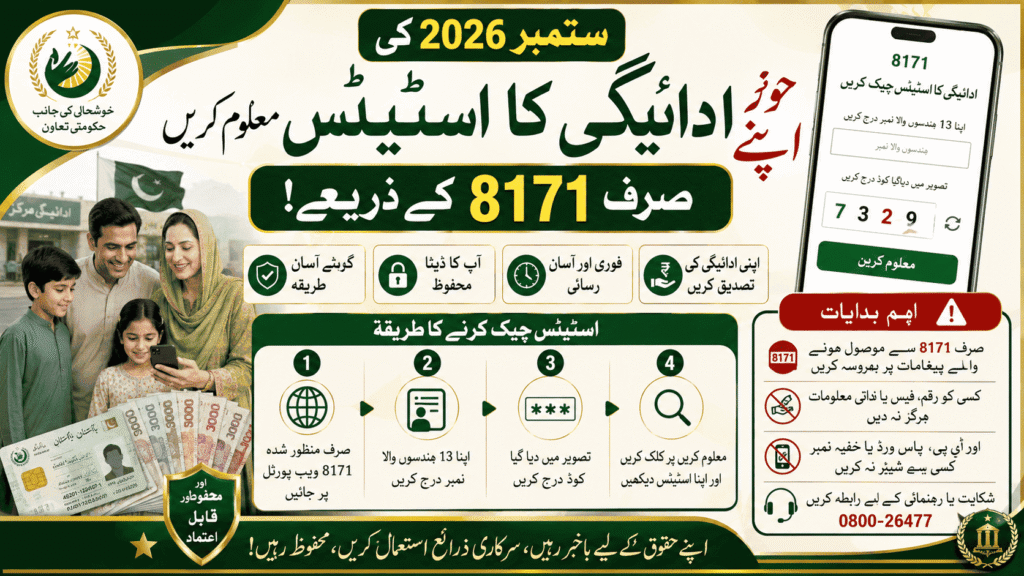
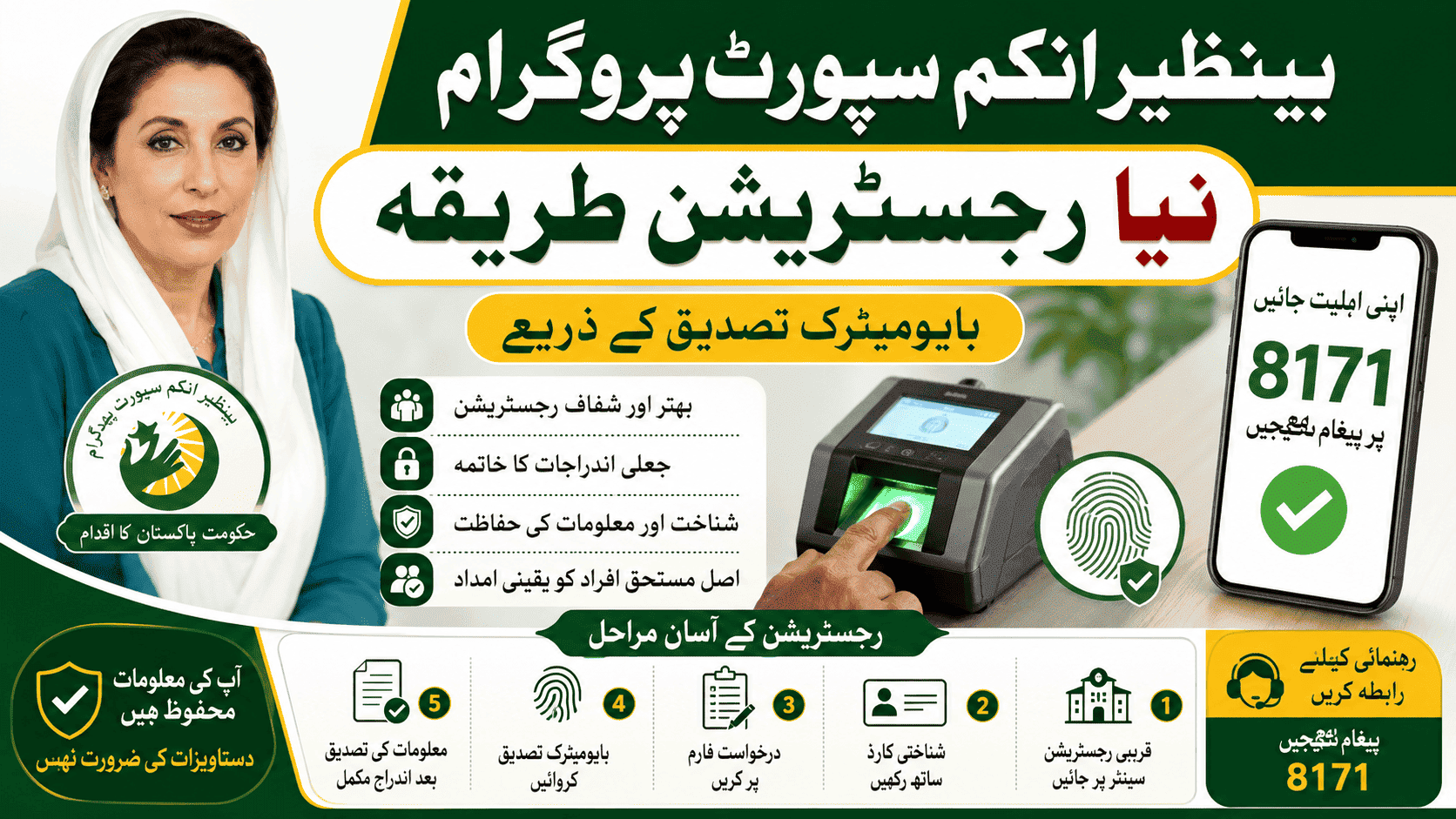
You can use the official 8171 web portal to check household eligibility/status. The portal asks for the CNIC number and verification code.
However, the 8171 portal should not be confused with a separate online Nashonuma registration form.
Step 2: Find a Nashonuma Facilitation Centre
Visit the relevant Benazir Nashonuma Facilitation Centre serving your area.
BISP’s current information says the programme has more than 558 Facilitation Centres, including mobile units, across 158 districts.
Step 3: Take Your Original Documents
Take your:
- Original CNIC
- Child’s B-Form where applicable
- Family Registration Certificate where required
- Pregnancy verification where applicable
- Immunization record
Step 4: Complete Verification
The centre verifies the beneficiary’s BISP status and the relevant pregnancy, lactation, or child information.
The programme’s system is connected with BISP and NADRA for verification and supports digital registration and compliance tracking.
Step 5: Complete Health and Nutrition Requirements
After registration, beneficiaries must follow the required health and nutrition activities.
These can include:
- Antenatal check-ups
- Postnatal care
- Health and nutrition counselling
- Consumption of specialized nutritious food
- Routine child immunization
- Child growth monitoring
These requirements are important because Nashonuma is a conditional cash transfer programme.
Step 6: Payment After Compliance Verification
Once the required conditions have been completed and verified, the eligible payment is processed according to the programme’s payment mechanism.
BISP says its dedicated digital platform supports beneficiary registration, verification, compliance tracking and payments.
What Benefits Does the Nashonuma Programme Provide?
Nashonuma is not limited to cash assistance. It combines several types of support.
Conditional Cash Assistance
Eligible beneficiaries can receive quarterly financial support after meeting the relevant conditions.
Specialized Nutritious Food
The programme provides specialized nutritious food for pregnant and breastfeeding women and young children as part of its nutrition intervention.
Maternal Healthcare
Pregnant women are encouraged to attend antenatal and other required health services.
Child Health Monitoring
Children under two can receive growth monitoring and health-related follow-up.
Immunization Support
Routine immunization is an important component of compliance for eligible children.
Nutrition Awareness
Beneficiaries receive information and counselling intended to improve maternal, infant and young-child nutrition and household health practices.
Why the Nashonuma Programme Is Important
The first 1,000 days—from conception through a child’s second birthday—are particularly important for physical growth and development.
BISP describes Nashonuma as a stunting-prevention intervention that combines social protection with health and nutrition services. The programme’s objectives include preventing child stunting, improving maternal weight gain, addressing micronutrient deficiencies, improving maternal and child health awareness, and reducing the risk of low birth weight.
Recent BISP reporting also highlights measurable progress against child stunting under the programme.
How to Check BISP Nashonuma Eligibility
If you want to determine whether your household is already registered with BISP, the first practical step is to check your status through the official 8171 system.
The official portal provides a CNIC-based household eligibility check.
For Nashonuma-specific enrolment, however, applicants should contact or visit the relevant Facilitation Centre because Nashonuma requires verification of pregnancy, child information and health-related conditions.
Important Difference
8171 check: Used to check BISP household eligibility/status.
Nashonuma registration: Requires enrolment and verification through the Nashonuma programme’s Facilitation Centre.
This distinction can help applicants avoid websites claiming to offer a fake “online Nashonuma registration.”
Is There an Online Nashonuma Registration Form?
Applicants should be careful with websites claiming that they can complete Nashonuma registration entirely online.
The official BISP programme information describes a Facilitation Centre-based enrolment and verification process, supported by a digital system.
Therefore, do not pay an unofficial website, agent or individual to submit a supposed online Nashonuma application.
Common Reasons for Payment Delay
A Nashonuma payment may not be processed as expected if:
- Required health visits have not been completed.
- Immunization records are incomplete.
- Pregnancy or child information has not been verified.
- Required nutritious food or programme activities have not been completed.
- Family or CNIC information needs verification.
- The beneficiary has missed required follow-up visits.
- The programme’s verification or payment process is still pending.
Because Nashonuma payments are conditional, beneficiaries should complete the health and nutrition requirements on schedule.
Important Tips for Nashonuma Beneficiaries
Keep Your CNIC Information Updated
Make sure your CNIC and family information are accurate and consistent with NADRA records.
Keep the Child’s B-Form Safe
For child enrolment, family and child documentation can be important for verification.
Do Not Miss Health Visits
Regular antenatal, postnatal, immunization and growth-monitoring activities can affect compliance.
Keep Health Records
Keep vaccination and other relevant health documents available when visiting the Facilitation Centre.
Do Not Pay an Agent
Be careful with anyone demanding money for BISP registration or Nashonuma enrolment. BISP has repeatedly warned beneficiaries about fraudulent individuals using the programme’s name.
Use Official BISP Channels
For official information, use the BISP website, official 8171 portal and BISP helpline rather than social-media posts or unofficial websites.
BISP Nashonuma 2026 – Frequently Asked Questions
What is the BISP Nashonuma Programme?
It is a BISP conditional cash transfer programme focused on improving maternal and child nutrition and preventing stunting among children under two.
How much is the Nashonuma payment in 2026?
According to the latest BISP programme information, the quarterly amount is Rs. 3,500 for a pregnant woman, Rs. 3,500 for a boy under two, and Rs. 4,000 for a girl under two.
Is Nashonuma payment monthly?
No. Nashonuma assistance is structured as a quarterly conditional payment.
Can any pregnant woman apply?
Not automatically. The current BISP eligibility criteria require the pregnant/lactating woman to already be enrolled under BISP Kafaalat and meet the Nashonuma requirements.
Can children under two receive Nashonuma support?
Yes. Children under two belonging to eligible BISP Kafaalat beneficiary households can be enrolled subject to verification and programme conditions.
Where is Nashonuma registration completed?
Registration is handled through Nashonuma Facilitation Centres, with BISP currently reporting more than 558 centres across 158 districts.
Can I check my BISP status online?
Yes. The official 8171 portal provides a CNIC-based household eligibility/status check.
Final Words
The BISP Nashonuma Program 2026 provides more than a quarterly cash payment. It connects financial support with maternal healthcare, child nutrition, immunization, growth monitoring and nutrition awareness. The latest BISP information shows that the programme has expanded to 158 districts and more than 558 Facilitation Centres, making it accessible to eligible families across Pakistan.
For applicants, the most important steps are to confirm BISP Kafaalat eligibility, visit the relevant Nashonuma Facilitation Centre, carry the required documents, complete health and nutrition requirements, and rely only on official BISP information for payment updates.

Leave a Reply