

Introduction
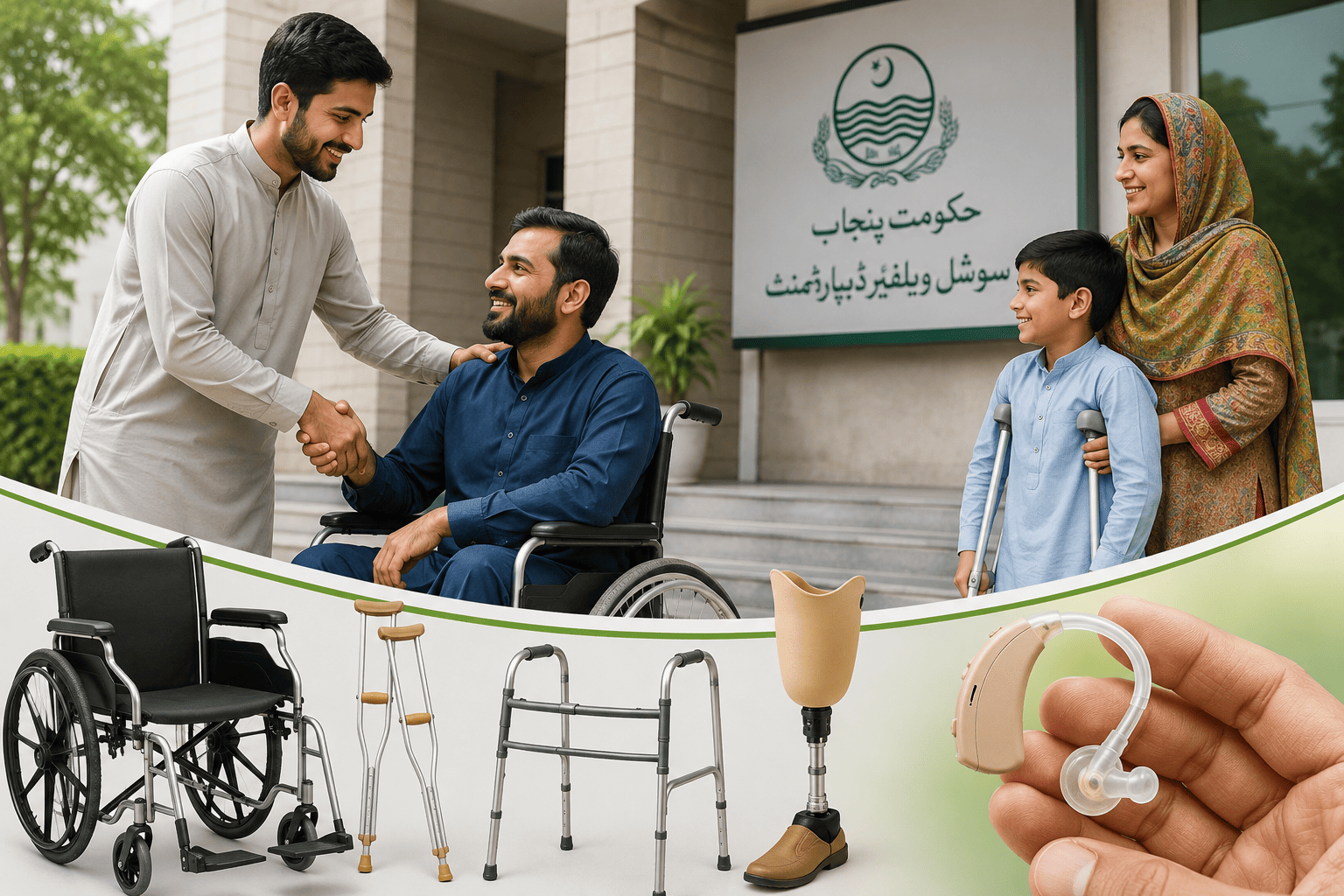
The Government of Punjab has introduced and expanded its Assistive Devices & Wheelchair (ADWC) Program to help persons with disabilities obtain essential equipment that can improve mobility, communication, independence, and everyday quality of life.
The initiative is being implemented through the Social Welfare & Bait-ul-Maal Department, Government of Punjab, as part of the province’s broader efforts to create a more inclusive and accessible society. Depending on eligibility, assessment, and the applicant’s specific needs, the program can provide different assistive devices, including wheelchairs, hearing aids, prosthetic equipment, mobility aids, and other supportive devices.
What Is the Free Assistive Devices Scheme in Punjab?
The Assistive Devices & Wheelchair Program is a Government of Punjab initiative designed to support eligible persons with disabilities by providing appropriate assistive equipment. The program focuses on improving mobility, accessibility, independence, dignity, and participation in education, employment, family life, and other social activities.
The Punjab Social Welfare Department describes the program as an important step toward improving the quality of life of persons with disabilities. It uses a verification and assessment process so that devices can be provided according to the needs and circumstances of eligible applicants.
The program is particularly significant for families who cannot easily afford specialized equipment. A suitable wheelchair, hearing aid, prosthetic device, walker, crutches, or another mobility aid can make a substantial difference in a person’s ability to move around, attend school, work, receive treatment, or participate independently in daily activities.
Students can also explore the Student Electric Bike Scheme 2026 for more information about the latest student mobility initiative.
Who Is Responsible for the Program?
The program is administered through the Social Welfare & Bait-ul-Maal Department of the Government of Punjab. The department works with relevant assessment and rehabilitation structures to identify eligible beneficiaries and determine the type of assistance required.
The Government of Punjab has also established the Council on the Rights of Persons with Disabilities (CRPD) under the Punjab Empowerment of Persons with Disabilities Act, 2022. The wider disability-support framework includes initiatives aimed at accessibility, rehabilitation, social protection, employment, and equal participation.
What Assistive Devices Are Available?
The program does not provide one identical device to every applicant. The equipment depends on the applicant’s disability, functional requirements, medical assessment, eligibility, and the category of device for which the person qualifies.
1. Wheelchairs
Wheelchairs are among the major forms of assistance available under the program. The official Punjab Government portal lists several categories, including:
- Manual active-use wheelchairs
- Pediatric manual wheelchairs
- Electric or motorized wheelchairs
The appropriate wheelchair is determined according to the applicant’s needs and eligibility rather than simply being selected by the applicant without assessment.
2. Hearing Aids
The program also includes digital hearing aids with batteries and mold for eligible applicants. Medical recommendations from an appropriate ENT consultant or specialist at a DHQ or teaching hospital may be required as part of the application and needs-assessment process.
3. Prosthetic Devices
Prosthetic equipment is intended to help individuals who have limb loss or specific physical disabilities. The official program information identifies different prosthetic categories, including conventional above-knee prostheses, modular below-knee prostheses, and myoelectric prostheses for upper-limb requirements.
Prosthetic assistance is subject to assessment and the applicant’s particular medical and functional requirements.
4. Other Mobility and Assistive Equipment
The official ADWC portal also lists a range of other devices. Depending on eligibility and assessment, these may include:
- Mobile toilet chairs for shower, bath, and toilet use
- Tricycles
- Tri-motor cycles
- Walking frames and walkers
- Rollators
- Knee orthoses
- Braille equipment
- Canes and sticks
- Axillary, elbow, and other crutches
The availability of a particular device should always be confirmed through the official program because equipment categories, assessment requirements, and distribution arrangements can change.
Who Can Apply for the Punjab Assistive Devices Program?
According to the official Punjab Government information, the general eligibility requirements include the following:
- The applicant should be a resident of Punjab.
- The applicant should have a valid CNIC or B-Form.
- For a minor or an intellectually impaired applicant, the valid CNIC of the guardian may be used where applicable.
- Applicants seeking wheelchairs, prosthetics, orthotics, or other relevant assistive devices may need a disability assessment certificate issued by the appropriate Disability Assessment Board.
- The applicant may need a needs assessment and relevant medical recommendations for the requested device.
Eligibility is not determined solely by having a disability. The relevant government authorities may verify the applicant’s identity, disability status, medical need, functional requirements, and other program conditions before approving assistance.
Disability Certificate and Assessment
A disability assessment can be an important part of obtaining assistive equipment. The Social Welfare Department states that District and Tehsil Assessment Boards operate through DHQ and THQ hospitals in Punjab to assess the nature and extent of disability and issue disability certificates.
Applicants who need a disability certificate can use the government’s disability-registration system and, where necessary, seek assistance from the Medical Social Officer at the relevant DHQ or THQ hospital or the district Social Welfare & Bait-ul-Maal office.
Having the required disability documentation can help the authorities evaluate the applicant’s needs and determine whether the requested assistive device is appropriate.
Medical Recommendations Required for Different Devices
Different assistive devices can require different professional recommendations. The official program information specifically identifies the following requirements:
| Device Category | Relevant Requirement |
|---|---|
| Hearing Aids | Recommendation from an ENT consultant or specialist at a DHQ or teaching hospital may be required. |
| Wheelchairs | Orthopedic recommendation from a DHQ or teaching hospital may be required. |
| Prosthetics | Medical/orthopedic assessment according to the applicant’s limb-related requirements. |
| Orthotics | Relevant medical assessment and recommendation may be required. |
Applicants should check the current instructions on the official ADWC portal before submitting an application because requirements can vary according to the device being requested.
How to Apply for Free Assistive Devices in Punjab
The Government of Punjab has provided an online mechanism for applications under the Assistive Devices & Wheelchair Program. Applicants can submit their information through the official ADWC portal.
Step 1: Open the Official ADWC Portal
Visit the official Assistive Devices & Wheelchair Program portal operated by the Government of Punjab. Avoid unofficial websites or social-media pages that ask for unnecessary payments or personal information.
Step 2: Start the Application
The online registration system asks applicants to provide personal and beneficiary information. The official registration form includes fields such as full name, father/spouse name, gender, CNIC, telephone number, email address, date of birth, and beneficiary status.
Step 3: Verify Your Contact Information
The online application process can include mobile-phone verification through an OTP. Applicants should therefore use an active mobile number that they can access during registration.
Step 4: Provide Disability and Supporting Information
Applicants should provide the disability-related information and supporting documents requested by the official system. Depending on the requested device, a disability certificate, medical recommendation, or needs assessment may be required.
Step 5: Select the Required Assistive Device
The applicant should identify the type of assistance required. The government may subsequently assess the application and determine the appropriate device according to eligibility, medical need, and program criteria.
Step 6: Submit the Application
Carefully review all information and attachments before submitting the application. Incorrect CNIC information, incomplete documents, an inactive phone number, or missing medical recommendations may cause delays or require additional verification.
Step 7: Wait for Verification and Assessment
Submission of an application does not automatically guarantee approval. Applications go through official verification and assessment stages. Successful applicants can receive the approved assistive equipment through the government’s distribution process.
Documents Applicants Should Keep Ready
Applicants should prepare the documents relevant to their circumstances before beginning the application. These can include:
- Valid CNIC or B-Form
- Guardian’s CNIC where applicable
- Disability Assessment Certificate, where required
- Medical or specialist recommendation for the requested device, where required
- Applicant’s active mobile phone number
- Email address, where required by the online application
- Other supporting documents requested by the official portal
Applicants should not submit forged, altered, or misleading documents. Any information supplied through the application should accurately represent the applicant’s identity and circumstances.
Is the Assistive Device Completely Free?
The program is designed to provide eligible beneficiaries with government-supported assistive devices. Official Punjab Government information describes the initiative as providing free assistive devices to eligible persons with disabilities.
However, applicants should understand that free assistance does not mean automatic approval. The applicant must meet the relevant conditions, complete the required verification, and receive approval through the government’s process.
How Are Applicants Selected?
The program uses an official verification and assessment process to identify deserving beneficiaries and match assistive equipment with individual needs. This is important because two people with disabilities may require completely different forms of support.
For example, one applicant may need a pediatric wheelchair, while another may require an electric wheelchair, hearing aid, prosthetic device, walker, or orthotic support. The government therefore considers the person’s disability and functional requirements rather than using a single device for every beneficiary.
What Happens After Applying?
After an application is submitted, it can pass through different stages of verification, scrutiny, approval, and device handover. The official program dashboard publicly displays application and distribution statistics, demonstrating that the program has processed applications and delivered devices to beneficiaries.
Applicants should keep their contact information active and monitor official communications. If additional documentation, verification, or assessment is required, applicants should cooperate with the relevant government office.
Can Applicants Apply Through a Government Office?
Yes. The official Punjab Government guidance states that interested individuals can also visit their nearest Social Welfare & Bait-ul-Maal office for assistance with the program.
This option can be especially useful for applicants who have limited internet access, require help understanding the online process, or need guidance regarding supporting documents.
The official program information also lists helpline 1312 for information and guidance about the application process.
Important Benefits of the Scheme
Assistive technology is more than a physical product. For many persons with disabilities, the right device can remove practical barriers that affect education, employment, healthcare, family life, and community participation.
Improved Mobility
Wheelchairs, walkers, crutches, canes, and other mobility aids can make it easier for eligible beneficiaries to move around their homes and communities.
Greater Independence
Appropriate assistive equipment can reduce dependence on family members or caregivers for routine activities.
Better Access to Education
Mobility and communication support can make it easier for students with disabilities to attend educational institutions and participate in learning activities.
Support for Employment
Improved mobility and functional independence can help persons with disabilities participate more effectively in vocational training and employment opportunities.
Enhanced Dignity and Social Inclusion
Access to suitable assistive equipment can help people participate more confidently in family, community, educational, and social activities.
Important Points Applicants Should Remember
- Apply through the official Government of Punjab portal.
- Make sure the CNIC or B-Form information is correct.
- Keep the applicant’s mobile number active for verification.
- Obtain the required disability certificate where applicable.
- Arrange the relevant medical recommendation if required for the selected device.
- Provide accurate information and genuine documents.
- Do not pay unofficial agents or individuals claiming they can guarantee approval.
- Remember that submission of an application does not guarantee that a device will be approved.
- Check the official portal for the latest eligibility requirements and application instructions.
- For assistance, contact the official helpline or the nearest Social Welfare & Bait-ul-Maal office.
Frequently Asked Questions
1. What is the Punjab Free Assistive Devices Program?
It is the Government of Punjab’s Assistive Devices & Wheelchair Program, which aims to provide eligible persons with disabilities with suitable assistive equipment to improve mobility, independence, accessibility, and quality of life.
2. Who can apply?
Generally, residents of Punjab with a valid CNIC or B-Form who meet the program’s disability, assessment, verification, and device-specific requirements can apply.
3. Which devices are available?
The official program lists manual and electric wheelchairs, pediatric wheelchairs, digital hearing aids, prosthetics, walkers, rollators, crutches, canes, orthotic devices, Braille equipment, tricycles, tri-motor cycles, mobile toilet chairs, and other assistive equipment.
4. Do I need a disability certificate?
A Disability Assessment Certificate is required for several categories of assistive equipment, including wheelchairs, prosthetics, orthotics, and other devices. Applicants should follow the current requirements shown on the official portal.
5. Is there a fee to receive the device?
The initiative is designed to provide approved assistive devices free of cost to eligible beneficiaries. Applicants should be cautious of anyone demanding an unofficial payment in exchange for approval.
6. Can a minor apply?
Yes, the official eligibility information allows the use of a guardian’s valid CNIC in the case of a minor or intellectually impaired applicant, where applicable.
7. Can I apply if I have not previously received a government device?
Applicants should submit their details through the official system and allow the government to determine eligibility and need according to the applicable criteria.
8. Where can I get help with my application?
Applicants can visit their nearest Social Welfare & Bait-ul-Maal office or contact the official program helpline at 1312 for information and guidance.
9. Does applying guarantee that I will receive a wheelchair or other device?
No. Applications are subject to eligibility, verification, assessment, medical recommendations where required, and approval under the program’s rules.
Why This Initiative Matters for Persons with Disabilities
The importance of assistive technology goes beyond convenience. A person who cannot move independently may face difficulties reaching school, employment, healthcare facilities, markets, public services, and social gatherings. Likewise, a person with hearing impairment may require an appropriate hearing aid to communicate more effectively.
By helping eligible citizens obtain suitable assistive devices, the Punjab Government’s program seeks to reduce these barriers and promote a society in which persons with disabilities can live with greater independence and dignity.
The initiative also complements Punjab’s broader disability-support framework, which includes rehabilitation services, disability assessment, financial assistance for eligible persons, employment-related measures, and other inclusion programs.
Final Words
The Punjab Assistive Devices & Wheelchair Program is an important welfare initiative for eligible persons with disabilities who need equipment to improve their mobility, communication, independence, and participation in everyday life. Depending on individual requirements and government assessment, assistance may include wheelchairs, hearing aids, prosthetic equipment, orthotics, walkers, crutches, Braille equipment, and other supportive devices.
Eligible residents should use the official application channel, provide accurate information, keep the required documents ready, and follow the government’s verification process. Because program requirements and application procedures may be updated, applicants should always rely on the official Government of Punjab portal for the latest information.
Apply Now for Free Assistive Devices
Ready to apply? Use the official Government of Punjab Assistive Devices & Wheelchair Program portal to begin your application or check the latest instructions.
Official source: Government of Punjab – Social Welfare & Bait-ul-Maal Department, Assistive Devices & Wheelchair Program.











Leave a Reply